
2026 Solar Mounting Systems: The Technical Guide to Selecting HDG Fasteners for 25-Year Lifespans

Annie Z
AuthorWith over 25 years of experience in fastener production and export sales, we operate our own manufacturing plant and our products are exported to over 50 countries. We are professional experts in bolts, nuts, washers, anchor bolts, and customized fasteners.
As global utility-scale solar installations expand in 2026, engineering standards are becoming increasingly strict. Solar farms are massive financial investments designed with a mandatory operational lifespan of 25 to 30 years. While photovoltaic (PV) panels and aluminum racking systems capture the most attention, the entire structural integrity of the array relies on the smallest components: the fasteners.
If the bolts connecting the solar racks rust and fail in year 10, the 25-year lifespan of the panels is irrelevant. For solar arrays exposed to open fields, coastal winds, and highly alkaline or acidic soils, Hot Dip Galvanizing (HDG) is the definitive standard for steel fasteners.
This technical guide breaks down the science of zinc depletion, component selection, and quality control requirements to ensure your solar mounting fasteners survive a quarter of a century.
1. The Math Behind a 25-Year Lifespan: Zinc Depletion Rates
Hot dip galvanizing is not merely a physical barrier; it is a metallurgical reaction that creates a zinc-iron alloy. In outdoor environments, this zinc layer acts as a sacrificial anode, corroding slowly over time to protect the underlying steel base. To guarantee a 25-year lifespan, engineers must calculate the environmental corrosion rate and specify the correct initial zinc coating thickness.
Average Zinc Depletion Rates by Environment
| Environmental Condition | ISO Corrosivity Category | Estimated Zinc Loss Per Year | Required Minimum HDG Thickness for 25 Years |
|---|---|---|---|
| Dry / Rural / Desert | C2 (Low) | 0.1 to 0.7 μm / year | 45 - 55 μm (Standard) |
| Urban / Mild Industrial | C3 (Medium) | 0.7 to 2.1 μm / year | 65 - 85 μm (Heavy Duty) |
| Coastal / High Humidity | C4 (High) | 2.1 to 4.2 μm / year | > 85 μm (Special Request) |
Engineering Note: For most utility-scale solar projects, standard electro-galvanized (zinc-plated) bolts only offer 5 to 15 μm of protection. In a C3 environment, they will rust entirely within 3 to 5 years. Always specify standards such as ISO 10684 or ASTM A153 to ensure the manufacturer applies the correct hot dip galvanized thickness.
2. Fastener Selection for Solar Racking Systems
Solar racking systems require fasteners that can handle both static dead loads (the weight of the panels) and dynamic environmental loads (wind uplift and snow). Fastener dimensions must strictly adhere to real-world industrial specifications, typically ranging from M10 to M20 for structural connections.
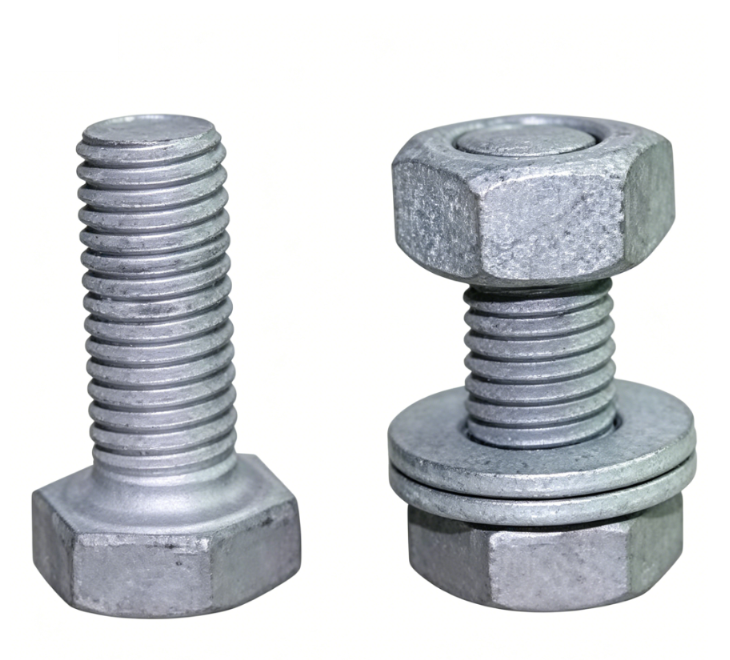
Structural Hex Bolts & Nuts (M12 - M16)
Used to connect the main steel support columns to the cross beams. Due to the high wind loads in open solar farms, these bolts must be high-strength (typically Grade 8.8 or ASTM A325). The HDG coating provides vital protection against atmospheric moisture.
Square and Round U-Bolts
Often used in ground-mounted systems to clamp tubular steel supports or secure tracker torque tubes. When sourcing U-bolts, engineers must ensure the factory uses proper cold-bending techniques before the HDG process. Poor bending can create micro-cracks in the steel, which leads to localized zinc flaking and premature rusting.
Anchor Rods and Foundation Studs (M16 - M24)
These threaded rods anchor the entire solar array to the concrete footings or directly into the earth. Because soil resistivity, pH levels, and ground moisture create a highly aggressive corrosive environment, the buried section of these rods must maintain a flawlessly uniform HDG coating.
3. The Thread Fit Protocol: Avoiding Assembly Failure
The most common failure point in sourcing HDG fasteners for solar projects is not the coating thickness, but the thread fit.
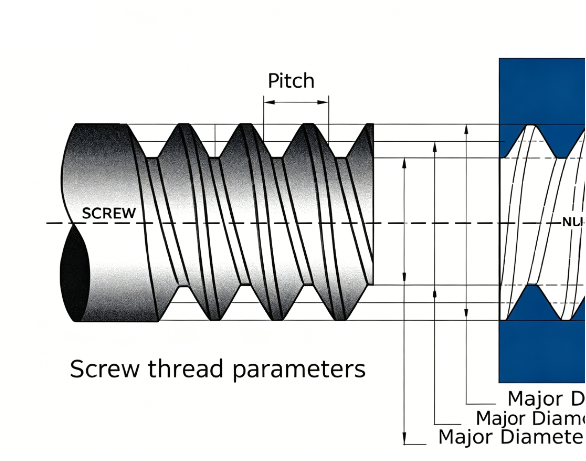
A 65 μm layer of zinc adds a total of 130 μm to the diameter of a bolt. If you pair a standard HDG structural bolt with a standard tapped nut, they will physically lock up on the construction site. Forcing them together with a wrench will strip the zinc coating, immediately destroying the 25-year rust protection.
To ensure rapid on-site assembly, the nuts must be overtapped after the galvanizing process. An oversized tap (usually +0.4mm to +0.8mm depending on the thread diameter) removes the zinc from the internal threads of the nut. When assembled, the thick zinc on the external threads of the bolt provides cathodic protection to the bare steel inside the nut.
Procurement Rule: Always purchase solar mounting bolts, overtapped nuts, and washers as complete, pre-tested assemblies from the same manufacturer.
4. Dimensional Precision and Quality Control
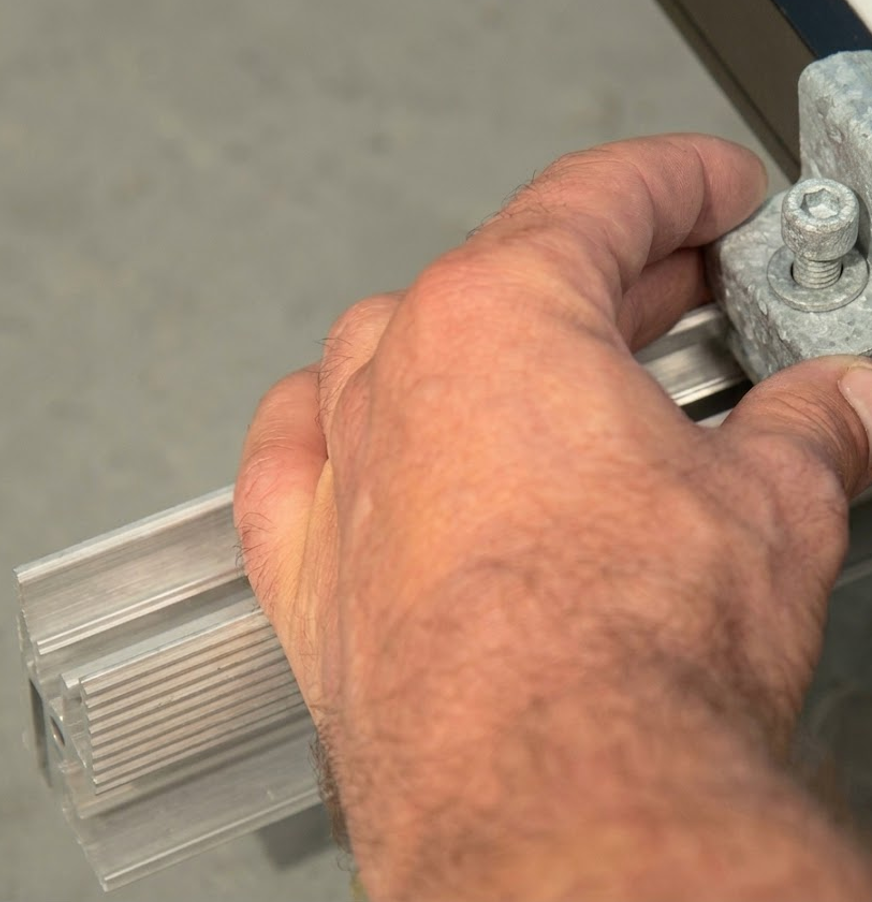
In large-scale solar farms requiring millions of fasteners, dimensional inaccuracy is unacceptable. A bolt that is 2mm too long might pierce a solar panel frame; a nut that is poorly threaded will halt an entire installation crew.
At Hotop Fasteners, we treat solar mounting hardware with strict dimensional rigor. We reject the "close enough" mentality. Our quality control protocols are executed meticulously before any shipment leaves the factory:
- Strict Dimensional Verification: We utilize precision calipers and micrometers to ensure the physical proportions of every fastener—from head height to thread length—strictly match exact industrial DIN/ASTM standards.
- Go/No-Go Gauge Testing: Our Chinese QC technicians physically test the rotational capacity of overtapped HDG nuts and bolts on the assembly line using calibrated thread ring gauges. This eliminates any thread interference caused by zinc pooling.
- Coating Measurement: Using digital magnetic thickness gauges, we verify that the zinc-iron alloy layer meets the specific micron requirements dictated by your project's environmental category.
---
Achieving a 25-year lifespan for a solar mounting system requires acknowledging the harsh realities of environmental corrosion. By enforcing strict hot dip galvanizing standards (ASTM A153 / ISO 10684), calculating proper zinc depletion rates, and ensuring absolute precision in thread overtapping, engineering teams can eliminate the risk of structural failure.
Related News
Other news you might be interested in
Can Stainless Steel Bolts Be Used with Galvanized Steel? Galvanic Corrosion Guide
Can stainless steel bolts be used with galvanized steel? Learn how galvanic corrosion occurs, which conditions increase risk, and how to specify compatible fasteners for outdoor and coastal projects.

Fastener Submittal Checklist: Drawings, MTC, Coating and Packaging
Use this fastener submittal checklist for steelwork projects. Learn what to confirm before ordering bolts, anchor bolts and threaded rods, including drawings, MTC, coating, thread fit, packaging and shipment labels.
Want to know more?
Get in touch with us for more information about our services and products.