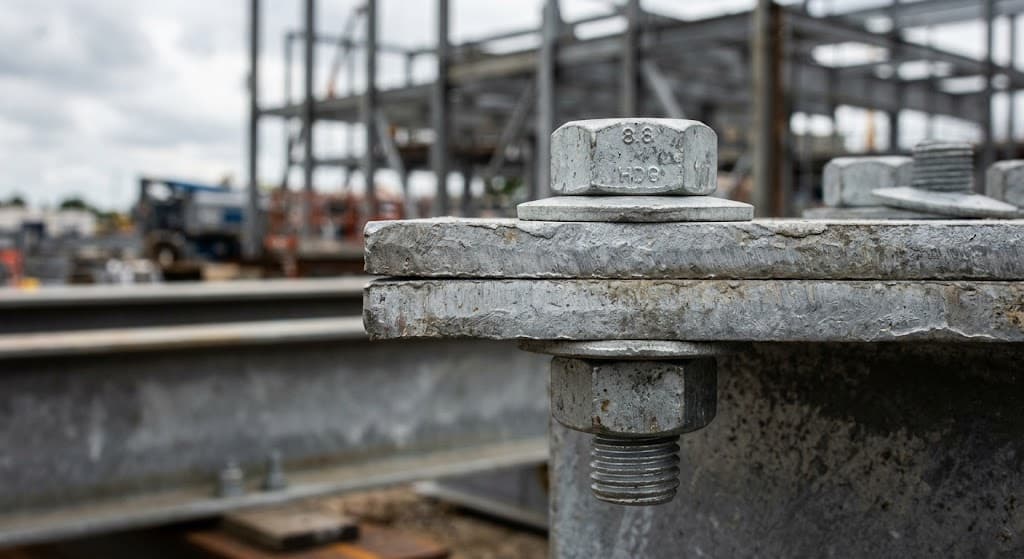
How to Select Hot Dip Galvanized Washers for Steel Structures

Annie Z
AutorCom mais de 25 anos de experiência na produção e exportação de fixadores, operamos nossa própria fábrica e nossos produtos são exportados para mais de 50 países. Somos especialistas profissionais em parafusos, porcas, arruelas, chumbadores e fixadores personalizados.
Washers are often treated as small accessory parts in a steel structure fastening assembly. However, the washer type can affect load distribution, contact area, bolt-head support, installation quality and corrosion protection around the connection.
For outdoor steelwork, transmission structures, support frames, equipment bases, fabricated steel assemblies and other exposed applications, buyers often specify hot dip galvanized bolts, nuts and washers as a complete fastening set. Selecting the correct washer is not only about finding a matching diameter. The washer shape, thickness, outside diameter, hole size, connected steel surface and installation detail all need to be considered.
This guide explains the differences between flat washers, square washers and beveled washers, and helps buyers prepare a clearer RFQ for hot dip galvanized steel structure fasteners.
Why Washer Selection Matters in a Steel Structure Connection
A washer is placed under a bolt head, nut or both. Its role depends on the connection design, but it may help distribute bearing pressure, protect the connected steel surface, support installation and provide a more stable bearing area.
In hot dip galvanized fastener assemblies, the washer also needs to match the corrosion-protection requirement of the bolt, nut and connected structure. Using an uncoated or incompatible washer in an exposed assembly can create an inconsistent corrosion-protection system.
A proper washer selection should consider:
- Bolt diameter and hole size
- Nut and bolt head bearing area
- Thickness and shape of the connected steel
- Flat, sloped or irregular connection surface
- Outdoor, marine, industrial or indoor exposure
- Required galvanizing or surface finish
- Applicable project drawing and fastening standard
- Required inspection and documentation
Common Washer Types for Galvanized Bolt Assemblies
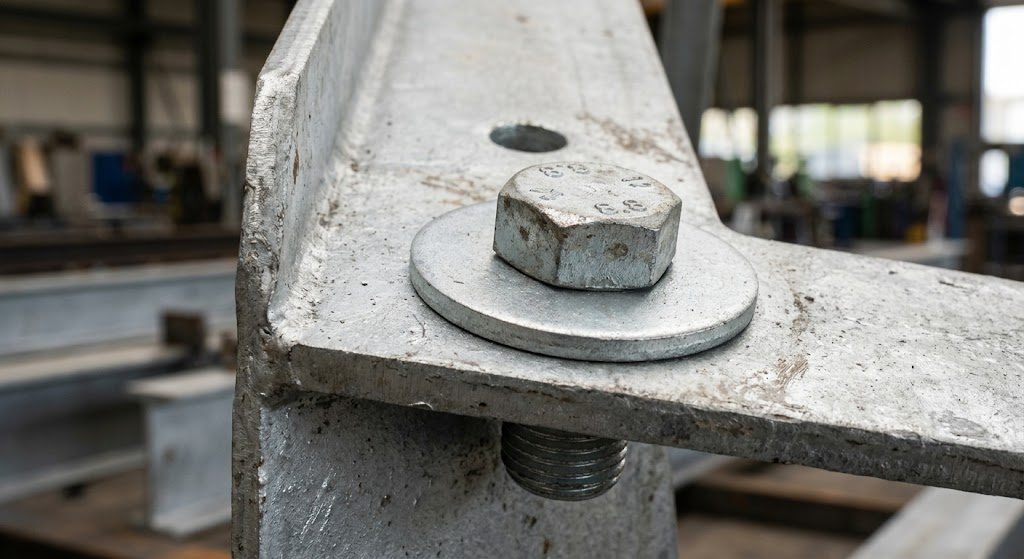
The most suitable washer type depends on the steelwork connection. Three common categories are flat washers, square washers and beveled washers.
| Washer Type | General Shape | Typical Function | Common Steelwork Consideration |
|---|---|---|---|
| Flat washer | Round and flat | Distributes load under a bolt head or nut | Used where the bearing surface is flat and the connection detail allows a round washer |
| Square washer | Square outer profile | Provides a larger bearing area in some structural details | May be used where greater contact area or a structural washer form is specified |
| Beveled washer | One surface is angled | Helps support a fastener on sloped steel surfaces | Often considered for channels, tapered flanges or other non-parallel bearing surfaces |
The correct choice should always follow the connection drawing and project specification. A washer should not be selected only because it fits over the bolt shank.
Flat Washers for Hot Dip Galvanized Bolts
Flat washers are widely used in standard bolt and nut assemblies. They can help distribute pressure from the nut or bolt head over a larger area of the connected material.
For steel structures, flat washers may be suitable when the bearing surface is flat and the bolt assembly does not require a special structural washer shape. Buyers should still confirm the inside diameter, outside diameter, thickness and surface finish required for the assembly.
When ordering hot dip galvanized flat washers, the RFQ should identify whether the washer is supplied as part of a complete bolt, nut and washer set. This helps ensure that the selected components are suitable for the intended assembly.
For galvanized bolt assemblies used in outdoor steelwork, explore our hot dip galvanized bolts category.
When Are Square Washers Used?
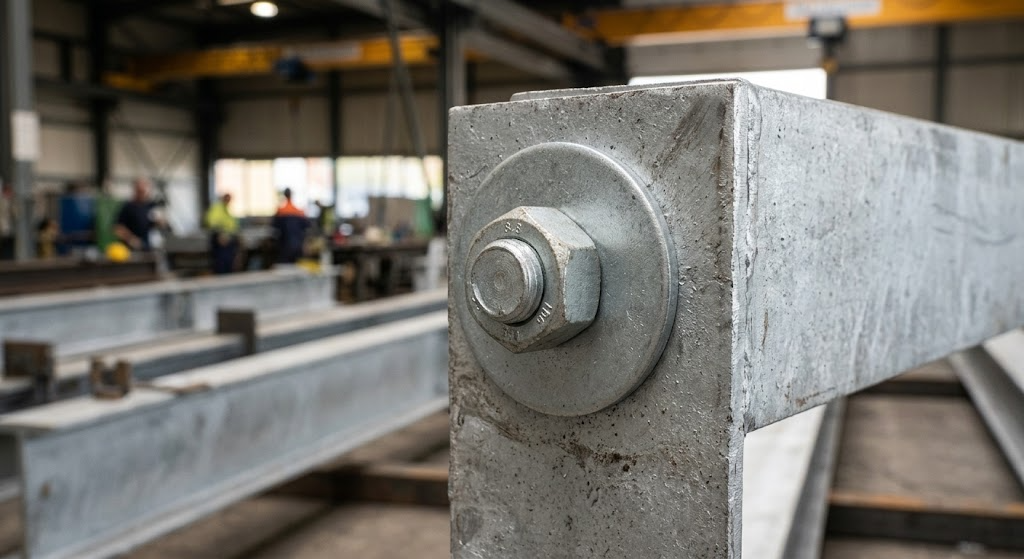
Square washers provide a different outer profile from standard round flat washers. In some steelwork applications, a square washer may offer a larger bearing area or better suit the connection detail shown on the drawing.
Square washers are commonly considered where the steel surface, hole arrangement or structural specification requires a wider contact area. The selected washer dimensions should match the bolt diameter, connected steel thickness and required installation arrangement.
For project supply, buyers should state whether the required washer is a standard square washer, a heavy-duty washer or a custom-made item based on a drawing. Dimensions such as length, width, thickness, hole diameter and required finish should be clearly included.
When Are Beveled Washers Important?
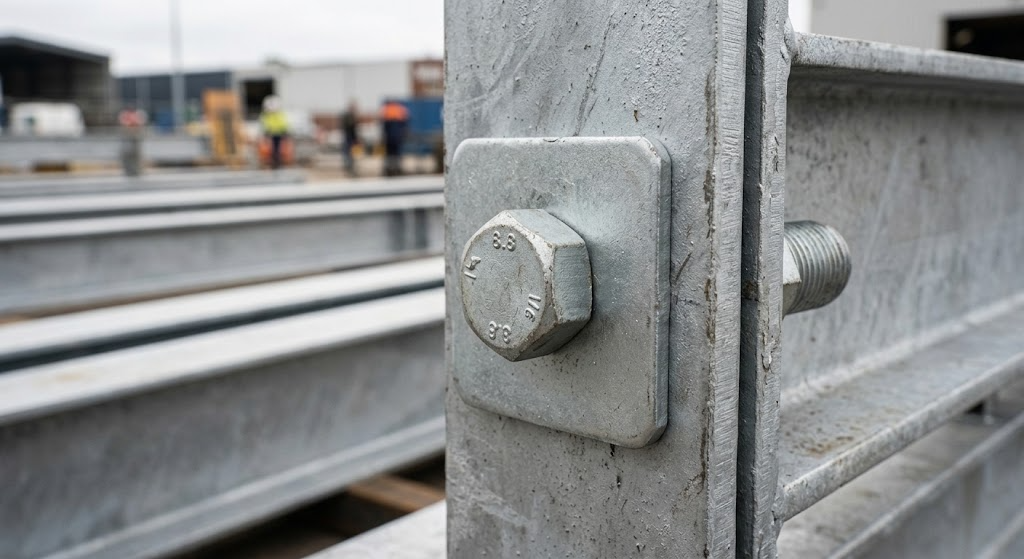
Beveled washers are designed for connections where the bearing surface is not perfectly flat or parallel to the bolt axis. They can be used in structural details involving channels, tapered flanges or other sloped steel surfaces.
Without the correct support arrangement, a nut or bolt head may not bear evenly against the connection surface. This can affect installation quality and may make tightening more difficult.
A beveled washer should be selected according to the actual steel profile and project detail. Buyers should provide the connection drawing, flange profile and bolt specification when requesting this type of washer.
| Connection Condition | Washer Consideration |
|---|---|
| Flat steel plate | Flat washer may be suitable when specified |
| Standard bolt and nut assembly | Confirm washer diameter, thickness and finish |
| Channel or sloped flange connection | A beveled washer may be required by the connection detail |
| Structural connection requiring a wider bearing area | A square or heavy-duty washer may be specified |
| Outdoor galvanized steelwork | Use a washer finish compatible with the required corrosion protection |
| Custom fabricated steel connection | Provide the drawing and fastening arrangement for review |
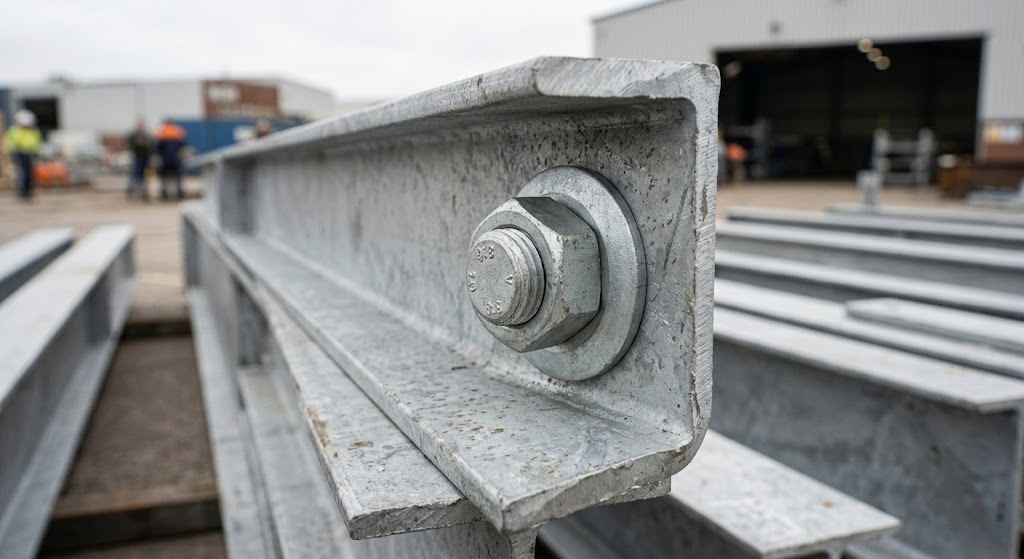
Match the Washer With the Complete Fastener Assembly
A washer should not be purchased as an isolated item when it will be used in a project bolt assembly. Buyers should consider the complete fastening set:
text Bolt + nut + washer + connected steel + installation environment
For example, a hot dip galvanized hex bolt assembly may require matching galvanized nuts and washers. The thread fit, washer hole size, coating requirement and component dimensions should all be compatible with the project specification.
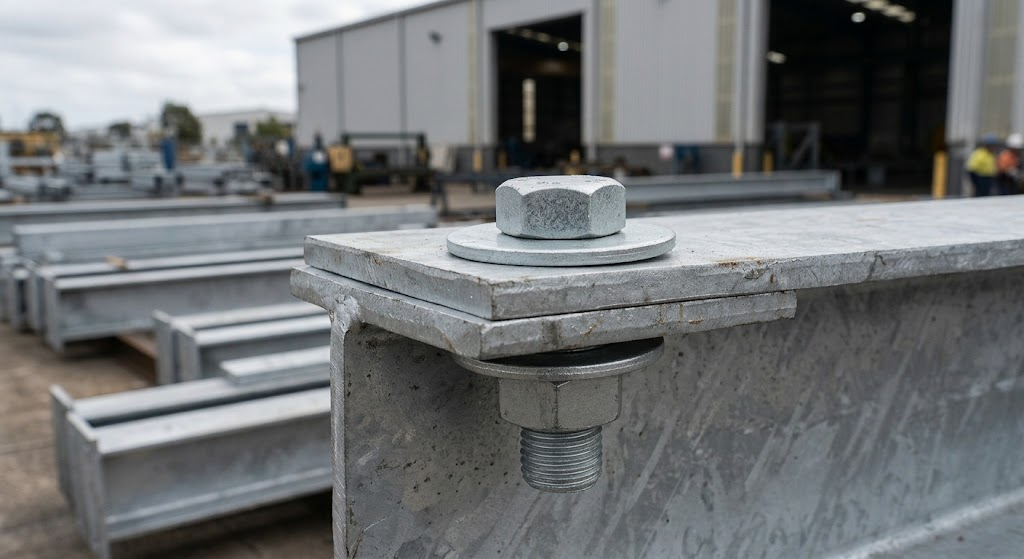
Corrosion Protection for Outdoor Steelwork
Outdoor steel structures may be exposed to rainwater, humidity, industrial pollution, salt-laden air or repeated wet-dry cycles. In these conditions, buyers often use hot dip galvanized fasteners to support corrosion protection across the full assembly.
The washer finish should be considered together with the bolt, nut and connected steel structure. A mixed assembly may not provide the intended corrosion performance, especially where moisture can collect around the bolt head, nut or washer contact area.
Good connection design can also help reduce water retention. Avoiding unnecessary gaps, trapped moisture and incompatible components supports better long-term performance in exposed applications.
For projects involving coastal or high-salt environments, read Marine and Coastal Steelwork: HDG Fasteners vs Stainless Steel.
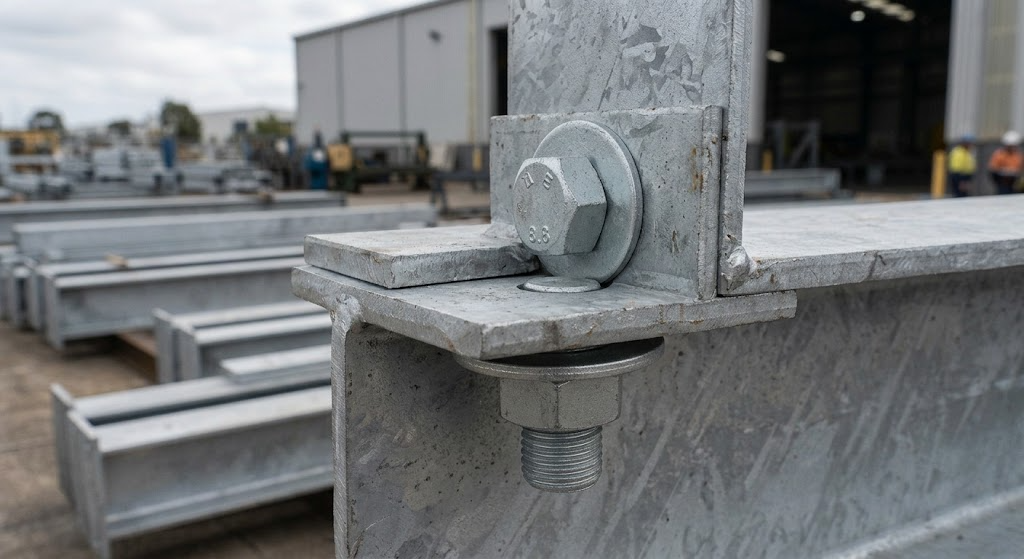
Common Washer Selection Mistakes
| Mistake | Possible Result |
|---|---|
| Selecting washers only by bolt diameter | The outside diameter, thickness or bearing area may not suit the connection |
| Using a flat washer on a sloped bearing surface | The bolt or nut may not bear evenly against the steel surface |
| Omitting washer type from the RFQ | The supplier may quote a standard washer that does not match the drawing |
| Mixing finishes in an outdoor fastening set | Corrosion protection may be inconsistent across the assembly |
| Ignoring washer thickness | The connection may not match the intended installation detail |
| Ordering bolts and washers separately without assembly details | Component compatibility becomes harder to control |
| Not providing a drawing for custom washers | The required profile and dimensions may be unclear |
Frequently Asked Questions
1.Can a standard flat washer be used for every steel structure connection?
No. Flat washers are commonly used on flat bearing surfaces, but some structural details require square washers, beveled washers or another specified washer form.
2.Should washers be hot dip galvanized with outdoor steel structure bolts?
The required finish depends on the project specification and exposure conditions. For outdoor galvanized steel assemblies, buyers often specify a compatible corrosion-protection system for bolts, nuts and washers.
3.What information is needed to quote a beveled washer?
Provide the bolt size, required washer dimensions, connected steel profile, slope or connection detail, surface finish, quantity and drawing.
4.Can washers be supplied with bolts and nuts as a set?
Yes. Providing the complete bolt, nut and washer requirement in the RFQ helps the supplier prepare a more suitable assembly for the intended project application.
---
Related News
Other news you might be interested in
Os Parafusos de Aço Inoxidável Podem Ser Usados com Aço Galvanizado? Guia sobre Corrosão Galvânica
Os parafusos de aço inoxidável podem ser usados com aço galvanizado? Saiba como ocorre a corrosão galvânica, quais condições aumentam o risco e como especificar fixadores compatíveis para projetos ao ar livre e costeiros.

Lista de Verificação de Submissão de Fixadores: Desenhos, MTC, Revestimento e Embalagem
Use esta lista de verificação de submissão de fixadores para projetos de estruturas metálicas. Saiba o que confirmar antes de pedir parafusos, chumbadores e hastes roscadas, incluindo desenhos, MTC, revestimento, ajuste de rosca, embalagem e etiquetas de envio.
Want to know more?
Get in touch with us for more information about our services and products.