Bolt and Nut Matching for High-Strength Fastener Assemblies

Annie Z
AuthorWith over 25 years of experience in fastener production and export sales, we operate our own manufacturing plant and our products are exported to over 50 countries. We are professional experts in bolts, nuts, washers, anchor bolts, and customized fasteners.
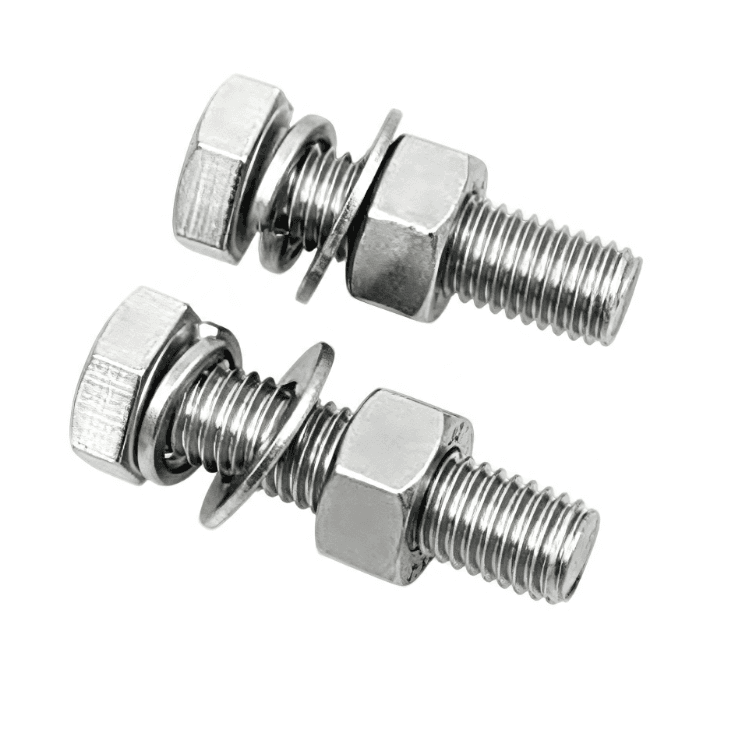
A high‑strength bolt should not be selected separately from its nut.
The bolt, nut, washer, thread, material, strength class, and surface finish all work together as one fastening assembly. If one component is incorrectly selected, the joint may be difficult to tighten, unable to achieve the required clamping force, or more likely to loosen or fail during service.
This is especially important for machinery, steel structures, equipment installation, power projects, and other applications using Grade 8.8, 10.9, or 12.9 bolts.
Why Bolt and Nut Matching Matters
The bolt and nut must have compatible:
- Nominal diameter
- Thread pitch
- Thread tolerance
- Strength or property class
- Material
- Surface finish
- Application requirements
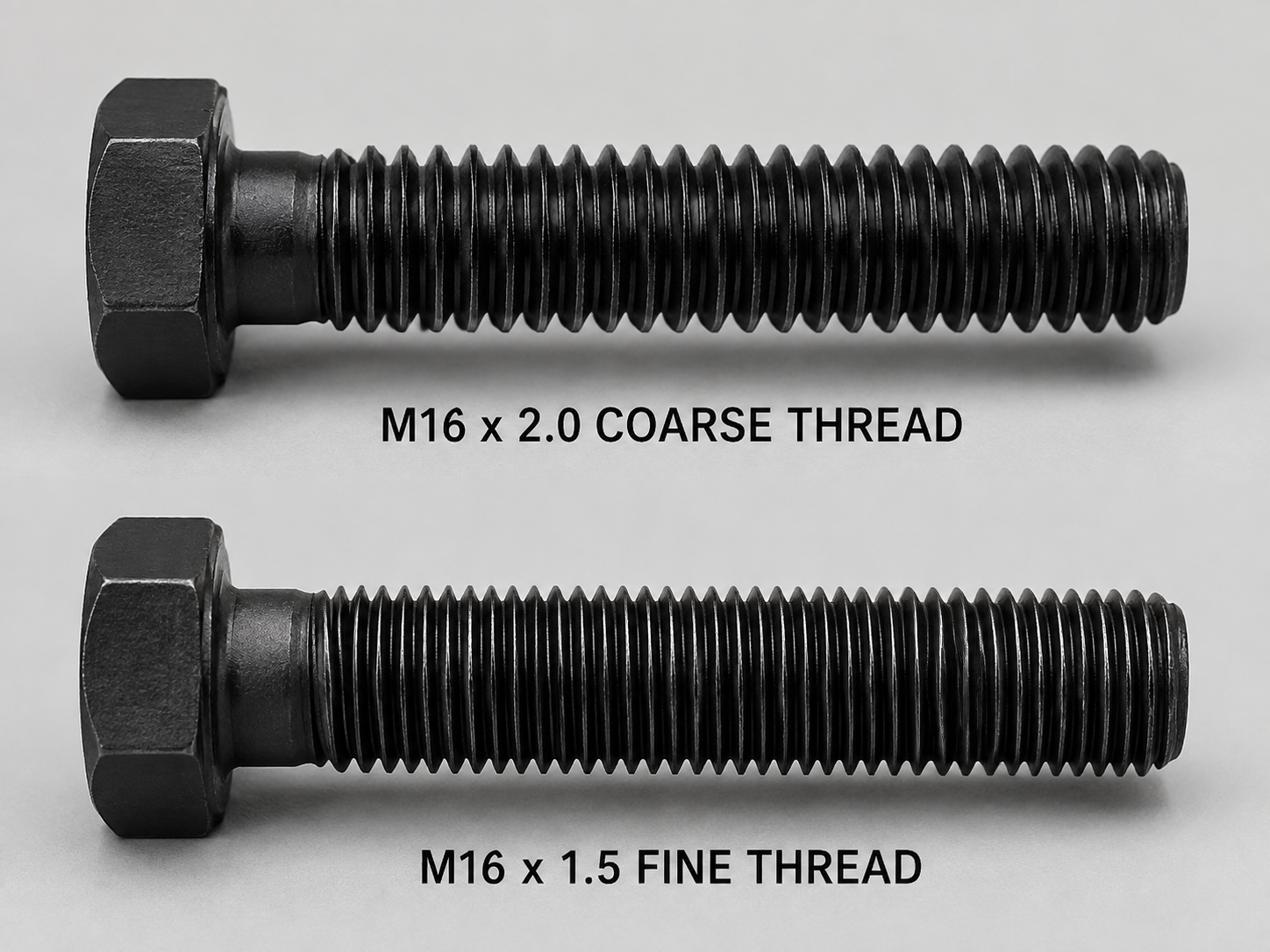
A nut with the correct diameter may still be unsuitable if the thread pitch is different. For example, an M16 coarse‑thread nut should not be used with an M16 fine‑thread bolt unless the thread pitch is confirmed to be the same.
The nut must also provide enough proof load and thread engagement for the bolt. A high‑strength bolt paired with a lower‑capacity nut may cause thread stripping or nut failure before the bolt reaches its intended performance.
Bolt Strength Class and Nut Property Class
Metric bolts are commonly marked with strength classes such as:
- 4.8
- 6.8
- 8.8
- 10.9
- 12.9
Metric nuts are usually identified by a property class, such as:
- Class 5
- Class 6
- Class 8
- Class 10
- Class 12
The numbers used for nuts and bolts do not have exactly the same meaning. A bolt marked 8.8 and a nut marked Class 8 are related in common ISO property‑class systems, but they are not simply two identical labels.
The following table can be used as a general starting point for selection:
| Bolt strength class | Common nut property class to review | Typical application |
|---|---|---|
| 4.8 | Class 4 or higher | General fastening |
| 6.8 | Class 6 or higher | Machinery and equipment assembly |
| 8.8 | Class 8 or higher | Structural and industrial fastening |
| 10.9 | Class 10 or 12 | Heavy‑duty machinery and equipment |
| 12.9 | Class 12 | High‑strength mechanical connections |
This table is a practical guide, not a replacement for the project standard or engineering drawing. The final combination should be checked against the applicable standard, bolt diameter, thread type, load, tightening method, and joint design.
For important structural or safety‑related connections, buyers should request the actual bolt and nut specifications rather than relying only on a general description such as "high‑strength nut."
Grade 8.8 Bolts and Matching Nuts
Grade 8.8 bolts are widely used in:
- Steel structures
- Machinery frames
- Equipment supports
- Industrial brackets
- Construction equipment
- General heavy‑duty fastening
A Class 8 nut is commonly reviewed for use with a Grade 8.8 bolt when the applicable standard and joint requirements allow this combination.
The buyer should still confirm:
- Bolt diameter and pitch
- Nut property class
- Nut height
- Thread tolerance
- Washer type
- Tightening requirement
- Surface finish
For standard industrial orders, a matched Grade 8.8 bolt and Class 8 nut assembly is often a practical starting point. The exact requirement may be different for structural joints or special load conditions.
Grade 10.9 and 12.9 Bolt Assemblies
Grade 10.9 and 12.9 bolts are used when higher tensile strength is required.
Typical applications include:
- Heavy machinery
- Equipment bases
- Mold and tooling assemblies
- Industrial transmission equipment
- High‑load mechanical connections
- Parts subject to repeated tightening or mechanical stress
For Grade 10.9 bolts, buyers commonly review Class 10 or Class 12 nuts. For Grade 12.9 bolts, a Class 12 nut is commonly considered.
A higher bolt grade does not automatically make the entire assembly safer. The joint may still be limited by:
- Nut strength
- Thread engagement
- Hole size
- Washer bearing area
- Base material
- Tightening accuracy
- Joint design
The assembly should be designed as a complete connection rather than selected only by choosing the highest available bolt grade.
Thread Diameter and Pitch Must Match
The bolt and nut must have the same nominal diameter and thread pitch.
For example:
- M12 x 1.75 bolt requires an M12 x 1.75 nut
- M16 x 2.0 bolt requires an M16 x 2.0 nut
- 1/2‑13 UNC bolt requires a 1/2‑13 UNC nut
An M16 nut is not automatically compatible with every M16 bolt. Fine‑thread and coarse‑thread products have different pitches and should not be mixed.
For imperial products, buyers should also specify:
- UNC, UNF, or BSW thread
- Nominal diameter
- Threads per inch
- Nut standard
- Bolt standard
- Required grade or material
This is particularly important for machinery replacement orders, where metric and imperial fasteners may look similar but cannot be correctly assembled together.
Matching Washers with the Bolt and Nut
Washers also affect the performance of a bolted joint.
A suitable washer can:
- Distribute the clamping load
- Protect the connected surface
- Reduce local deformation
- Support slotted or oversized holes
- Improve the consistency of the joint
For high‑strength applications, buyers should confirm:
- Washer inside diameter
- Outside diameter
- Thickness
- Material
- Hardness or property class
- Surface finish
- Applicable washer standard
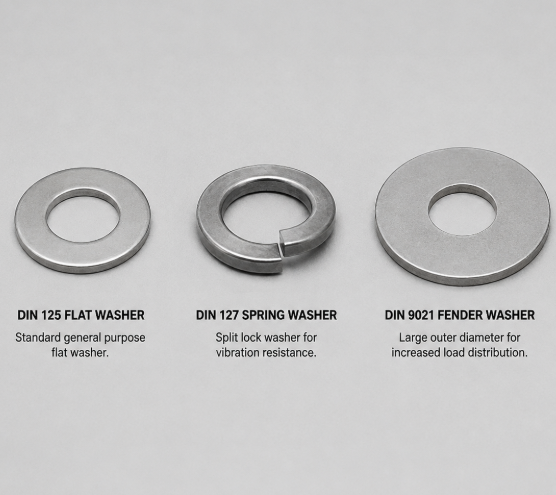
DIN 125 flat washers may be suitable for general fastening, while enlarged‑hole or structural washers may be more appropriate for slotted holes, steel structures, or softer materials.
A spring washer or locking washer should not be added automatically to every high‑strength joint. The correct locking method depends on the joint design, vibration level, tightening method, and project specification.
Surface Finish and Thread Fit
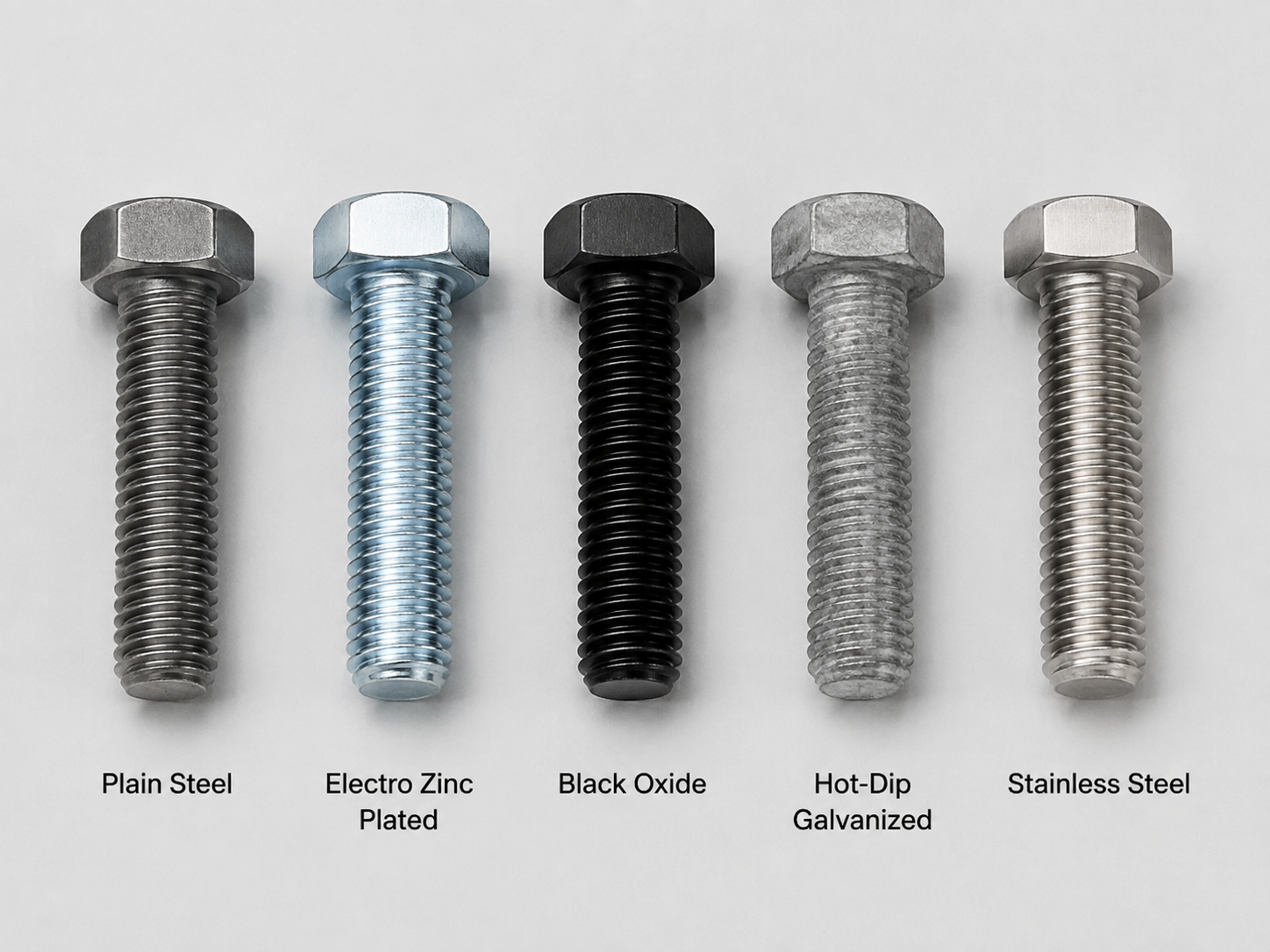
The bolt, nut, and washer should have compatible surface finishes.
Common options include:
For hot‑dip galvanized assemblies, coating thickness can affect thread fit. The nut and bolt should be produced or selected as a compatible pair. Buyers should confirm whether the nut is intended for use with the specified galvanized bolt.
Mixing different materials or coatings may also affect corrosion behavior. For example, stainless steel and carbon steel components may require additional review in wet, marine, or chemically exposed environments.
What Should Buyers Include in an RFQ?
For an accurate quotation, buyers should provide:
| Item | Information to Confirm |
|---|---|
| Bolt standard | DIN 931, DIN 933, ISO, ASTM, GB, or other |
| Bolt size | Diameter, length, and thread pitch |
| Bolt class | 8.8, 10.9, 12.9, or other |
| Nut standard | DIN 934, DIN 6923, ASTM A194 2H, etc. |
| Nut property class | Class 8, 10, 12, or project‑specific requirement |
| Washer | Type, size, thickness, and standard |
| Material | Carbon steel, alloy steel, SS304, SS316 |
| Finish | Plain, zinc plated, black, or hot‑dip galvanized |
| Quantity | Pieces, sets, cartons, or project quantity |
| Documents | Inspection report, material certificate, or other requirements |
If the buyer is unsure about the correct combination, a drawing, previous order specification, or sample can help the supplier confirm the required bolt, nut, and washer set.
---
Related News
Other news you might be interested in
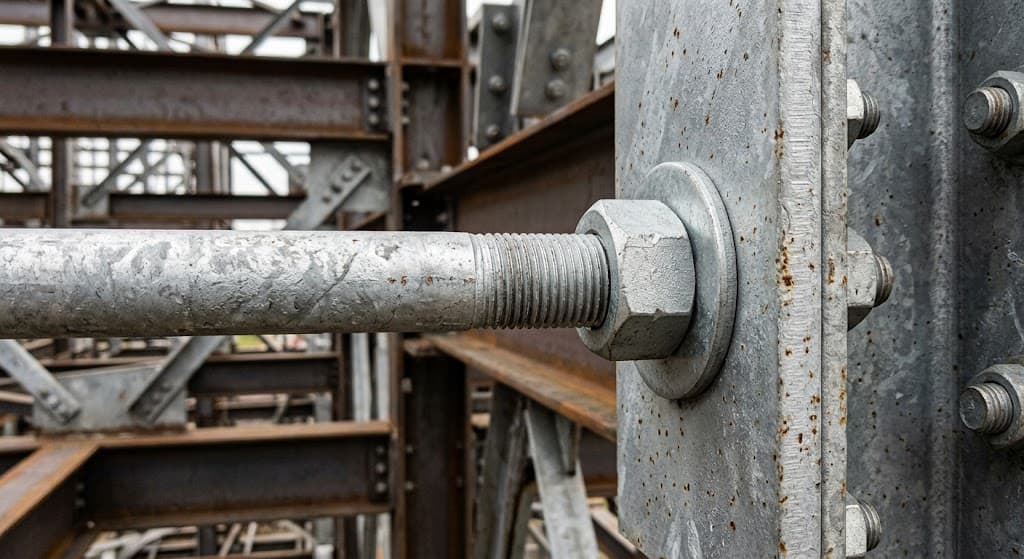
How to Specify Hot Dip Galvanized Tie Rods for Steel Bracing: Diameter, Thread Length and RFQ Checklist
Learn how to specify hot dip galvanized tie rods for steel bracing and tension applications. Check diameter, thread length, coating, matching components and RFQ requirements.
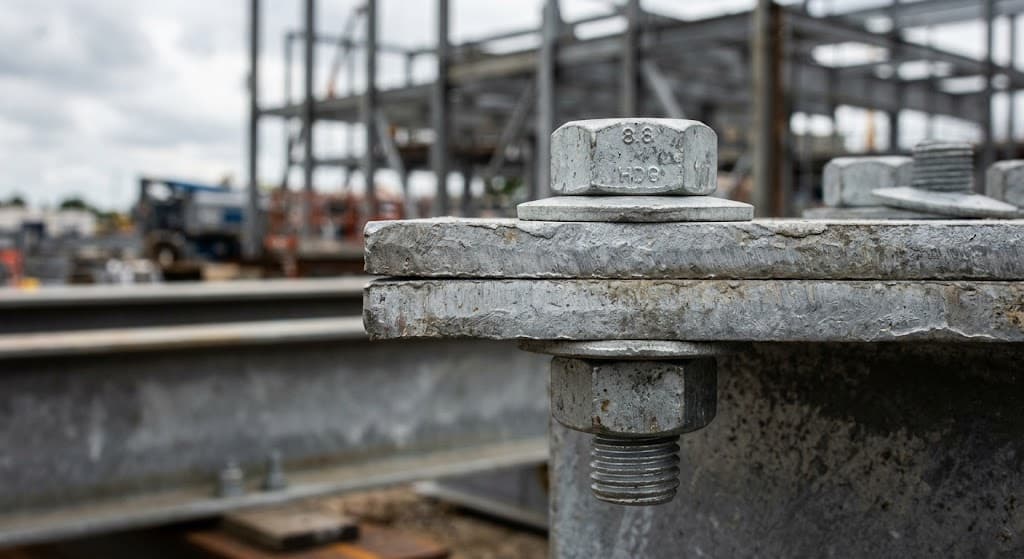
How to Select Hot Dip Galvanized Washers for Steel Structures
Learn how to select hot dip galvanized flat, square and beveled washers for steel structures. Compare washer functions, bolt compatibility, corrosion protection and RFQ requirements.
Want to know more?
Get in touch with us for more information about our services and products.