Q235 vs. Q345 Steel for HDG Dock Washers: A Sourcing Advice from a Chinese Manufacturer

Annie Z
AuthorWith over 25 years of experience in fastener production and export sales, we operate our own manufacturing plant and our products are exported to over 50 countries. We are professional experts in bolts, nuts, washers, anchor bolts, and customized fasteners.
If you are an overseas purchasing manager buying heavy-duty dock washers from China, you have probably stared at a quotation sheet and seen material grades like "Q235" or "Q345."
For many buyers, Chinese steel grades can be confusing. More importantly, picking the wrong steel grade for a heavy timber washer or marine bulkhead project can either lead to structural failure (if the steel is too soft) or wasted money (if you over-specify).
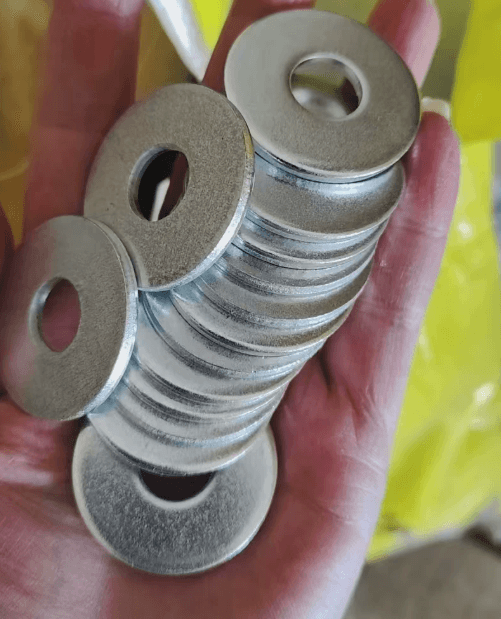
As a direct fastener manufacturer operating out of Handan, Hebei—the core manufacturing hub for steel fasteners in China—our stamping workshop punches thousands of tons of dock washers every year. In this guide, the Hotop Fasteners team strips away the sales talk to give you honest, practical advice on how to choose between Q235 and Q345 steel for your Hot Dip Galvanized (HDG) washers, and how to avoid common sourcing traps.
1. What Exactly Are Q235 and Q345?
In Chinese steel standards (GB), the "Q" stands for Yield Strength (Qu Fu Dian in pinyin), and the number represents the minimum yield strength in Megapascals (MPa).
- Q235 Steel: This is standard mild carbon steel. It has a yield strength of 235 MPa. It is highly ductile, easy to weld, and very easy to stamp. Western Equivalents: ASTM A36 (USA), S235JR (Europe).
- Q345 Steel: This is a low-alloy, high-strength structural steel. It has a yield strength of 345 MPa. It is significantly harder and can bear much heavier loads before bending. Western Equivalents: ASTM A572 Grade 50 (USA), S355JR (Europe).
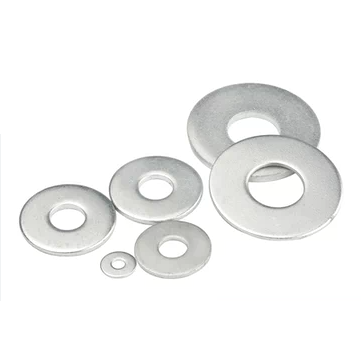
Quick Comparison Table
| Chinese Grade | International Equivalent | Yield Strength | Raw Material Cost | Stamping Difficulty |
|---|---|---|---|---|
| Q235 | ASTM A36 / EN S235 | 235 MPa | Baseline | Easy (Less wear on molds) |
| Q345 | ASTM A572 Gr.50 / EN S355 | 345 MPa | Approx. 10-15% Higher | Harder (Requires heavy tonnage presses) |
2. When to Choose Q235 for Dock Washers
For about 70% of standard dock and timber framing applications, Q235 is perfectly fine. The entire purpose of a dock washer (which is usually thick, ranging from 3/16" to 3/8") is to create a massive bearing surface to stop the bolt head or nut from crushing into the soft wood. Because the wood itself is the weakest point, a heavy Q235 steel washer is usually more than strong enough to distribute the load.
Use Q235 if:
- You are bolting standard wooden piers, boardwalks, or landscaping timber.
- You are using standard-strength HDG carriage bolts or timber bolts (like Grade 2 or Class 4.8).
- You want to keep your import costs down. Q235 is the most abundant and cost-effective steel in the Chinese market.
3. When You MUST Upgrade to Q345
While Q235 is great for standard wood, it will fail if you pair it with high-tension structural applications. If you tighten a high-strength bolt too hard against a Q235 washer, the center of the washer will cave in, forming a bowl shape. In the hardware industry, we call this "dishing" or "cupping."
You must specify Q345 if:
- You are building heavy marine bulkheads or seawalls: When HDG tie rods anchor a retaining wall, the tension is immense. Q345 prevents the dock washer from deforming under the earth's pressure.
- You are using High-Strength Bolts: If your Bill of Materials (BOM) specifies Grade 8.8, Grade 10.9, or ASTM A325 structural bolts, you cannot use a soft Q235 washer. The clamping force of the bolt will crush the washer.
- You are bolting steel-to-steel: If the washer is bridging a slotted hole on a steel channel (like Unistrut or solar racking) rather than wood, Q345 provides the rigidity needed to prevent the washer from buckling into the slot.
4. The Export Reality: How to Avoid the "Grade Swapping" Trap
Here is a reality check from inside the Chinese export market. Because Q235 is cheaper and easier to punch out on a stamping machine (it causes less wear and tear on the factory's tooling molds), some trading companies will quote you the price of Q345 but secretly ship you Q235 dock washers.
Once a washer is covered in a thick 50μm layer of rough, grey hot dip galvanized zinc, you cannot tell what steel is underneath just by looking at it. You will only find out it is the wrong steel when your construction crew tightens it and the washer bends.
How to protect your supply chain:
- Deal with real stamping factories: Ask your supplier for photos of their stamping workshop. A real factory doesn't mind taking a quick smartphone video of steel coils being punched.
- Demand Material Test Reports (MTRs): Before paying the balance, require the supplier to provide the mill test certificate from the raw steel batch used to stamp your washers.
- Test it on-site: If you order Q345, the washers should be noticeably difficult to scratch or bend compared to standard mild steel hardware.
5. The Hotop Fasteners Approach
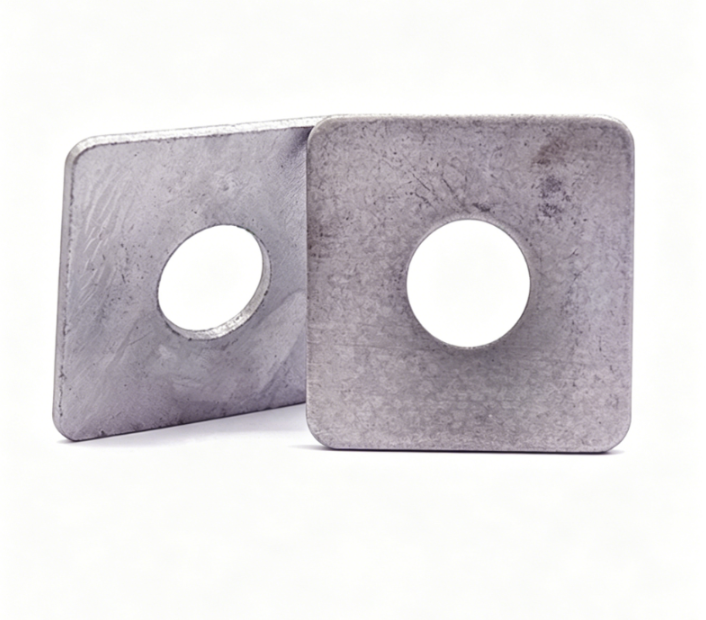
At Hotop Fasteners, we do not play games with steel grades. If your engineering drawing requires the heavy-duty rigidity of Q345 for a marine project, we procure certified Q345 steel plate, stamp it on our high-tonnage hydraulic presses, tumble the edges to remove sharp burrs, and send it to the zinc bath for genuine ASTM A153 hot dip galvanizing.
We understand that buying heavy bulk fasteners from a Chinese supplier requires trust. That trust is built on receiving exactly the material grade you paid for, securely packed in moisture-proof export cartons on solid wooden pallets, ready for immediate use at your job site.
Related News
Other news you might be interested in
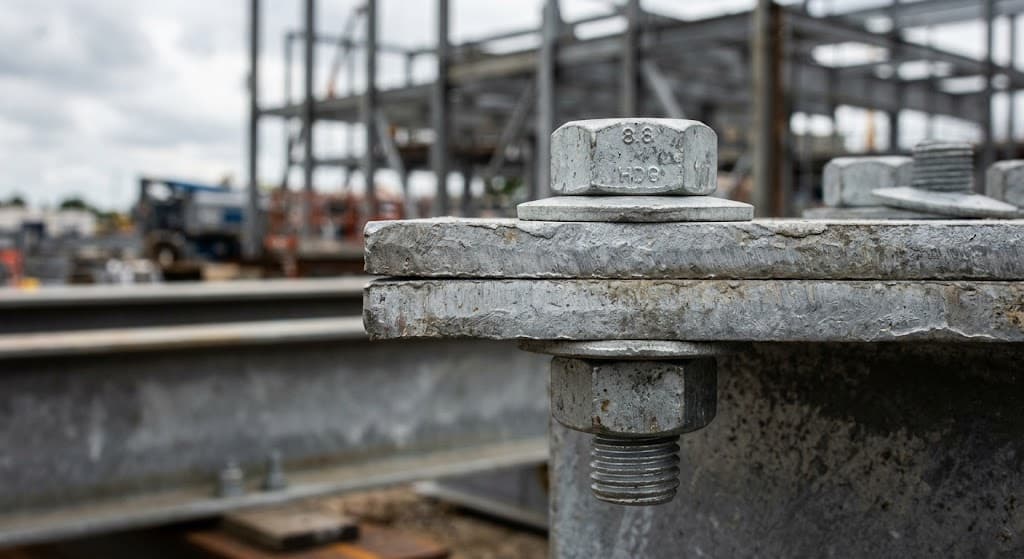
How to Select Hot Dip Galvanized Washers for Steel Structures
Learn how to select hot dip galvanized flat, square and beveled washers for steel structures. Compare washer functions, bolt compatibility, corrosion protection and RFQ requirements.
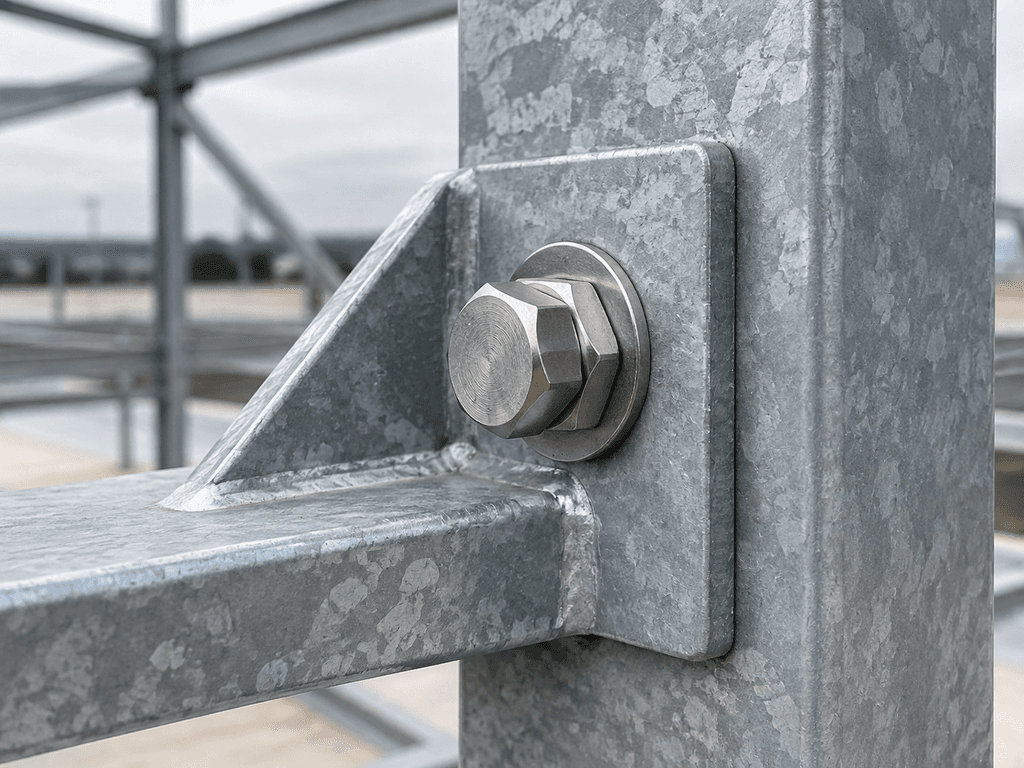
Can Stainless Steel Bolts Be Used with Galvanized Steel? Galvanic Corrosion Guide
Can stainless steel bolts be used with galvanized steel? Learn how galvanic corrosion occurs, which conditions increase risk, and how to specify compatible fasteners for outdoor and coastal projects.
Want to know more?
Get in touch with us for more information about our services and products.