Round vs. Square HDG U-Bolts: A Structural Selection Guide for Piping and Framing

Annie Z
AuthorWith over 25 years of experience in fastener production and export sales, we operate our own manufacturing plant and our products are exported to over 50 countries. We are professional experts in bolts, nuts, washers, anchor bolts, and customized fasteners.
In structural engineering and industrial piping, U-bolts are the primary fasteners used to secure conduits, pipes, and structural tubing to fixed frames. While they appear simple, selecting the incorrect U-bolt geometry for your application is a critical engineering error.
Mismatching a U-bolt's shape to the profile of the clamped material results in "point-loading"—concentrating massive clamping force onto a minuscule surface area.
This causes pipe deformation, structural wobbling, and accelerated fatigue failure. Furthermore, when these installations are outdoors, specifying Hot Dip Galvanized (HDG) U-bolts is mandatory to prevent environmental corrosion. This technical guide breaks down the precise structural differences between Round and Square HDG U-Bolts, how they distribute load, and how to select the right specification for your project.
1. Round HDG U-Bolts: Engineered for Cylindrical Profiles
The Structural Mechanism
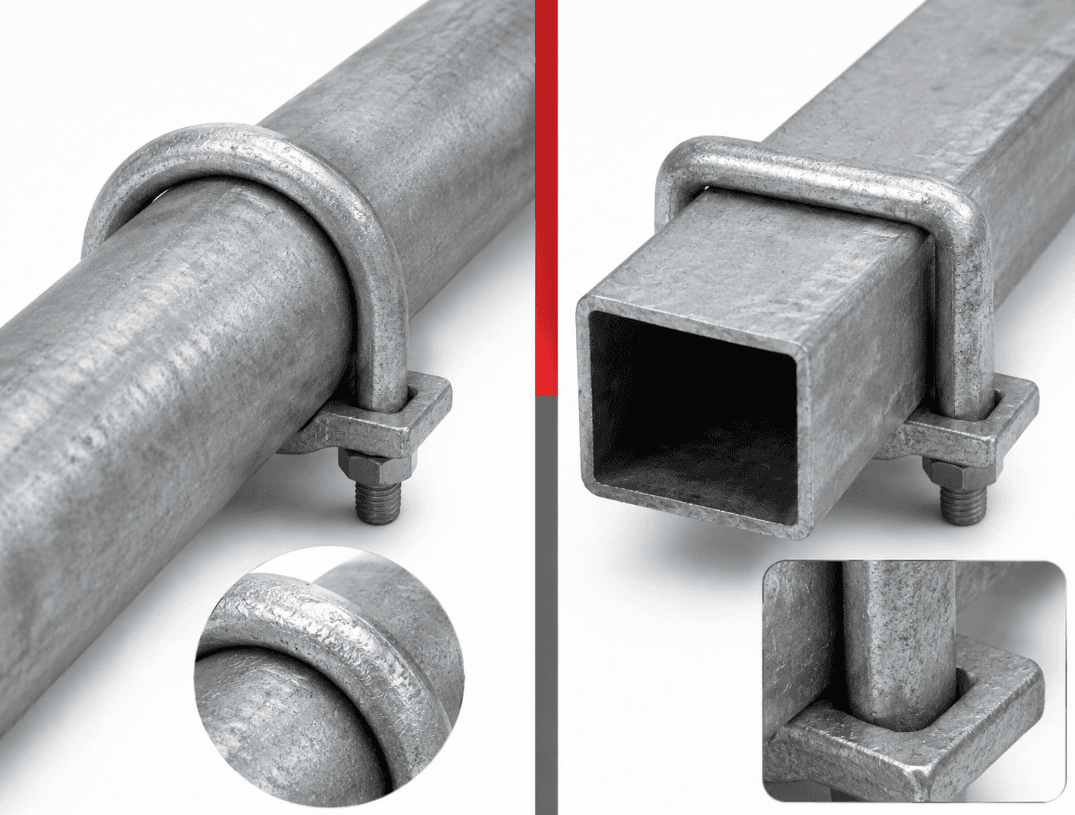
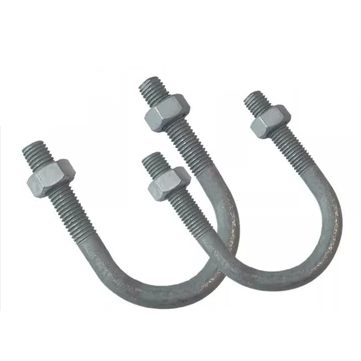
Round U-bolts feature a smooth, semi-circular 180-degree curve. They are engineered exclusively to secure cylindrical objects. When tightened, the inner curve of the U-bolt makes continuous, flush contact with the Outer Diameter (OD) of the pipe. This uniform contact distributes the clamping load evenly across the pipe's surface, preventing localized crushing.
Primary Applications:
- Petrochemical & Water Pipelines: Securing heavy steel or ductile iron pipes to I-beam supports.
- Fire Sprinkler Systems: Suspending overhead water mains in commercial infrastructure.
- Marine & Offshore: Clamping cylindrical handrails or masts on ships and oil rigs where saltwater corrosion is extreme.
The Manufacturing Standard
Round U-bolts must strictly conform to the actual OD of the pipe, not just the Nominal Pipe Size (NPS). For example, a standard 2" pipe actually has an OD of 60.3mm (2.375"). A properly manufactured round U-bolt (such as those adhering to DIN 3570) will have an inner width precisely calibrated to hug that 60.3mm dimension without binding or leaving a loose gap.
2. Square HDG U-Bolts: Engineered for Hollow Sections
The Structural Mechanism
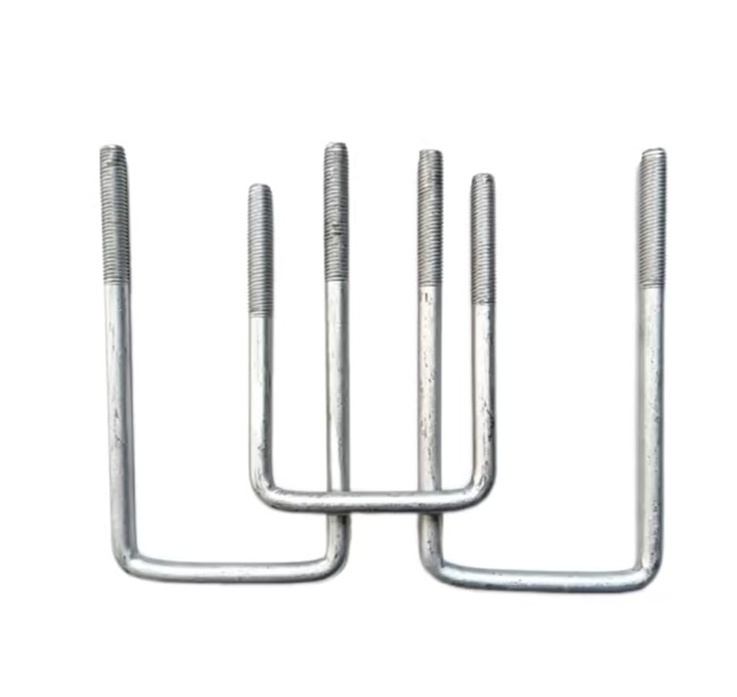
Square U-bolts are defined by a flat top section and two 90-degree bends. They are designed exclusively for Square Hollow Sections (SHS), Rectangular Hollow Sections (RHS), and timber beams. When tightened, the flat inner top of the U-bolt sits completely flush against the flat side of the square tube, while the two straight legs run perfectly parallel down the adjacent sides. This creates a highly stable, three-sided locking mechanism that completely prevents the clamped tube from twisting or vibrating.
Primary Applications:
- Solar Mounting Racks: Clamping square torque tubes and cross-bracing to main support posts in utility-scale solar farms.
- Trailer Axles and Chassis: Securing heavy square leaf springs to the main rectangular chassis of boat and utility trailers.
- Agricultural Frameworks: Assembling the square steel profiles of greenhouse frames and heavy farm machinery.
The Bending Challenge (Zinc Cracking)
Square U-bolts are significantly harder to manufacture correctly than round ones. A sharp 90-degree bend creates extreme internal stress in the steel. If improperly bent and then hot dip galvanized, the 40μm to 85μm zinc coating will form micro-cracks at the inner corners. Over time, these cracks expose bare steel, leading to rapid rust. High-quality manufacturing requires a controlled inner corner radius to relieve stress and ensure uniform zinc adhesion.
3. The Consequences of Mismatching Profiles
Engineers and contractors sometimes substitute one shape for the other due to lack of inventory. This is a structural hazard.
What happens if you use a Round U-Bolt on a Square Tube?
The round curve will only contact the four sharp corners of the square tube. When tension is applied via the nuts, the U-bolt will dig into and crush the corners of the tubing. The clamping force is severely compromised, and the tube will eventually slip or vibrate loose.
What happens if you use a Square U-Bolt on a Round Pipe?
The flat top of the square U-bolt will only touch the round pipe at a single tangential point at the top, and the two straight legs will only touch the sides tangentially. This creates three extreme stress concentration points. Under heavy load, the square U-bolt will dent or puncture the pipe wall, which is catastrophic for pressurized fluid lines.
4. The Universal Rule for HDG Fasteners: Overtapping
Whether you select a round or square profile, if the U-bolt is Hot Dip Galvanized, the matching nuts must be overtapped.
Hot dip galvanizing immerses the steel in molten zinc, adding significant thickness to the threaded legs. A standard-sized nut will immediately seize on an HDG U-bolt. At Hotop Fasteners, we strictly overtap the internal threads of our heavy hex nuts (typically +0.4mm to +0.8mm) after the galvanizing process. This critical step ensures that field installers can thread the nuts by hand, achieving the exact specified torque without thread galling.
5. Procurement Guide: How to Specify U-Bolts Accurately
To ensure you receive the exact structural hardware required, provide your manufacturer with the following dimensions:
When Ordering Round U-Bolts:
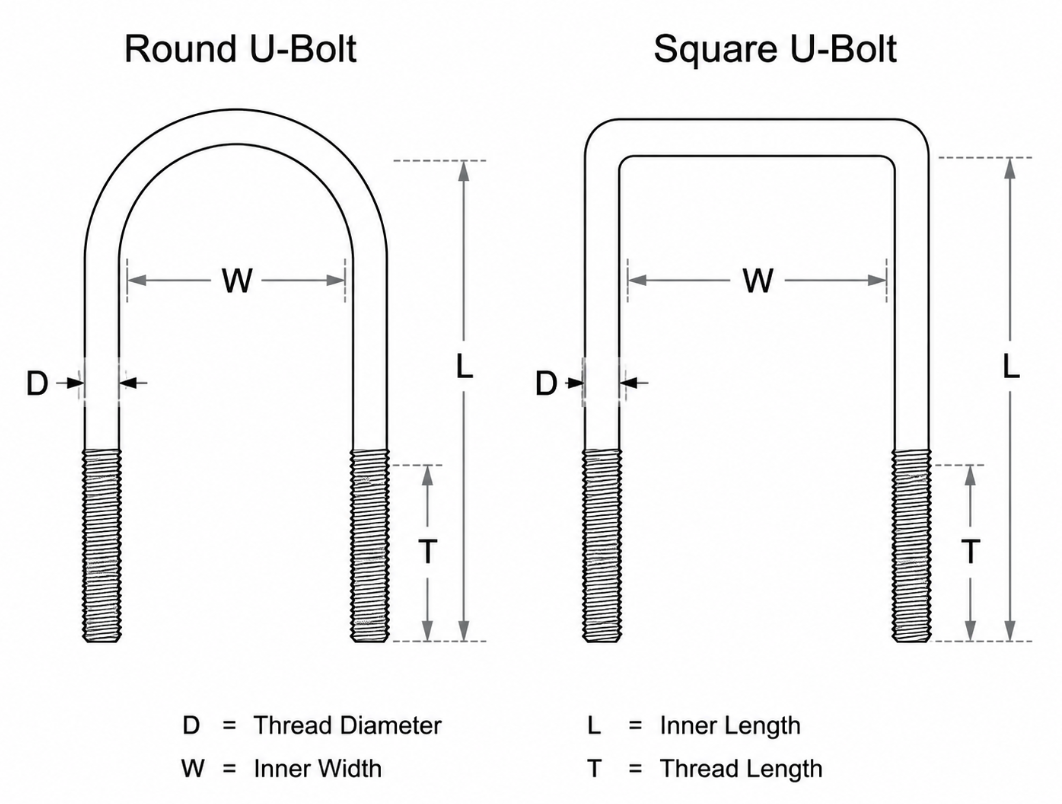
- Thread Diameter (D): The thickness of the steel rod (e.g., M12).
- Pipe OD (Inner Width - W): Do not just give the nominal pipe size; provide the exact Outer Diameter (e.g., 114.3mm for a 4" pipe).
- Thread Length (T): Ensure sufficient length for the mounting plate, double nuts, and washers.
When Ordering Square U-Bolts:
- Thread Diameter (D): The thickness of the steel rod.
- Inner Width (W): The exact distance between the inside of the legs, matching the width of the square tube.
- Inner Length (L): The distance from the flat inside top to the end of the threaded legs.
- Thread Length (T): The threaded portion required for secure fastening.
Conclusion
Selecting between a round and square HDG U-bolt is not a matter of preference; it is dictated entirely by the geometry of your structural framework. Precision matching ensures optimal load distribution, while the hot dip galvanized coating guarantees the fastener will survive the harshest industrial and outdoor environments.
Related News
Other news you might be interested in
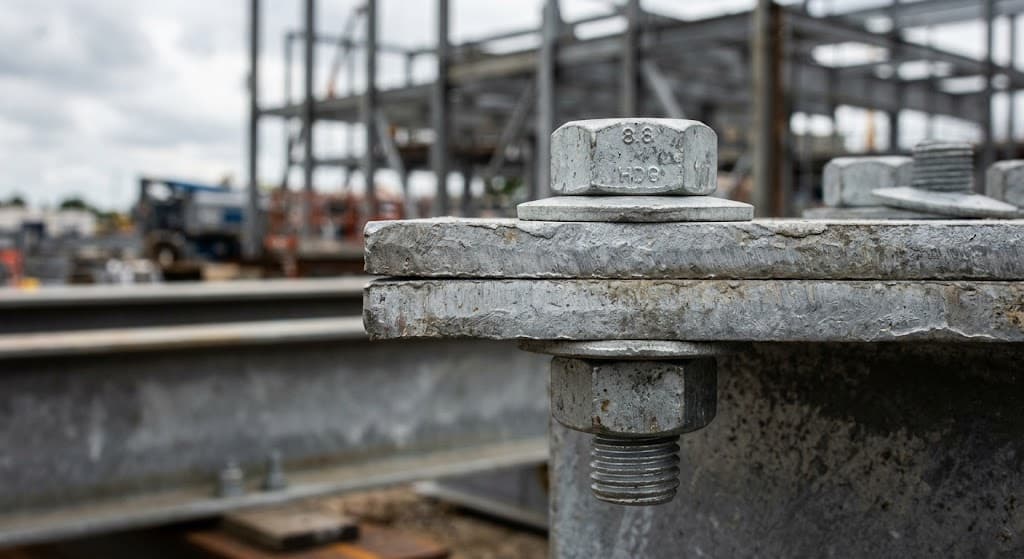
How to Select Hot Dip Galvanized Washers for Steel Structures
Learn how to select hot dip galvanized flat, square and beveled washers for steel structures. Compare washer functions, bolt compatibility, corrosion protection and RFQ requirements.
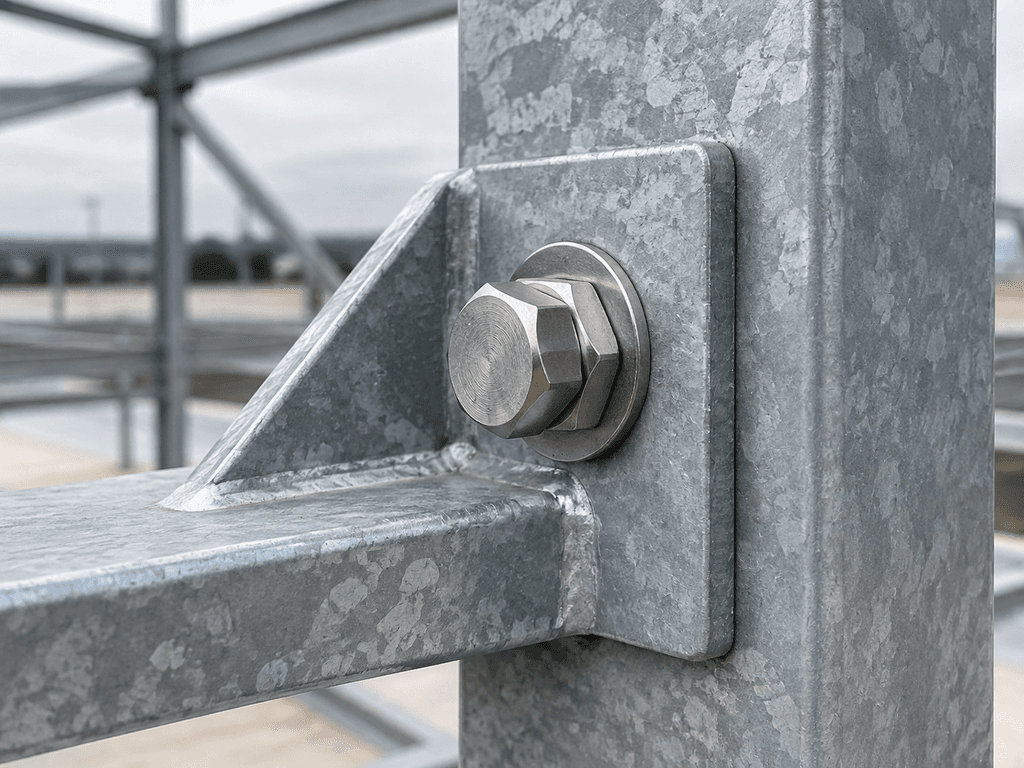
Can Stainless Steel Bolts Be Used with Galvanized Steel? Galvanic Corrosion Guide
Can stainless steel bolts be used with galvanized steel? Learn how galvanic corrosion occurs, which conditions increase risk, and how to specify compatible fasteners for outdoor and coastal projects.
Want to know more?
Get in touch with us for more information about our services and products.