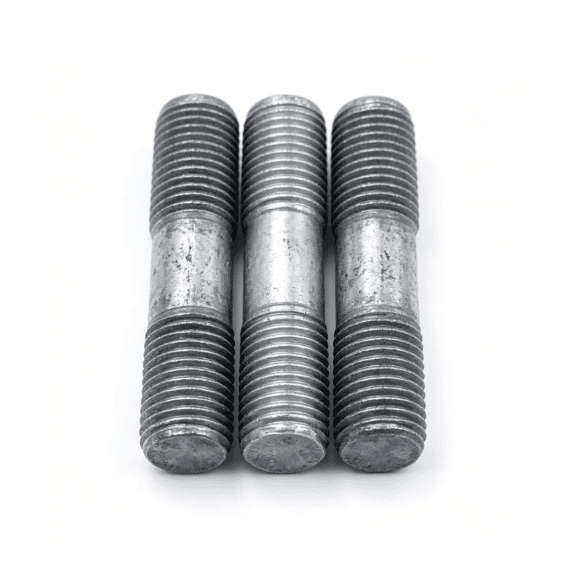
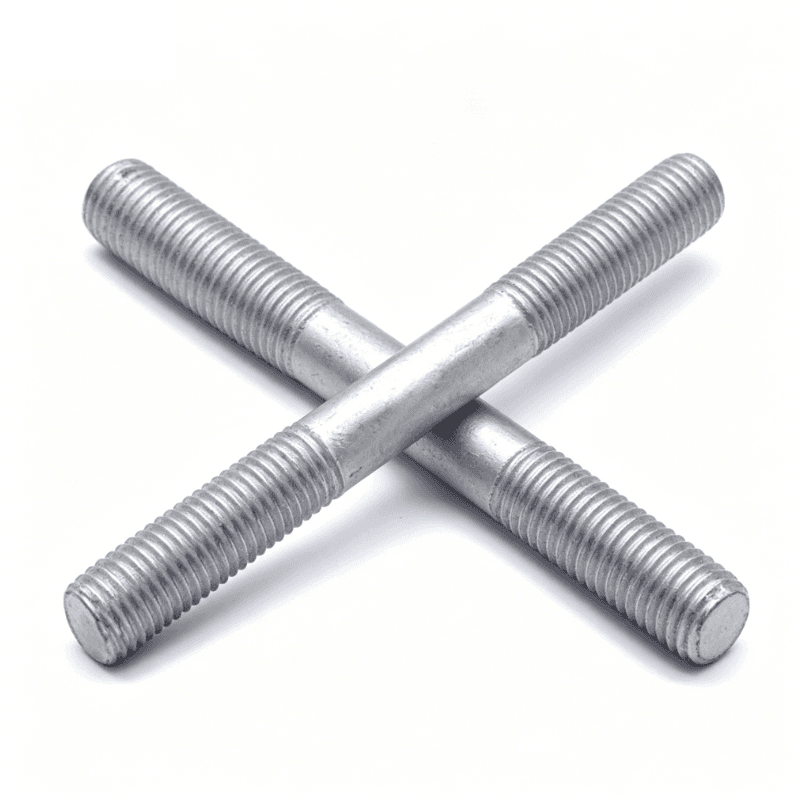
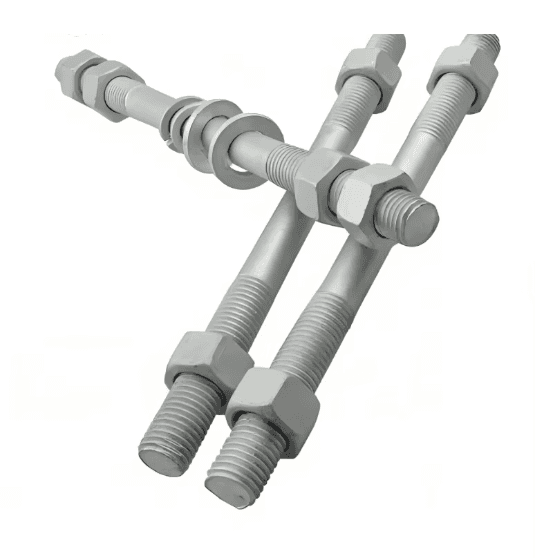
Heavy-Duty HDG Double End Studs for Industrial Flanges
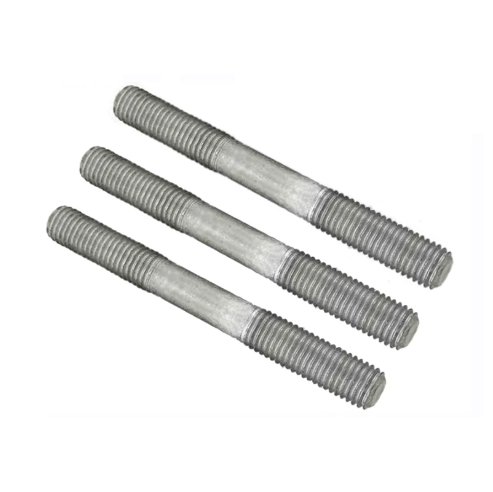
In industrial piping, valve assembly, and heavy machinery, a standard hex bolt is not always the best solution. When joining massive high-pressure flanges or casting blocks, engineers rely on Double End Studs. These fasteners feature threads on both ends with a solid, unthreaded shank in the middle. They allow for a more uniform transfer of tension when tightened with a nut on each side and are essential for blind-tapped hole installations.
However, when pipelines run outdoors, through coastal desalination plants, or across abrasive desert environments, raw steel studs will rapidly corrode, leading to catastrophic flange leaks.
Hotop Fasteners manufactures High-Strength Hot Dip Galvanized (HDG) Double End Studs designed for severe-condition infrastructure. We apply a thick, metallurgically bonded zinc-iron alloy coating (typically 50μm to 85μm) capable of withstanding heavy sand abrasion and high salinity. By pairing these studs with our precision-overtapped heavy hex nuts, we guarantee a secure, jam-free assembly for your most critical pressure vessels and structural joints.
Why Specify HDG Double End Studs from Hotop Fasteners?
1.The "Double Thread" HDG Challenge
Hot dip galvanizing a fastener with threads on both ends doubles the risk of zinc pooling. If the molten zinc cools and hardens inside the thread valleys, the installation crew will not be able to thread the nuts on either side. We utilize high-speed centrifuge technology immediately as the studs exit the zinc bath. This clears excess zinc from the thread pitch while maintaining the heavy-duty coating thickness on the exposed center shank.
2.Tap End vs. Nut End Precision
We don't just cut threads randomly. We manufacture strictly to engineering standards. For applications requiring the stud to be screwed into a tapped casting (engine blocks or pump housings), we manufacture Tap End Studs (DIN 938 / DIN 939). The "tap end" has a shorter, specifically toleranced thread designed to lock tightly into the blind hole, while the longer "nut end" receives the overtapped nut.
3.Matched HDG Assemblies for Pressure Joints
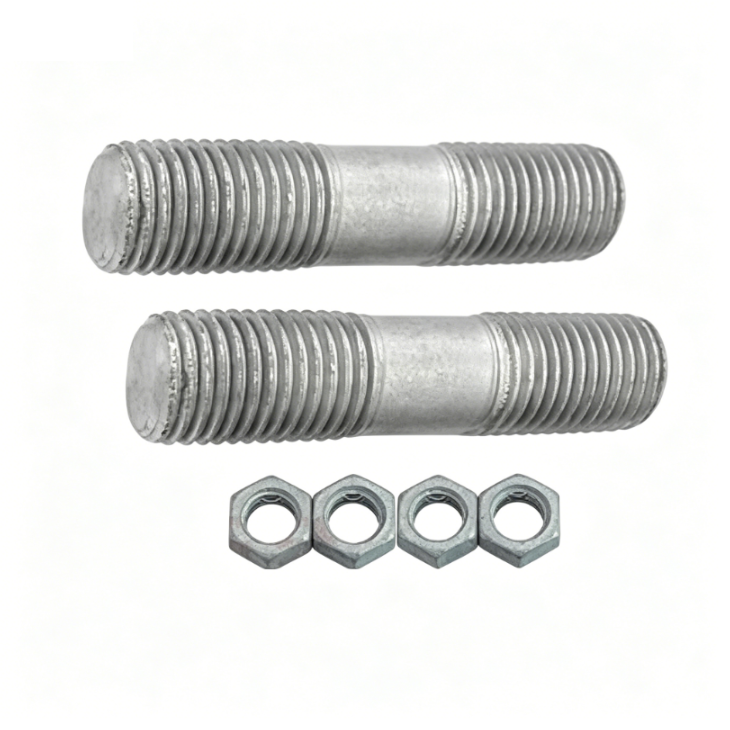
High-pressure flange connections require absolutely even torque. If the threads bind due to poor galvanizing, the torque wrench will give a false reading, and the flange will leak. We supply our HDG double end studs as complete, pre-tested assemblies with matched, overtapped HDG Heavy Hex Nuts (e.g., ASTM A194 Grade 2H) to ensure smooth, accurate tensioning on site.
Product Specifications
| Item | Technical Specification |
|---|---|
| Product Name | HDG Double End Studs / Tap End Stud Bolts |
| Material Composition | Medium Carbon Steel, Alloy Steel (e.g., 35#, 45#, 42CrMo) |
| Surface Treatment | Hot Dip Galvanized (HDG) strictly per ISO 10684 / ASTM A153 |
| Applicable Standards | GB901 |
| Diameter Range | M8–M30 |
| Thread Length Configuration | Equal Ends or Unequal Ends (Tap End / Nut End) |
| Strength Grade | 4.8 /8.8 /10.9 |
| Matching Components | HDG Overtapped Heavy Hex Nuts (A194 2H), HDG Flat Washers |
| Packaging | Bulk cartons or heavy-duty woven bags on fumigation-free pallets |
Core Engineering Applications
Petrochemical & Water Pipeline Flanges
The most common application. Double end studs are passed through the unthreaded clearance holes of two mating pipe flanges. A nut is tightened on both ends. The thick HDG coating protects the exposed center shank from highly corrosive industrial atmospheres and saltwater spray.
Pumps, Valves, and Pressure Vessels
Heavy-duty industrial valves often have a tapped (threaded) body. The short "tap end" of the stud is driven into the valve body, serving as a permanent anchor. The pipeline flange is then slipped over the protruding "nut end," and an overtapped HDG nut is used to secure the connection.
Heavy Machinery & Foundation Anchoring
Used as heavy-duty anchor pins or spacer studs in heavy equipment manufacturing where precise grip lengths (the unthreaded middle section) are required to keep massive steel plates spaced perfectly apart.
Quality Control and Export Logistics
For critical pressure and flange applications, B2B buyers cannot afford dimensional defects or shipping damage. Our factory process ensures your cargo arrives project-ready.
- Thread Fit & Go/No-Go Gauging: Because these studs are often used with automated torque equipment, every batch is verified on the factory floor. Our QC technicians physically confirm that the overtapped nuts run smoothly down the full length of the HDG threads by hand.
- Hydrogen Embrittlement Prevention: For high-strength alloy studs (like A193 B7 or Class 10.9), the acid pickling and zinc bath process introduces the risk of hydrogen embrittlement. We implement strict post-galvanizing baking protocols to release trapped hydrogen, ensuring the studs will not snap under flange pressure.
- Heavy-Cargo 20GP Packaging: Stud bolts are extremely dense dead-weight cargo. We pack them in heavy-duty, double-wall export cartons. Each carton is lined with a thick PE moisture-barrier bag to completely eliminate the risk of "container rain" causing white rust during sea freight. The cartons are compactly stacked on solid plywood pallets and bound with high-tension PET strapping, specifically optimized to maximize the payload limits of a 20GP shipping container.
Frequently Asked Questions (FAQ)
Q: What is the difference between a Double End Stud and a Fully Threaded Stud Bolt?
A: A fully threaded stud bolt (like DIN 976) has threads running across its entire length. A Double End Stud has an unthreaded, smooth center shank. This unthreaded shank is structurally stronger against shear forces and is used when a specific "grip length" is required to match the thickness of the joined flanges.
Q: What do DIN 938 and DIN 939 mean regarding thread length?
A: These standards define the length of the "tap end" (the end screwed into the blind hole).
- DIN 938: The tap end thread length is equal to 1 x Diameter (1d). Used for tapping into hard steel.
- DIN 939: The tap end thread length is equal to 1.25 x Diameter (1.25d). Used for tapping into slightly softer materials like cast iron, providing deeper engagement.
Q: Are the threads on your HDG Double End Studs cut or rolled?
A: For structural and high-pressure applications, we use thread rolling. Rolling physically compresses the steel grain structure, making the threads significantly stronger and more resistant to fatigue than cut threads.
---
Don't risk your pipeline infrastructure with studs that bind during installation or rust prematurely in harsh environments. Partner with a direct Chinese manufacturer that understands precise thread tolerances, thick-coating galvanizing, and industrial flange requirements.
Send the Hotop Fasteners engineering team your stud diameters, total lengths, specific tap end/nut end thread lengths, material grade (e.g., Class 8.8 or B7), and total quantities. We will provide a transparent commercial quotation and an export shipping breakdown within 24 hours.
Interested in this product?
Get in touch for more information, pricing, or custom requirements.