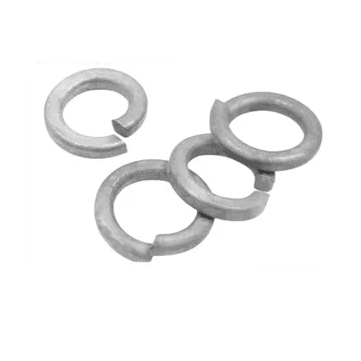
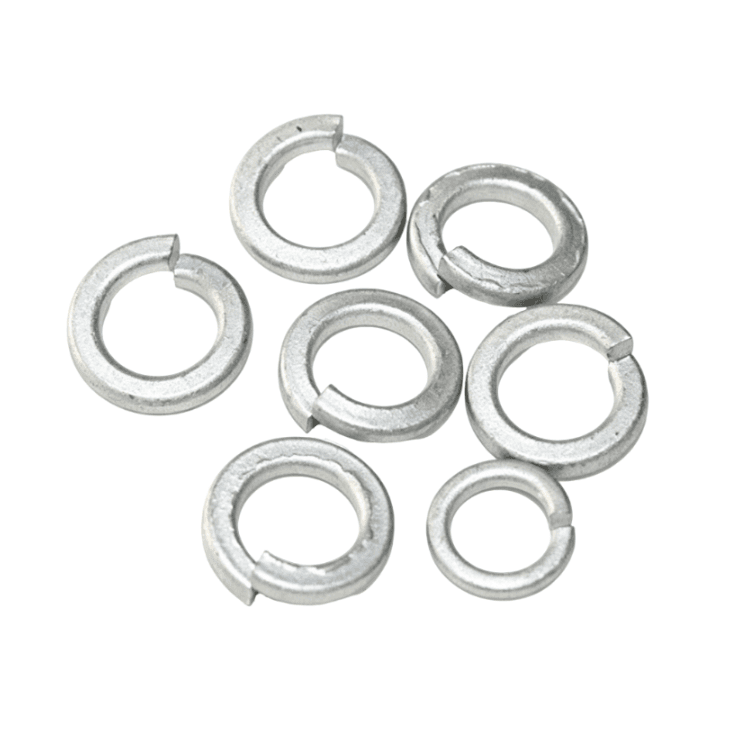
High-Strength HDG Spring Lock Washers (DIN 127B) – Engineered to Prevent Embrittlement
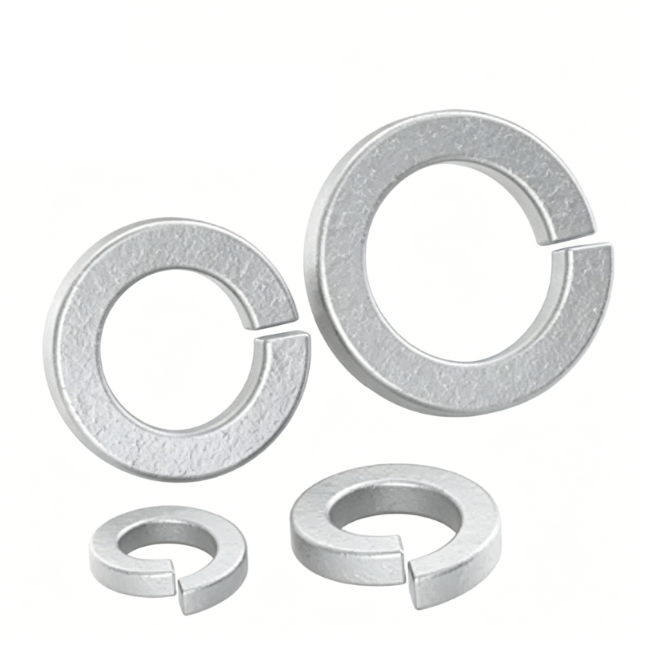
In structures subjected to heavy dynamic loads, motor vibrations, or thermal expansion, standard flat washers cannot prevent a nut from vibrating loose. Spring Lock Washers (Split Rings) are engineered with a helical offset. When the nut is tightened, the washer flattens, creating continuous spring tension and biting its sharp split edges into the mating surfaces to lock the assembly in place.
However, sourcing Hot Dip Galvanized (HDG) spring washers is one of the riskiest procurement tasks in the hardware industry. Because they are made from high-carbon spring steel, exposing them to acid pickling and 450°C (842°F) molten zinc creates two massive risks: Hydrogen Embrittlement (snapping under pressure) and Annealing (losing their spring tension).
As a highly experienced China fastener manufacturer, Hotop Fasteners has mastered the metallurgical control required for this specific product. We employ strict time-controlled galvanizing and mandatory post-zinc baking protocols. The result is a heavy-duty HDG spring washer that retains its fierce locking tension, resists snapping, and provides the thick zinc-iron alloy protection required for decades of outdoor structural survival.
Why Source HDG Spring Washers from Hotop Fasteners?
1.Mandatory De-Embrittlement (Solving the "Snapping" Problem)
Many buyers have experienced the nightmare of tightening an HDG spring washer only to have it shatter like glass. This is caused by trapped hydrogen from the galvanizing process. At our factory, immediately after the zinc bath, we transfer our high-carbon (e.g., 65Mn) spring washers into industrial baking ovens at 200°C for a minimum of 4 hours. This critical "de-embrittlement" step bakes out the hydrogen, restoring the steel's structural toughness.
2.Temperature Control (Preserving the "Spring")
If a spring washer stays in the 450°C molten zinc bath for too long, the steel will anneal (lose its temper), meaning it will flatten out and never spring back. Our floor technicians strictly control the submersion time to mere seconds—just enough to build a 45μm+ zinc layer without destroying the steel's inherent elasticity.
3.Centrifuge Separation (Zero Tangling)
Because of their split-ring shape, spring washers love to hook onto each other in the zinc bath, forming massive chains. We use high-speed centrifuges to violently separate the washers before the zinc cools. This prevents nesting, clears excess zinc from the critical split gap, and ensures every washer is ready for immediate installation.
Product Specifications
| Item | Technical Specification |
|---|---|
| Product Name | HDG Spring Lock Washers / Split Washers |
| Material Composition | High Carbon Spring Steel (e.g., 65Mn, 70# Steel) |
| Surface Treatment | Hot Dip Galvanized (HDG) strictly per ASTM A153 |
| Applicable Standards | DIN 127B (Flat Ends), ASME B18.21.1, GB/T 93 |
| Size Range (Bolt Fit) | M6 to M36 / 1/4" to 1-1/2" |
| Pre-HDG Hardness | HRC 38 – 46 (Tempered for maximum elasticity) |
| Critical Process | Mandatory post-galvanizing hydrogen relief baking |
| Matching Components | HDG Hex Bolts, HDG Hex Nuts, HDG Flat Washers |
| Packaging | 25kg bulk cartons, heavy-duty export packaging on pallets |
Core Engineering Applications
Highway Guardrails and Infrastructure
Traffic creates continuous, high-frequency vibrations. HDG spring washers are heavily utilized in highway crash barriers and bridge joints, ensuring the structural bolts do not back out over time while surviving the corrosive effects of winter road salts.
Solar Tracking Racks
Active solar trackers use heavy motors to tilt panels toward the sun. This constant mechanical movement requires aggressive anti-vibration locking fasteners. Our HDG spring washers maintain joint integrity while matching the 25-year anti-corrosion requirement of the solar industry.
Heavy Machinery and Pump Flanges
Industrial pumps, compressors, and diesel generators transfer intense vibration into their mounting bases. These washers maintain dynamic clamping force on the anchor bolts, preventing catastrophic equipment loosening in damp industrial environments.
China Supplier Export Logistics (20GP Strategy)
To successfully export heavy industrial hardware from our Handan facility to your global port, packaging must be treated with the same rigor as manufacturing.
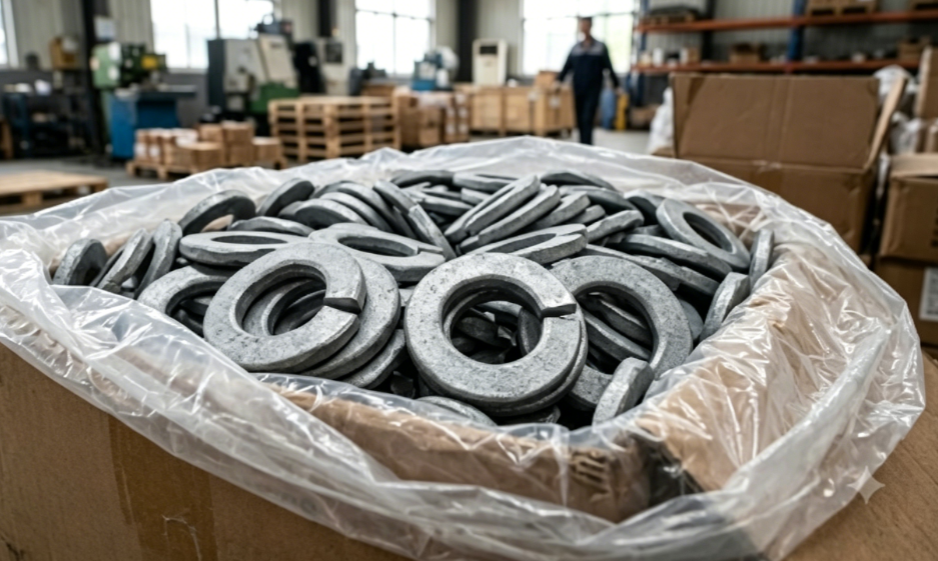
- Moisture Defense: We bulk-pack our HDG spring washers into heavy-duty, double-corrugated export cartons (max 25kg/box). Inside every carton, the washers are completely sealed within a thick PE plastic bag to block "container rain" and ocean humidity, preventing white rust.
- Secure Palletization: The cartons are tightly stacked onto fumigation-free plywood pallets, bound with high-tension green PET plastic-steel strapping, and wrapped in industrial stretch film. This system is designed to maximize the 25-ton weight limit of a 20GP container while guaranteeing secure forklift handling at your destination port.
Frequently Asked Questions
Q: Why did my previous supplier's HDG spring washers break when I tightened them?
A: You were a victim of Hydrogen Embrittlement. If a Chinese trading company buys cheap spring washers and sends them to a low-end galvanizer, they usually skip the 4-hour baking process to save money. The hydrogen trapped in the high-carbon steel causes sudden, catastrophic failure under torque. Hotop Fasteners never skips this step.
Q: What is the difference between DIN 127A and DIN 127B?
A: DIN 127A has an upward bent tang (a sharp, bent-up tip) at the split, which bites aggressively but can severely damage the mating surface. DIN 127B has flat, square-cut ends at the split. DIN 127B is the global standard for 95% of industrial applications, providing excellent locking without tearing up the steel flange.
Q: Will the HDG coating interfere with the locking action?
A: If poorly galvanized, yes. Thick zinc can fill the split gap. Our centrifuge process ensures the split remains open and the sharp, square-cut ends are exposed enough to bite into the metal surface when compressed.
---
Stop taking risks with brittle, snapping washers or trading company markups.
Send the Hotop Fasteners team your required sizes (e.g., M12, M16), standards (DIN 127B), and total project quantities.
We will respond within 24 hours with a transparent, factory-direct commercial quotation and an optimized sea-freight shipping breakdown.
Interested in this product?
Get in touch for more information, pricing, or custom requirements.