ASTM F1554 Anchor Bolts: Grades 36, 55 and 105

Annie Z
AuthorWith over 25 years of experience in fastener production and export sales, we operate our own manufacturing plant and our products are exported to over 50 countries. We are professional experts in bolts, nuts, washers, anchor bolts, and customized fasteners.
ASTM F1554 Grades 36, 55 and 105 identify minimum yield strengths of 36, 55 and 105 ksi. The grade specified on the project drawing is the starting point for an order. Welding requirements, coating, dimensions and matching hardware must then be checked together. A higher grade is not a general-purpose replacement for a lower one.
For buyers comparing quotations, the key question is whether each offer covers the same specified anchor, including any supplementary requirements. An enquiry that says only “F1554 galvanized anchor bolts” leaves the grade and several manufacturing requirements unresolved.
What Does ASTM F1554 Cover?
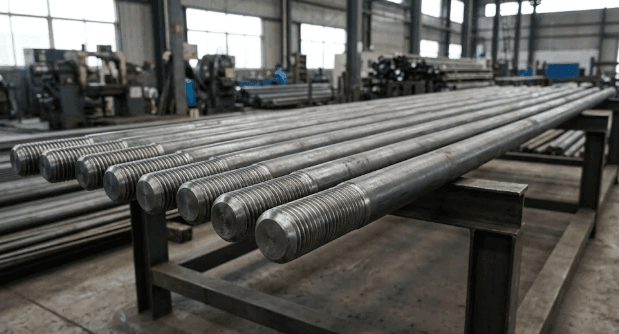
ASTM F1554 covers steel anchor bolts and anchor rods intended to anchor structural supports to concrete foundations. Its scope includes straight, bent, headed and headless configurations, as well as all-thread rod for anchoring to concrete. It does not cover mechanical expansion anchors or anchors fabricated from deformed reinforcing bar.
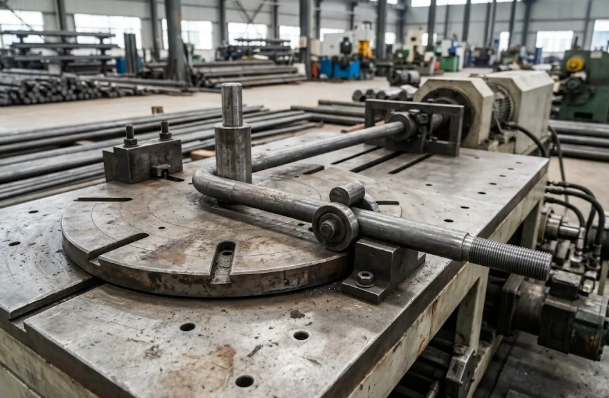
The standard designation does not define the anchor shape. A bent bolt and a straight rod can carry the same F1554 grade while requiring different drawings. For the installation and configuration differences, see our anchor bolt types guide.
Grade 36 vs 55 vs 105: What the Grade Numbers Mean
| F1554 grade | Minimum yield strength | Tensile strength range | Fabrication point to check |
|---|---|---|---|
| Grade 36 | 36 ksi | 58–80 ksi | Generally weldable material; the actual welding detail and procedure still need review |
| Grade 55 | 55 ksi | 75–95 ksi | Specify Supplementary Requirement S1 when weldability is required |
| Grade 105 | 105 ksi | 125–150 ksi | Quenched-and-tempered material; should not be welded |
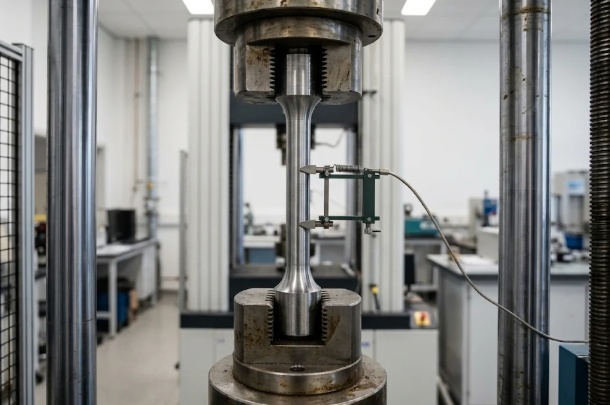
One ksi equals 1,000 psi. These are material-property requirements, not allowable loads for an installed anchor. Concrete conditions, embedment, spacing, edge distance and the complete connection also affect the design. Grade 105 does not make an anchor connection approximately three times as strong as Grade 36 simply because its grade number is higher.
This table is a comparison, not a complete acceptance specification. Check the applicable F1554 edition for the required diameter range, chemistry, ductility, testing and other requirements. Material offered under another specification is not proven equivalent merely because its yield strength meets one of the values in the table.
Which Grade Should a Buyer Order?
Use the approved drawing and project specification to identify the grade. If either document says only “F1554,” ask the responsible engineer to resolve the missing grade before comparing prices.
- When Grade 36 is specified: request that designation and check any permitted substitution against the applicable standard and contract.
- When Grade 55 is specified: establish whether S1 weldability or other supplementary requirements are included. Grade 55 and Grade 55 S1 should not be treated as identical quotation descriptions.
- When Grade 105 is specified: check that the proposed fabrication and installation details do not rely on welding the rod.
There is a specific substitution provision to understand: F1554 permits a weldable Grade 55 to be furnished at the supplier’s option when Grade 36 is specified. Confirm that this provision applies under the project’s specified edition and contractual requirements, and identify the supplied grade in the order records. This does not create general permission to replace Grade 55 with Grade 105 or to substitute unrelated threaded rod.
Keep inch dimensions and thread designations explicit. F1554-20 uses inch-pound units; changing an inch thread to the nearest metric size is a separate technical change, not a unit conversion.
Welding: Why Grade 55 S1 Matters
If an approved detail requires welding, identify that requirement before purchasing the material. This includes proposed tack welds used to hold an assembly in position.
For Grade 55, S1 is the supplementary weldability requirement. It controls chemistry and carbon equivalency. Without S1, Grade 55 material may or may not be weldable; the grade number alone does not settle the question. Put “ASTM F1554 Grade 55, Supplementary Requirement S1” on the enquiry and purchase order when required, and request the supporting chemistry information.
S1 addresses material weldability. The welding detail, procedure and execution still need to meet the project requirements. It is not permission to add an unapproved weld to an anchor assembly.
Grade 105 anchor rods develop their properties through quenching and tempering. Welding can change those properties, so Grade 105 anchor rods should not be welded. If a Grade 105 detail appears to require a welded attachment, refer the conflict to the responsible engineer before fabrication.
Galvanizing and Hardware: Specify the Finished Assembly
All three F1554 grades can be galvanized, including Grade 105. This is separate from their welding characteristics. For hot-dip galvanized F1554 anchor bolts, identify the applicable coating specification, such as ASTM F2329 where required, and state whether the coating covers the full rod or only a defined portion.
Hot-dip galvanizing adds thickness to threaded surfaces. The mating nuts need the specified allowance and finished fit for that assembly. Our HDG thread-fit guide explains why nut selection must be considered with the coated rod.
Do not specify only “matching nuts.” Nut grade and style depend on the anchor grade, diameter and finish. State the required nut specification, grade, style and quantity, together with the washer and any anchor-plate details. A nut that turns onto a rod has not, by that fact alone, been verified as the correct component.
Likewise, a catalogue description such as J-type anchor bolt identifies a configuration. F1554 grade compliance and the requested coating must be confirmed separately for the proposed supply.
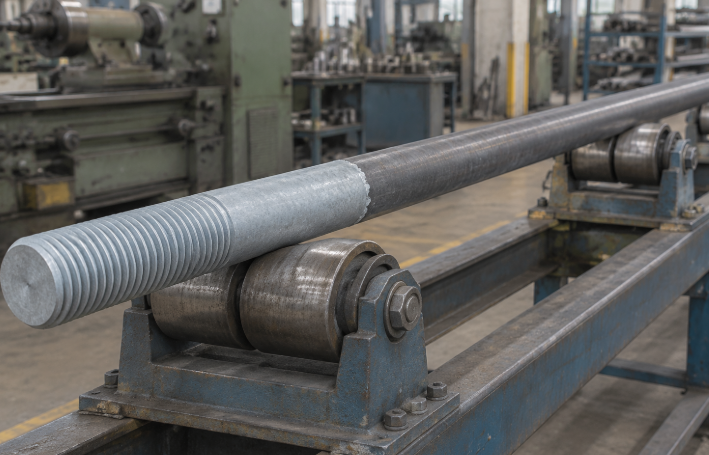
What to Include in an F1554 Anchor-Bolt RFQ
Use one schedule that links each drawing reference to its technical requirements and quantity.
| RFQ item | Information to provide |
|---|---|
| Standard and grade | Required F1554 edition, Grade 36/55/105 and specified supplementary requirements |
| Drawing and dimensions | Current revision, configuration, diameter, thread designation, length datums, thread lengths and controlled tolerances |
| Finish | Plain or specified coating, coating standard and required coated extent |
| Components | Nut and washer specifications, grades, styles and quantities; anchor-plate details where applicable |
| Identification and records | Required markings, lot identification, chemical and mechanical reports, and coating records where specified |
| Commercial details | Quantity by drawing reference, destination and required delivery date for supplier confirmation |
If S1 is required, make it a separate, visible requirement rather than leaving it in an unreferenced drawing note. Identify any required impact testing or special marking at enquiry stage, too. Supplementary requirements should be stated in the purchase order or contract.
Ask the supplier to identify how the submitted records relate to the finished anchors being offered. A raw-material document with a similar strength value does not establish that all finished-product requirements have been met.
Next Step: Submit the Drawing and Grade Together
Send your anchor drawing, F1554 grade, quantity and coating requirements to Hotop Fasteners. Include S1 or other specified supplementary requirements and the required documentation list. Ask for written confirmation of the proposed supply scope and any exceptions before placing the order.
If the grade, welding detail or component specification is missing, resolve it with the project engineer first. The resulting quotation should identify what is being supplied, what evidence is included and which items still need approval.
Related News
Other news you might be interested in
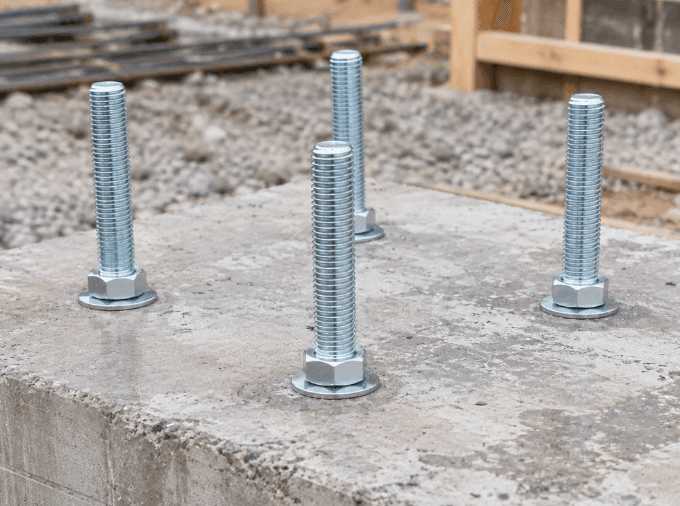
Anchor Bolt Types: Cast-In vs Post-Installed Anchors
Anchor bolts are not one product family. This guide separates cast-in J-, L-, headed and plate anchors from post-installed wedge, sleeve, screw and adhesive systems, and explains how to read sizes across them.
A2-70 vs A4-80 Stainless Steel Bolts: Differences and Substitution Checks
Compare A2-70 and A4-80 stainless steel bolts by grade and property class. Check strength values, substitution approval, corrosion exposure and mating parts.
Want to know more?
Get in touch with us for more information about our services and products.