Can Stainless Steel Bolts Be Used with Galvanized Steel? Galvanic Corrosion Guide

Annie Z
AuthorWith over 25 years of experience in fastener production and export sales, we operate our own manufacturing plant and our products are exported to over 50 countries. We are professional experts in bolts, nuts, washers, anchor bolts, and customized fasteners.
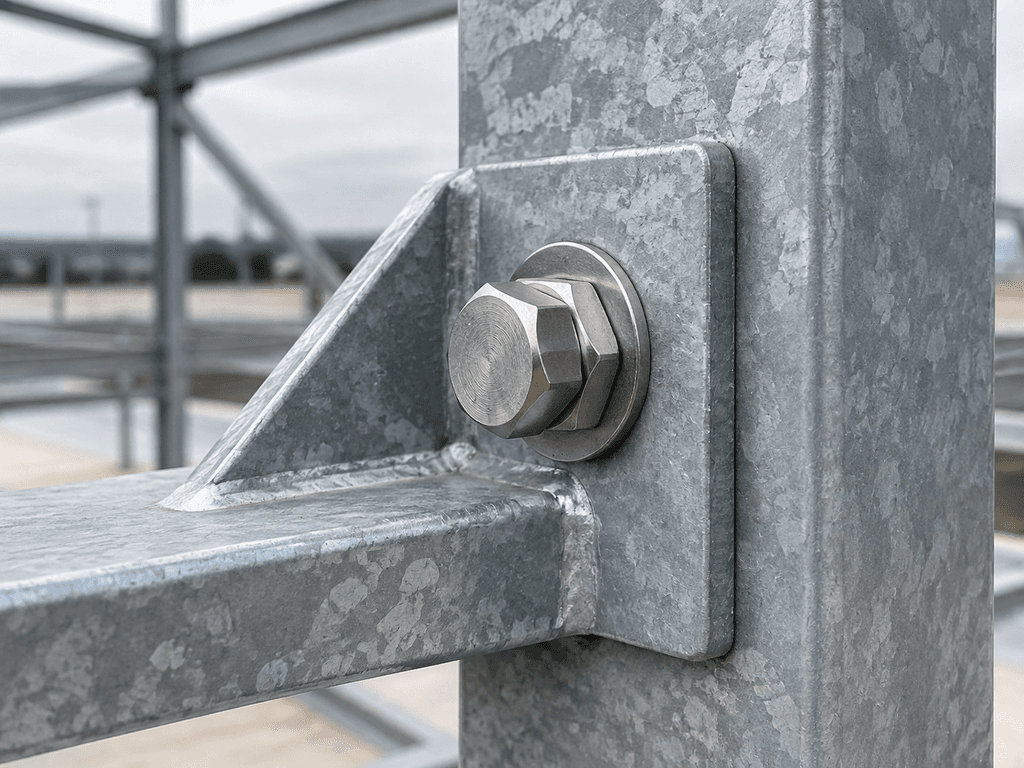
Stainless steel bolts are sometimes used to connect galvanized steel structures, brackets, handrails, frames and outdoor equipment. The combination may appear practical because stainless steel offers corrosion resistance while galvanized steel is widely used for structural components.
However, when stainless steel and galvanized steel are electrically connected in the presence of moisture, a corrosion risk known as galvanic corrosion can occur. The risk is not the same in every project. It depends on the environment, the amount of moisture, the surface area of each metal, the connection design and the ability of the assembly to drain and dry.
This guide explains when stainless steel bolts can be used with galvanized steel, when the risk is higher and what buyers should specify to reduce corrosion problems.
Can Stainless Steel Bolts Be Used with Galvanized Steel?
Yes, stainless steel bolts can be used with galvanized steel in some applications. However, the connection should be evaluated according to the project environment and corrosion requirement.
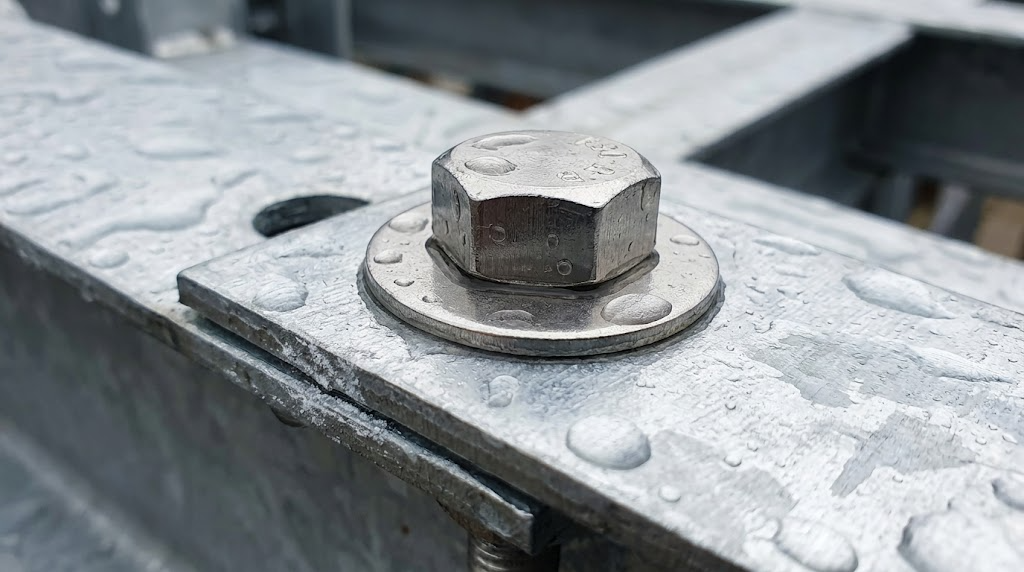
The combination is generally less concerning in dry indoor environments where the connection remains clean and does not experience repeated wetting. The corrosion risk increases when the joint is exposed to rainwater, condensation, salt-laden air, seawater spray or other conductive moisture.
When stainless steel and galvanized steel are connected in a wet environment, the zinc coating on the galvanized steel can corrode more quickly than it would in an isolated galvanized steel connection. This is because stainless steel is generally more noble than zinc in a galvanic couple.
The key point is not simply whether the two metals touch. The key question is whether the connection will remain wet enough to create an electrochemical path between them.
What Is Galvanic Corrosion?
Galvanic corrosion occurs when two different metals are electrically connected and exposed to an electrolyte, such as water containing salts or other dissolved substances.
Three conditions are usually needed:
| Condition | What It Means |
|---|---|
| Different metals | Stainless steel and zinc-coated steel have different corrosion potentials |
| Electrical connection | The metals are connected through the bolt, nut, bracket or steel assembly |
| Conductive moisture | Rainwater, condensation, saltwater or contaminated water allows electrochemical activity |
If the connection remains dry, the galvanic corrosion risk is generally lower. If the connection remains wet, particularly in coastal or industrial environments, the risk becomes more important.
In a galvanized steel and stainless steel connection, the zinc coating can act as the more active material. The zinc may be consumed faster around the contact area or in locations where moisture is trapped.
When Is the Risk of Galvanic Corrosion Higher?
The risk is not equal across all projects. Buyers should pay closer attention when one or more of the following conditions apply:
- The structure is located near the sea or in a coastal area.
- The fasteners are exposed to salt spray or salt-laden air.
- Rainwater can collect around the bolt, washer or connected steel surfaces.
- The connection is located in a high-humidity or poorly ventilated area.
- The galvanized steel area is small compared with the stainless steel area.
- The installation is difficult to inspect or maintain.
- The steel structure is exposed to industrial pollution or chemical contamination.
- The project requires a long design life with minimal maintenance.
For coastal material selection, read Marine and Coastal Steelwork: When to Choose HDG Fasteners and When Stainless Steel Is Better.
When Is the Risk Lower
A stainless steel bolt and galvanized steel connection may be more practical when the installation environment is dry, protected and easy to inspect.
Examples may include:
- Dry indoor structural connections
- Interior equipment frames
- Indoor brackets in climate-controlled spaces
- Temporary assemblies with limited moisture exposure
- Connections where moisture cannot collect around the joint
- Installations with a documented corrosion-protection design
Even in lower-risk conditions, buyers should still specify the bolt size, material grade, washer arrangement and required finish. A fastener assembly should not be selected only because the bolt is available.
Why Surface Area Ratio Matters
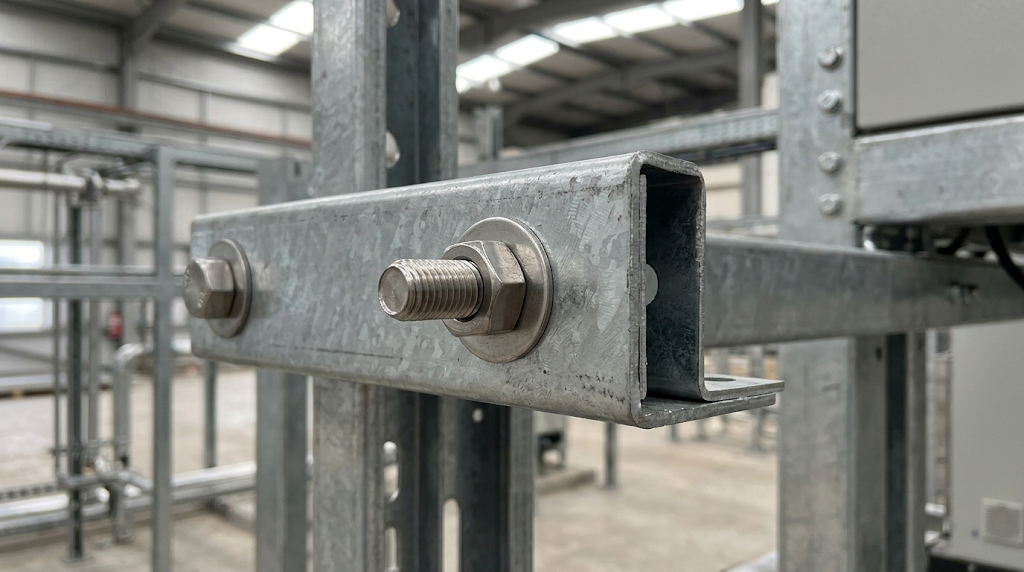
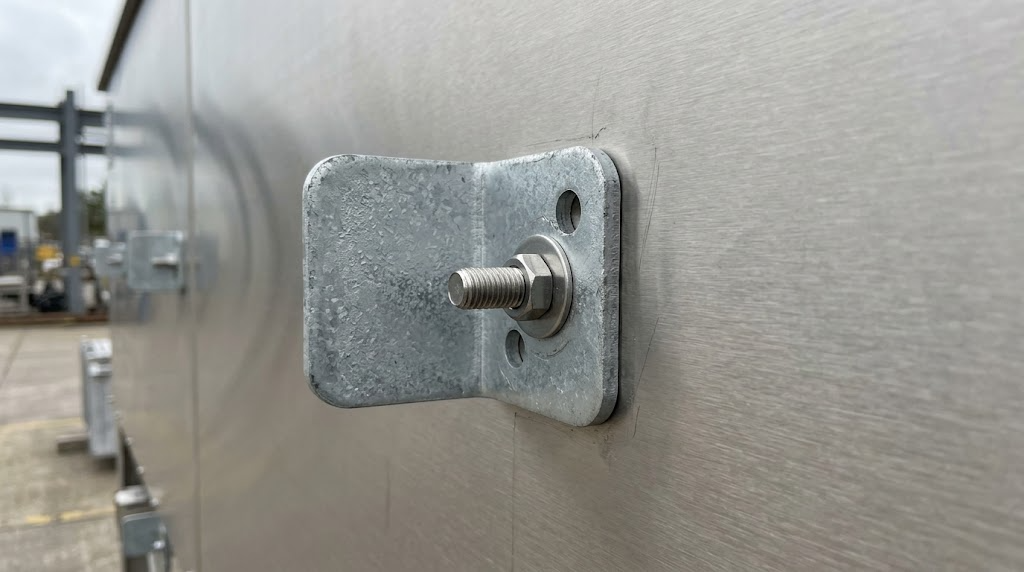
The relative surface area of the connected materials can affect galvanic corrosion risk. A small galvanized steel area connected to a much larger stainless steel area may be more vulnerable because the zinc coating has less surface area available to protect itself.
For example, a small galvanized bracket connected to a large stainless steel panel may require more attention than a large galvanized steel structure fastened with a small number of stainless steel bolts.
| Connection Arrangement | General Corrosion Consideration |
|---|---|
| Large galvanized steel structure with limited stainless steel hardware | May present a lower relative risk if moisture is controlled |
| Small galvanized component connected to a large stainless steel surface | May increase the risk of faster zinc consumption |
| Galvanized steel and stainless steel in dry indoor conditions | Usually lower risk than exposed wet conditions |
| Galvanized steel and stainless steel in coastal splash or salt exposure | Requires careful corrosion design and material selection |
| Connection with trapped water around washers or joints | Risk increases because the joint stays wet longer |
Surface area is only one factor. The final decision should also consider corrosion exposure, project life, drainage, maintenance access and the applicable engineering specification.
How to Reduce Galvanic Corrosion Risk
The best solution depends on the project design, but several practical measures can help reduce the risk of galvanic corrosion in mixed-metal assemblies.
Use Compatible Material Selection
Where possible, use compatible materials for the complete assembly. This may include selecting galvanized bolts with galvanized steel components or choosing a stainless steel system where the project specifically requires it.
For outdoor structural connections, explore our hot dip galvanized bolts category. For corrosion-resistant fastening options, view our stainless steel fasteners category.
Add Electrical Isolation
Non-conductive washers, sleeves or isolating materials may be used between different metals where the project design requires separation. The isolation method should be selected according to the load requirement, installation environment and engineering specification.
The purpose is to reduce direct electrical contact between the stainless steel fastener and galvanized steel component.
Prevent Water Traps
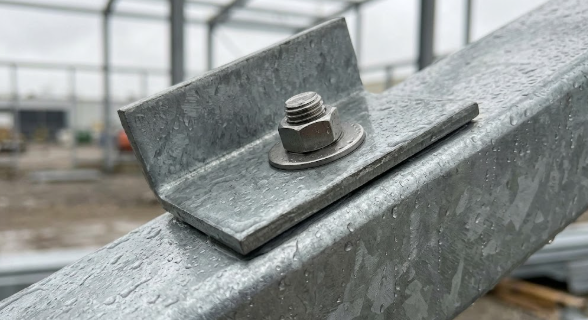
Connection design matters. Water trapped between washers, plates, brackets and bolt heads can keep the assembly wet for extended periods.
Good drainage and ventilation can help reduce moisture retention. Avoid details that create narrow gaps where saltwater, rainwater or condensation can remain after the surrounding structure has dried..
Protect Damaged Coating Areas
Installation can damage a galvanized coating if bolts are dragged, forced through undersized holes or assembled with incompatible components. Any coating damage should be assessed and treated according to the project requirement.
For galvanized bolt and nut assembly guidance, read Why HDG Nuts Need Oversized Threads: Galvanized Bolt Thread Fit Guide.
Plan for Inspection and Maintenance
Connections in high-corrosion environments should be accessible for inspection where practical. If a joint is difficult to reach after installation, the corrosion strategy should be more carefully defined before production.
What Buyers Should Include in an RFQ
When stainless steel fasteners will be used with galvanized steel, the buyer should describe the complete connection rather than only requesting a bolt size.
Include the following information:
- Bolt type, diameter, length and thread requirement
- Stainless steel material grade required
- Galvanized steel component or structure description
- Project environment: indoor, outdoor, coastal, marine or industrial
- Expected moisture or salt exposure
- Required washers, sleeves or insulation components
- Required corrosion-protection method
- Quantity and packaging requirement
- Drawing, sample photo or connection detail
- Inspection requirement
- Destination port or delivery location
Common Mistakes to Avoid
| Mistake | Possible Result |
|---|---|
| Selecting fasteners only by material name | The assembly may not match the actual corrosion environment |
| Ignoring water retention around the joint | Moisture can increase galvanic corrosion risk |
| Mixing bolt, nut and washer materials without specification | Assembly compatibility and corrosion performance may be unclear |
| Using an incorrect washer arrangement | Direct metal contact or trapped moisture may remain |
| Assuming stainless steel always solves corrosion problems | The full connection design still matters |
| Ignoring coating damage during installation | Exposed areas may corrode sooner |
| Omitting environmental details from the RFQ | The supplier cannot evaluate the intended application properly |
Frequently Asked Questions
1.Will stainless steel bolts always corrode galvanized steel?
No. Galvanic corrosion depends on the presence of dissimilar metals, electrical contact and conductive moisture. Dry indoor conditions are different from coastal or wet outdoor environments.
2.Can nylon or non-conductive washers help?
Where permitted by the project design, non-conductive washers or sleeves can help reduce direct electrical contact. The selected material must still be suitable for the required load and installation environment.
3.Is hot dip galvanizing suitable for coastal steelwork?
Hot dip galvanizing can be suitable for many coastal structures, but the expected salt exposure, project location, maintenance plan and design life should be evaluated before selecting the fastening system.
4.What information should be provided for a mixed-metal fastener quotation?
Provide the bolt size, stainless steel grade, galvanized steel component details, installation environment, corrosion requirement, washer or isolation requirement, quantity and technical drawing.
---
Related News
Other news you might be interested in

Fastener Submittal Checklist: Drawings, MTC, Coating and Packaging
Use this fastener submittal checklist for steelwork projects. Learn what to confirm before ordering bolts, anchor bolts and threaded rods, including drawings, MTC, coating, thread fit, packaging and shipment labels.

Marine and Coastal Steelwork: HDG Fasteners vs Stainless Steel
Compare hot dip galvanized and stainless steel fasteners for marine and coastal steelwork. Learn how salt exposure, corrosion risk, maintenance access and material compatibility affect fastener selection.
Want to know more?
Get in touch with us for more information about our services and products.