Data Center Construction Fasteners: Anchor Bolts, Threaded Rods and HDG Selection

Annie Z
AuthorWith over 25 years of experience in fastener production and export sales, we operate our own manufacturing plant and our products are exported to over 50 countries. We are professional experts in bolts, nuts, washers, anchor bolts, and customized fasteners.
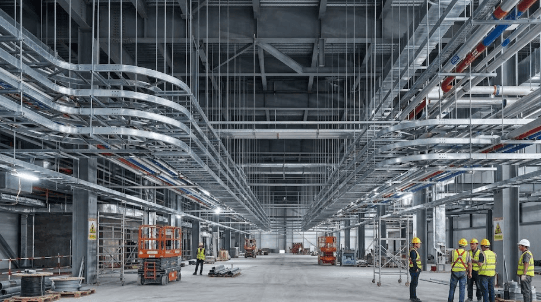
Data center construction requires more than servers, cooling equipment and electrical systems. Every facility also depends on reliable mechanical fastening for steel frames, equipment bases, cable tray supports, pipe systems, outdoor utility areas and maintenance platforms.
As data center projects expand, contractors, fabricators and procurement teams need fasteners that match the application, base material, installation environment and project documentation. A bolt that is suitable for an indoor equipment rack may not be suitable for an outdoor steel support, a concrete equipment foundation or a corrosion-exposed utility structure.
This guide explains where anchor bolts, threaded rods and hot dip galvanized fasteners are commonly used in data center-related construction and what buyers should confirm before ordering.
Where Are Fasteners Used in Data Center Construction?
Data centers contain a wide range of structural and mechanical systems. Fasteners are used throughout the construction process, from the concrete foundation stage to equipment installation and support-system assembly.
Typical fastening applications include:
- Concrete bases for generators, transformers and mechanical equipment
- Steel frames and structural support systems
- Cable tray and electrical support installations
- Pipe hangers and cooling-system supports
- HVAC equipment mounting
- Access platforms, handrails and maintenance walkways
- Outdoor utility structures and perimeter equipment
- Rooftop or external plant-area fastening
- Equipment skids, brackets and fabricated assemblies
Each application may require a different product type. The correct selection depends on whether the connection is embedded in concrete, installed into existing concrete, suspended from steelwork or exposed to outdoor conditions.

Anchor Bolts for Equipment Bases and Concrete Foundations
Anchor bolts are commonly used to secure equipment, steel columns, support frames and base plates to concrete foundations. In a data center project, this may include generator foundations, equipment pads, structural supports and external utility installations.
The anchor bolt must match the foundation drawing, base plate layout and required assembly arrangement. Buyers should specify the bolt shape, diameter, overall length, thread length, material grade, nut and washer arrangement and surface finish.
For available products, see our anchor bolt category. For embedded concrete connections, buyers can also review our carbon steel L type anchor bolts and foundation bolts.
| Anchor Bolt Requirement | Why It Matters |
|---|---|
| Bolt type | Determines whether an L bolt, J bolt, straight anchor rod or custom shape is required |
| Diameter and length | Must match the design load, base plate and embedment requirement |
| Thread length | Must allow for the steel plate, washer, nut and adjustment requirement |
| Bolt spacing | Must match the base plate hole layout |
| Material grade | Must meet the project’s mechanical requirement |
| Surface finish | Should match the corrosion exposure of the installation area |
| Matching nuts and washers | Ensure practical and reliable assembly |
For a full purchasing guide, read How to Specify Hot Dip Galvanized Anchor Bolts for Concrete Foundations.

Threaded Rods for Cable Trays, Pipe Supports and MEP Systems
Threaded rods are widely used in suspended support systems. In data center construction, they may be used for cable trays, pipe hangers, HVAC supports, electrical containment and adjustable support assemblies.
Full-thread rod allows installers to adjust the support height by positioning nuts and washers along the threaded length. This makes threaded rod practical for installations where support elevations must be aligned with drawings and site conditions.
For outdoor areas, plant rooms with moisture exposure or steel support systems requiring corrosion protection, hot dip galvanized threaded rod may be specified. For indoor and lower-corrosion environments, the required finish should still be selected according to the project specification.
Explore our hot dip galvanized threaded rods and studs category. A common full-thread option is our DIN 975 steel threaded rod with zinc plated and hot dip galvanized finish options.

When Hot Dip Galvanizing Is Suitable
Not every fastener in a data center needs hot dip galvanizing. The correct coating depends on the installation environment, maintenance accessibility, moisture exposure and material compatibility.
Hot dip galvanized fasteners are commonly considered for:
- Outdoor steel support structures
- External generator or utility areas
- Rooftop mechanical installations
- Exposed pipe support systems
- Cable support structures in humid or semi-outdoor areas
- Guardrails, access platforms and external walkways
- Outdoor foundation bolts and steel frame connections
For these applications, visit our hot dip galvanized bolts category.
Indoor, climate-controlled areas may have different fastening requirements. Procurement teams should avoid applying one coating choice to the entire project without reviewing the actual service environment of each fastening point.
| Installation Area | Typical Consideration |
|---|---|
| Indoor server room | Clean, controlled environment; project specification determines finish |
| Mechanical room | Moisture, condensate and maintenance access should be considered |
| Cable tray support area | Rod size, support load and environmental exposure are important |
| Rooftop equipment zone | UV, rainwater and outdoor corrosion exposure require attention |
| External generator base | Concrete anchoring, vibration, coating and assembly details matter |
| Outdoor steel platform | Long-term corrosion protection and fastener accessibility are important |

Why Fastener Documentation Matters
Data center projects often involve multiple contractors, equipment suppliers, fabricators and installation teams. A fastener order with incomplete specifications can create delays when products arrive without the correct size, grade, coating or matching components.
A complete fastener RFQ should include:
- Product type and applicable standard
- Bolt diameter, length and thread requirement
- Material and required grade
- Surface finish or galvanizing requirement
- Matching nut and washer requirement
- Quantity for each size
- Drawing or installation detail
- Required inspection documents
- Packaging requirement
- Delivery location or destination port
For anchor bolt assemblies, the base plate drawing and bolt-spacing layout are especially important. For threaded rod orders, buyers should define whether the rods are supplied in standard lengths, cut lengths or with matching nuts, washers and couplers.
Bolt, Nut and Washer Compatibility
Fasteners should be ordered as a complete assembly when the project requires matching bolts, nuts and washers. This is particularly important for hot dip galvanized products because zinc coating can affect the thread fit between a bolt and nut.
A galvanized bolt should be paired with a compatible nut arrangement. The buyer should state that the bolt and nut are required as a hot dip galvanized assembly, rather than purchasing unrelated galvanized products separately.
For more detail, read Why HDG Nuts Need Oversized Threads: Galvanized Bolt Thread Fit Guide.
Key Procurement Risks to Avoid
Data center projects often follow tight construction schedules. Fastener problems may appear small but can delay equipment installation, support assembly or final commissioning.
Common issues include:
- Anchor bolt spacing that does not match the base plate drawing
- Thread length that is too short for the required nut and washer assembly
- Incorrect rod length for suspended supports
- Galvanized bolts supplied with incompatible nuts
- Incomplete packaging for mixed-size project orders
- Missing material or inspection documentation
- Incorrect coating selection for outdoor equipment areas
- Product labels that do not identify size, grade or quantity clearly
A project-specific packing list can help installers identify and separate different fastener sizes on site. For larger orders, grouping products by application area, drawing reference or installation package can improve handling efficiency.

Frequently Asked Questions
1.Are hot dip galvanized fasteners suitable for all data center applications?
No. The surface finish should match the environment and project specification. HDG fasteners are commonly used in outdoor or corrosion-exposed areas, while indoor controlled spaces may have different requirements.
2.What fasteners are commonly used for cable tray support systems?
Threaded rods, nuts, washers, channel nuts, brackets and support hardware are commonly used. The rod diameter, length, material and finish should match the support load and installation environment.
3.What information is required for data center anchor bolt quotations?
Provide the anchor bolt type, diameter, length, thread length, material grade, galvanizing requirement, matching nuts and washers, quantity and technical drawing.
4.Should anchor bolts and threaded rods be supplied with nuts and washers?
For project orders, specifying matching nuts and washers together helps ensure assembly compatibility and simplifies on-site installation.
---
To receive an accurate quotation for data center construction fasteners, please send the product type, applicable standard, size, material grade, coating requirement, quantity and destination port.
Related News
Other news you might be interested in
Are Black Oxide Fasteners Suitable for Outdoor Use?
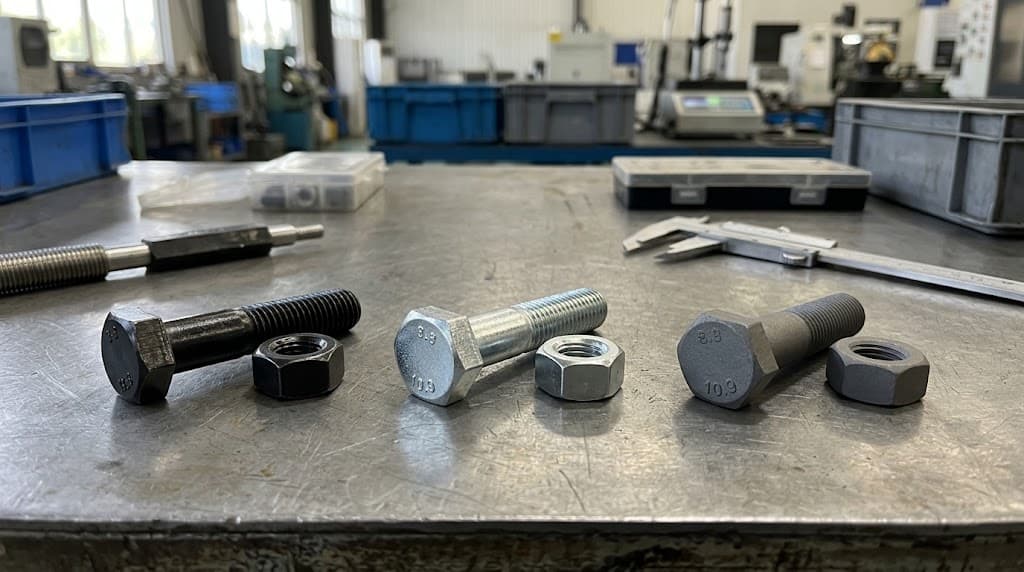
Compare black oxide, electro galvanized, and hot dip galvanized fasteners by corrosion protection, cost, and application. Learn what to specify before requesting a bulk quote.
Hot-Dip Galvanized Bolts at Canton Fair 2026: What Bulk Buyers Should Check
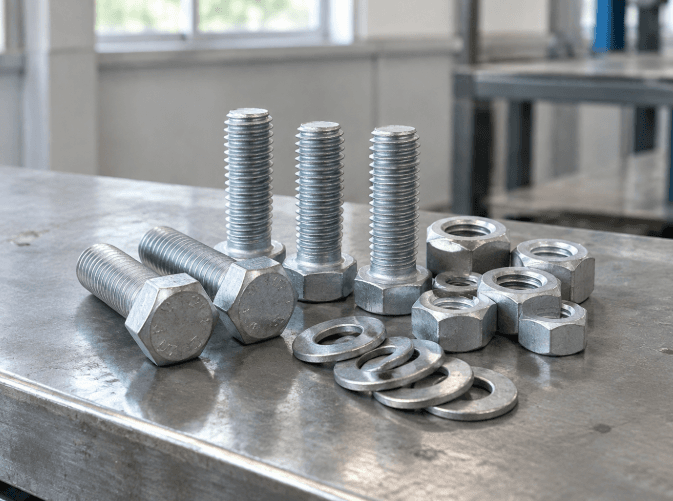
Sourcing hot-dip galvanized bolts and nuts for a construction or steel structure project? Learn what bulk buyers should check for standards, grades, coating, thread fit, inspection and supply before placing an order.
Want to know more?
Get in touch with us for more information about our services and products.