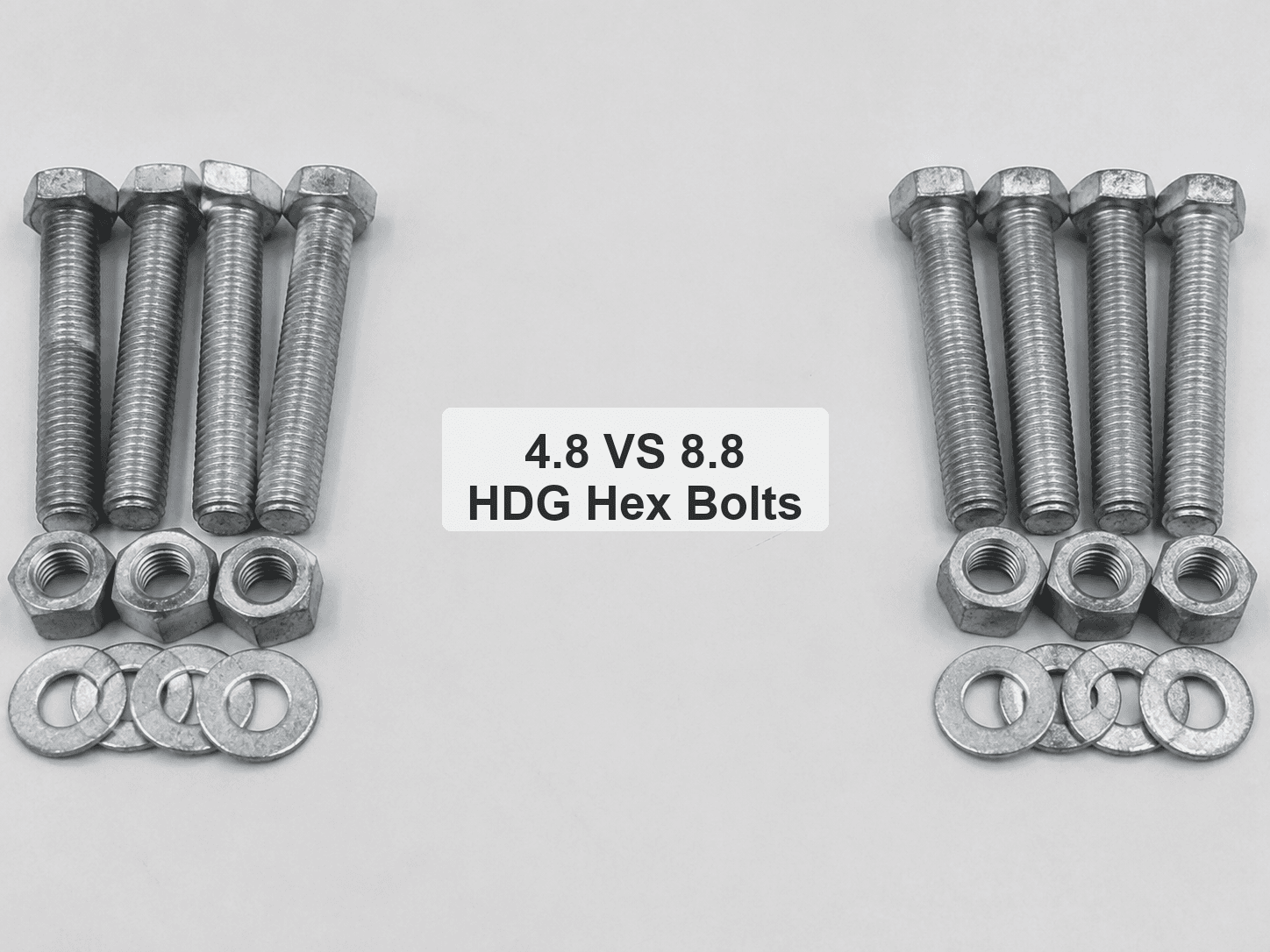
Standard HDG Hex Bolt Grades: How Should Importers Choose 4.8 or 8.8?

Annie Z
AuthorWith over 25 years of experience in fastener production and export sales, we operate our own manufacturing plant and our products are exported to over 50 countries. We are professional experts in bolts, nuts, washers, anchor bolts, and customized fasteners.
When importing hot dip galvanized hex bolts, buyers often need to choose between property class 4.8 and 8.8. Both grades are common metric bolt options, but they are designed for different load requirements and applications.
For hardware distributors, construction suppliers, machinery manufacturers, and engineering buyers, the correct choice should be based on the actual application rather than price alone.
A 4.8 bolt may be suitable for general fastening and light-duty connections, while an 8.8 bolt is more appropriate when the connection requires higher strength. Buyers should also confirm the bolt standard, size, thread, matching nuts, washers, surface treatment, and order quantity before placing a bulk order.
What Does 4.8 or 8.8 Mean?
The numbers 4.8 and 8.8 refer to the mechanical property class of metric bolts. The first number gives an indication of the bolt’s nominal tensile strength. The second number represents the relationship between tensile strength and yield strength. In practical purchasing terms:
| Property Class | General Characteristics | Typical Use |
|---|---|---|
| 4.8 | General-purpose carbon steel bolt | Light-duty fastening, fencing, brackets, general hardware |
| 8.8 | Higher-strength carbon steel bolt | Machinery, construction, steel structures, heavier connections |
The exact performance also depends on bolt diameter, manufacturing process, thread condition, applicable standard, and test requirements. Buyers should always specify the required grade in the purchase order instead of simply asking for “galvanized bolts.”
What Are Standard HDG Hex Bolts?
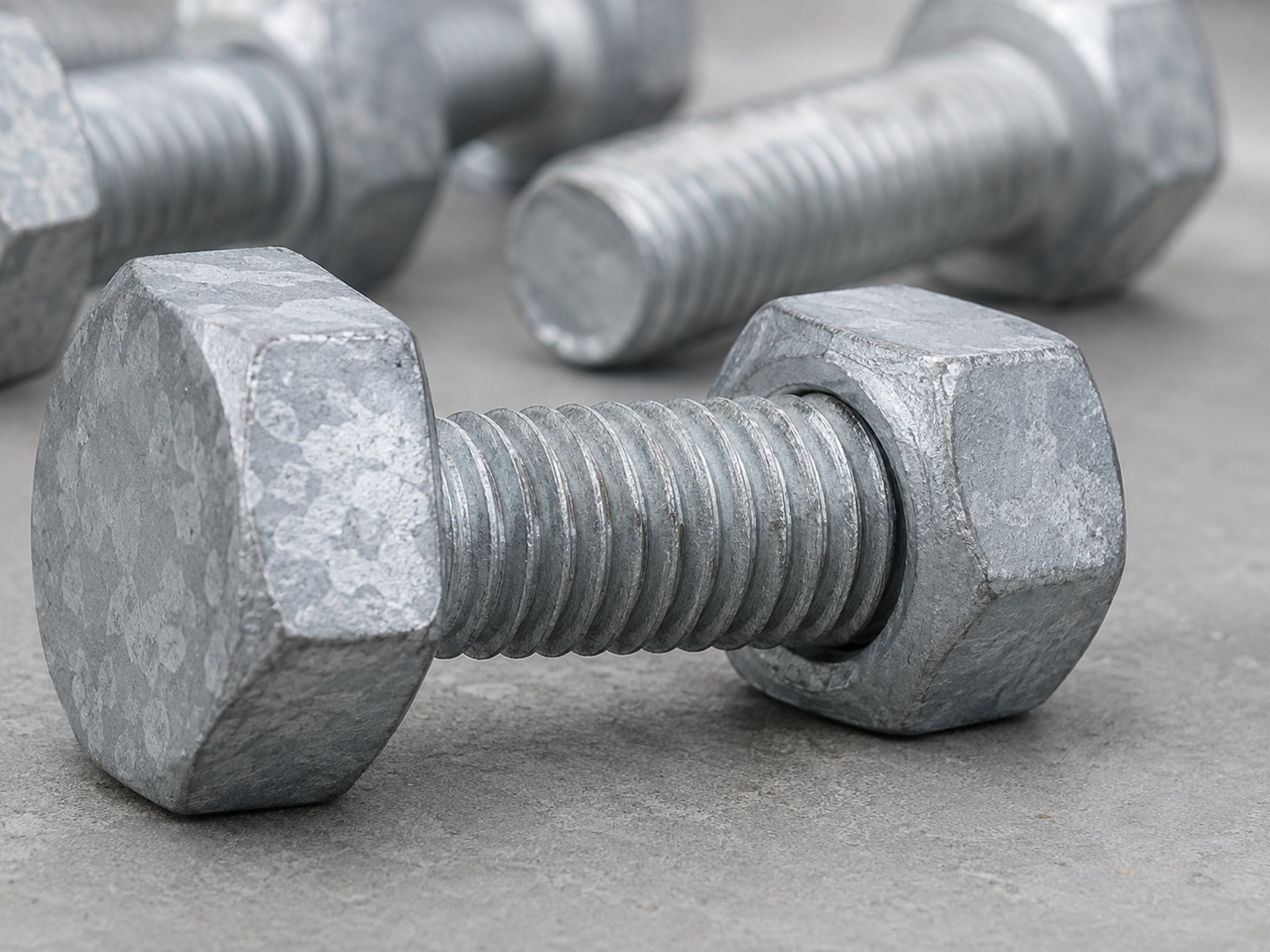
Standard HDG hex bolts are carbon steel hex head bolts with a hot dip galvanized surface treatment. The bolt is coated with zinc to improve corrosion resistance in outdoor or humid environments.
They are commonly used for:
- Machinery manufacturing
- Construction projects
- Bridge-related connections
- Architectural engineering
- Outdoor steel structures
- Agricultural equipment
- Brackets and support frames
- General industrial maintenance
A hex bolt normally works together with a nut and washer. For outdoor projects, buyers often purchase a complete set of:
- HDG hex bolts
- HDG hex nuts
- HDG flat washers
- Spring washers if required
Ordering matched components can help reduce thread compatibility and installation problems.
When Should Importers Choose Grade 4.8?
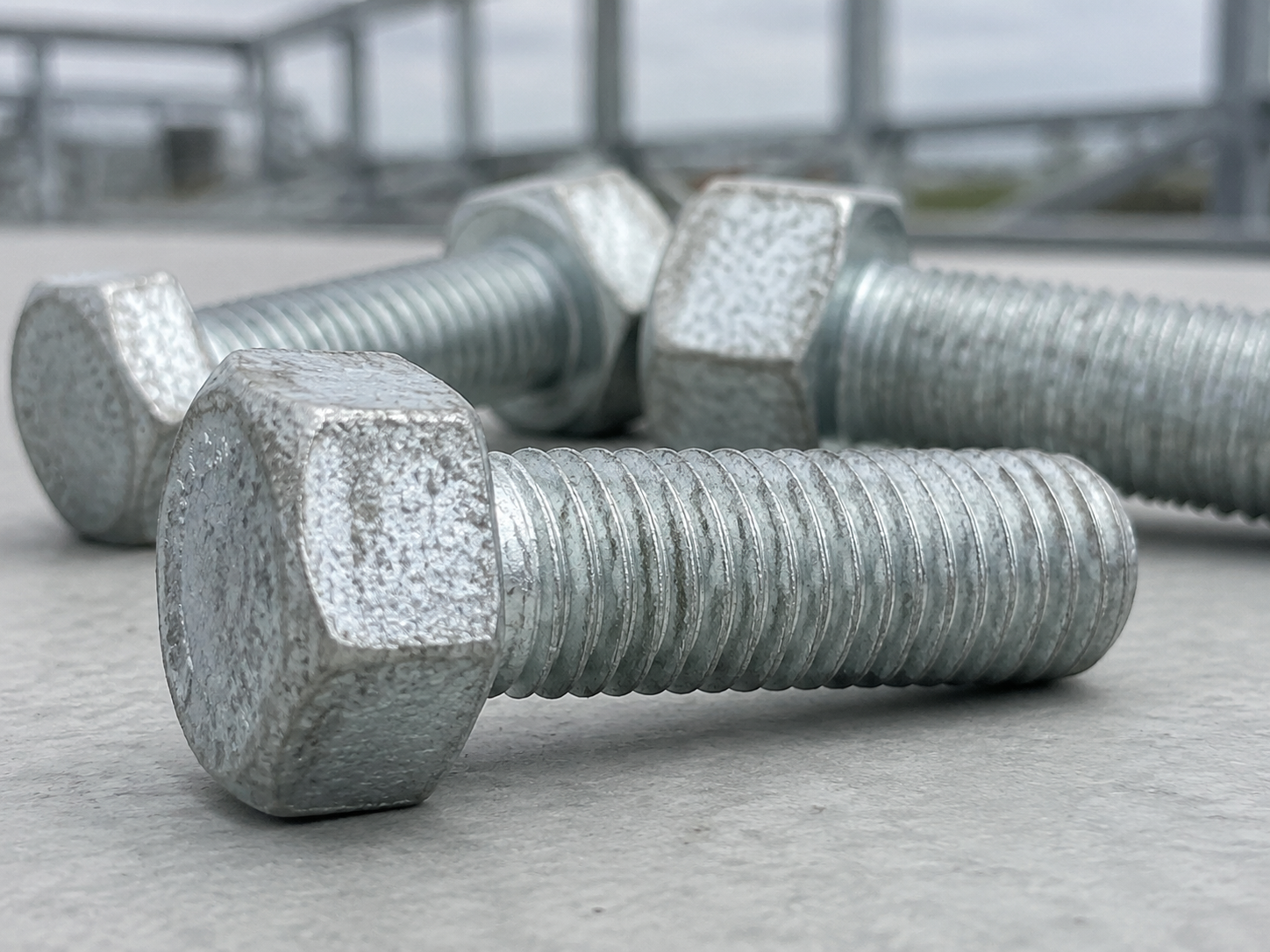
Grade 4.8 is often suitable for general-purpose fastening where the connection does not require a higher-strength bolt.
Typical applications may include:
- Fencing and gates
- Light steel brackets
- Agricultural hardware
- General maintenance
- Light equipment frames
- Outdoor hardware assemblies
- Non-critical steel connections
- Standard hardware distribution
For distributors serving general hardware, farm equipment, fencing, and maintenance customers, 4.8 HDG hex bolts may be a practical stock item.
However, buyers should not choose 4.8 only because it is less expensive. The bolt must still match the project’s load, safety, and installation requirements. If the connection is exposed to high tension, heavy vibration, impact, or structural load, the buyer should confirm whether a higher grade is required.
When Should Importers Choose Grade 8.8?
Grade 8.8 is a higher-strength bolt class and is commonly considered when the connection needs more load capacity than a general-purpose 4.8 bolt.
Typical applications may include:
- Machinery manufacturing
- Construction equipment
- Outdoor steel structures
- Bridge-related fastening
- Heavy brackets
- Pipe support structures
- Industrial frames
- Agricultural machinery
- Equipment bases
Grade 8.8 is often a more suitable option for buyers who supply engineering, construction, and machinery customers.
The correct grade still depends on the project specification. A higher grade does not automatically make the whole connection stronger if the nut, washer, base material, tightening method, or joint design is not suitable.
Check the Bolt Standard and Thread
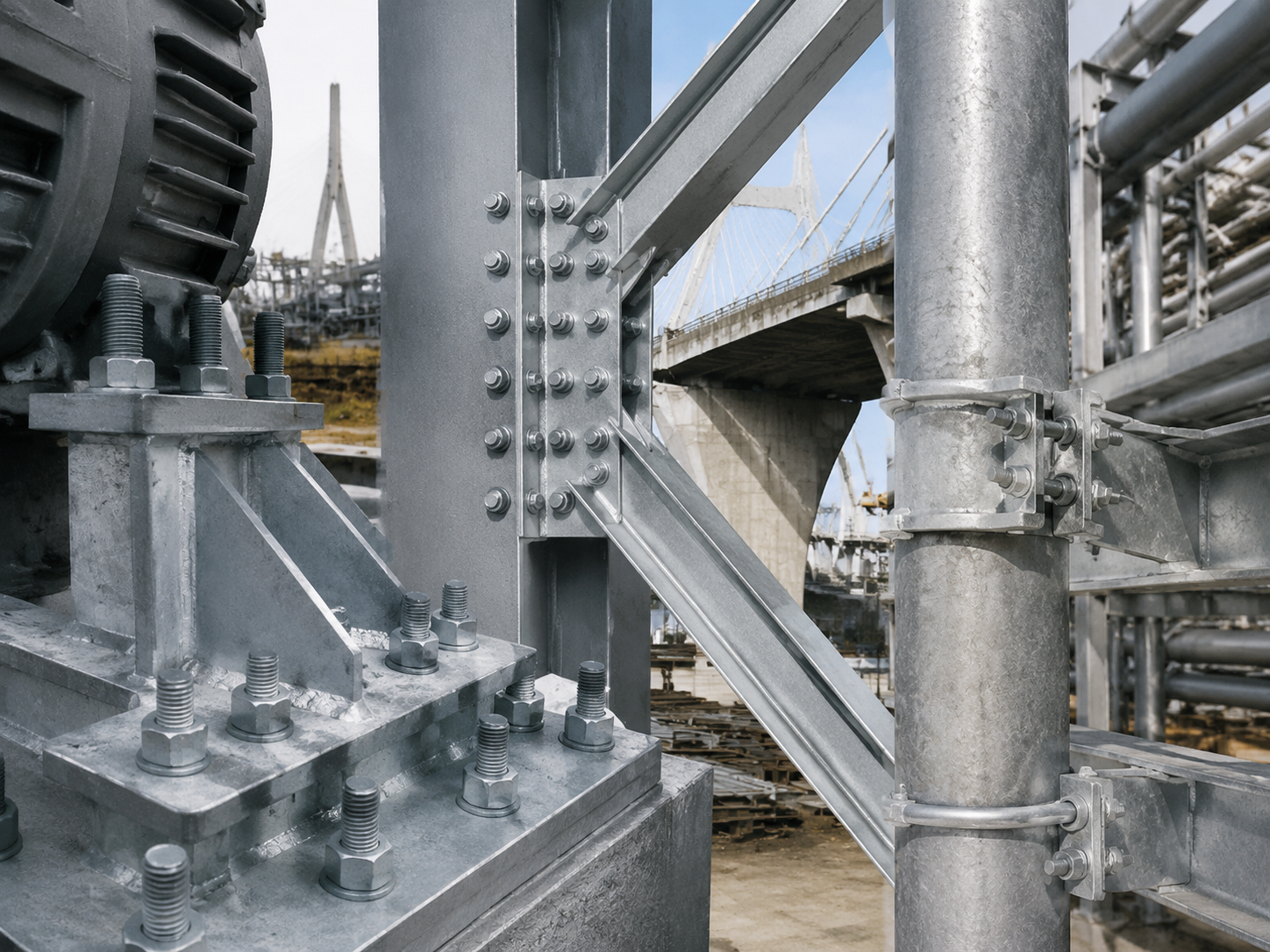
Before ordering standard HDG hex bolts, importers should confirm the product standard and thread type.
The buyer should specify:
- DIN, ISO, ANSI, ASTM, or local standard
- Metric or inch thread
- Bolt diameter
- Bolt length
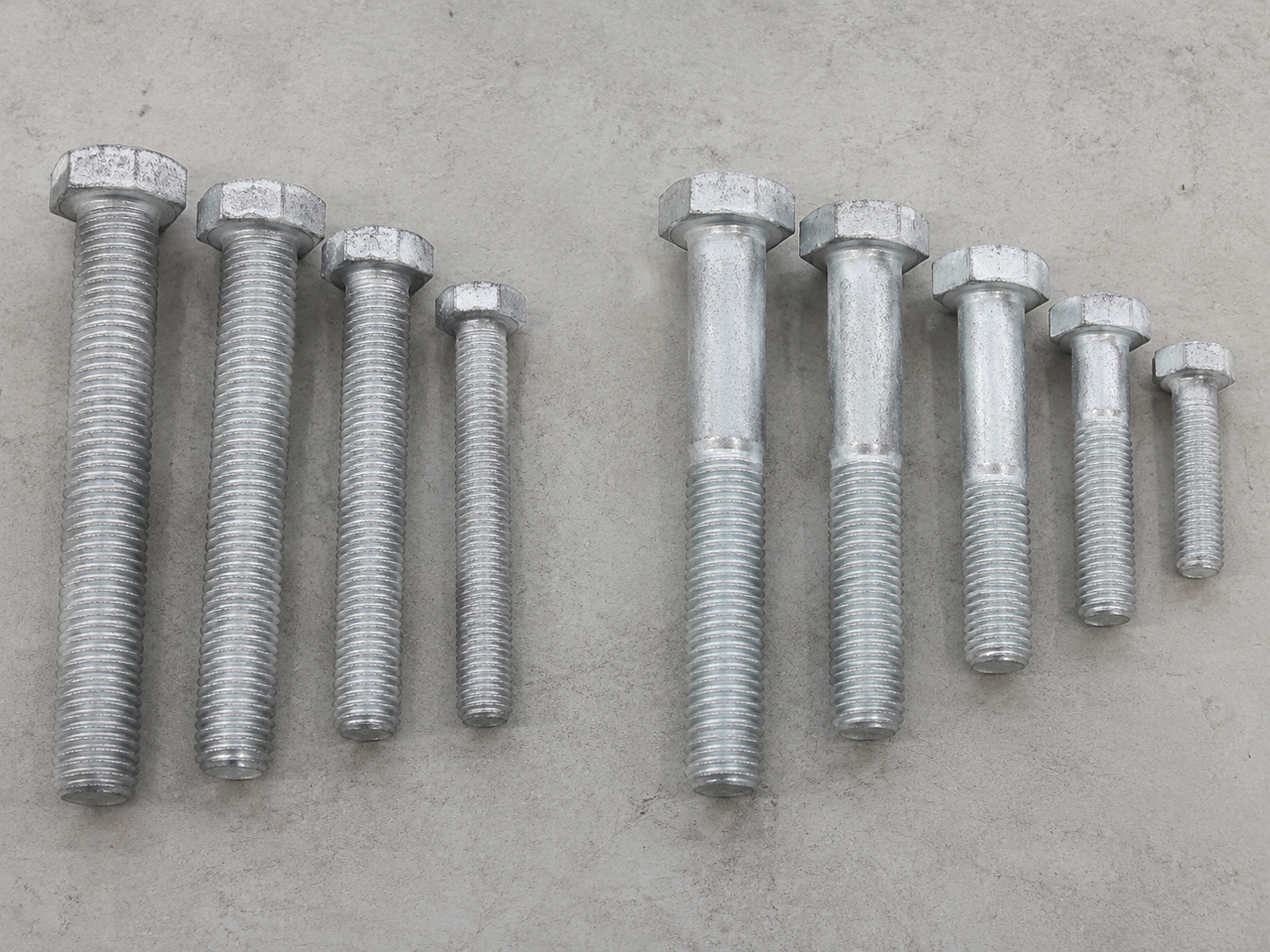
- Full thread or partial thread
- Thread pitch
- Head size
- Nut compatibility
For example, a buyer who needs a DIN933 hex bolt should not receive a different product standard only because the diameter and length appear similar.
The bolt and nut should also use the same thread system. Metric and inch threads should not be mixed.
Match the Nuts and Washers
HDG hex bolts should be paired with suitable nuts and washers.
Buyers should confirm:
- Nut size and thread
- Nut strength class
- Hot dip galvanized finish
- Washer inside diameter
- Washer thickness
- Washer outside diameter
- Whether spring washers are needed
- Whether the complete set should be packed together
The hot dip galvanizing process adds a zinc coating to the bolt surface. For this reason, correctly matched nuts are important for smooth installation.
For standard bulk orders, a complete bolt, nut, and washer set is often easier for distributors and project buyers to handle than purchasing each component separately.
Which Grade Should Distributors Stock?
The right stock mix depends on the local market.
Grade 4.8 may be suitable for:
- Hardware stores
- Fencing suppliers
- Agricultural suppliers
- General maintenance distributors
- Light outdoor construction
Grade 8.8 may be suitable for:
- Machinery suppliers
- Steel structure contractors
- Construction equipment distributors
- Industrial maintenance suppliers
- Engineering project buyers
Importers do not need to stock every possible grade and size. A more practical approach is to focus on standard sizes with repeat demand, then pack and label each grade clearly.
Before placing an order, buyers should review:
- Local metric or inch preference
- Common bolt diameters
- Common bolt lengths
- Customer application
- Matching nut and washer demand
- Carton quantities
- Required certificates
- Destination market requirements
Conclusion
Grade 4.8 and grade 8.8 HDG hex bolts serve different purchasing needs.
- Grade 4.8 is generally suitable for standard hardware, fencing, agricultural hardware, light brackets, and general maintenance.
- Grade 8.8 is more suitable for machinery, construction, steel structures, bridge-related connections, and other applications with higher strength requirements.
The correct choice also depends on the bolt standard, diameter, length, thread, matching nuts and washers, hot dip galvanizing requirement, and local market demand.
For importers and distributors, the most practical approach is to stock standard sizes that match regular customer demand instead of ordering too many unusual specifications.
We can help check suitable HDG bolt and nut sets for your market.
Related News
Other news you might be interested in
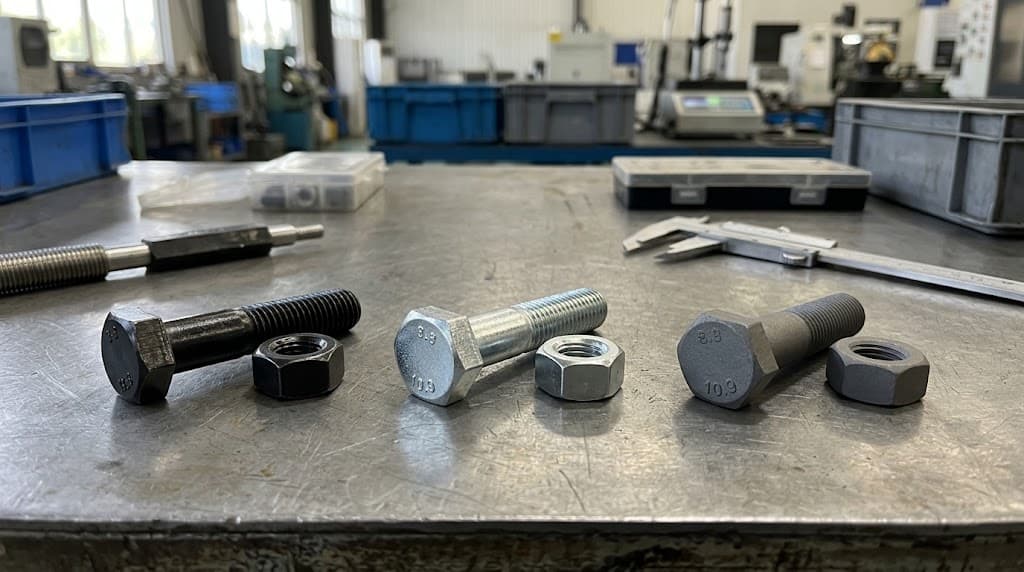
Are Black Oxide Fasteners Suitable for Outdoor Use?
Compare black oxide, electro galvanized, and hot dip galvanized fasteners by corrosion protection, cost, and application. Learn what to specify before requesting a bulk quote.
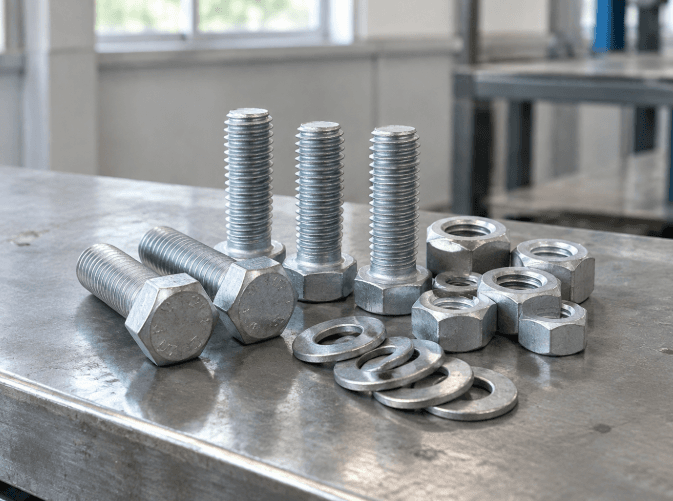
Hot-Dip Galvanized Bolts at Canton Fair 2026: What Bulk Buyers Should Check
Sourcing hot-dip galvanized bolts and nuts for a construction or steel structure project? Learn what bulk buyers should check for standards, grades, coating, thread fit, inspection and supply before placing an order.
Want to know more?
Get in touch with us for more information about our services and products.