8.8 vs 10.9 vs 12.9 Bolts: What Buyers Should Confirm for Hot-Dip Galvanized Projects

Annie Z
AuthorWith over 25 years of experience in fastener production and export sales, we operate our own manufacturing plant and our products are exported to over 50 countries. We are professional experts in bolts, nuts, washers, anchor bolts, and customized fasteners.
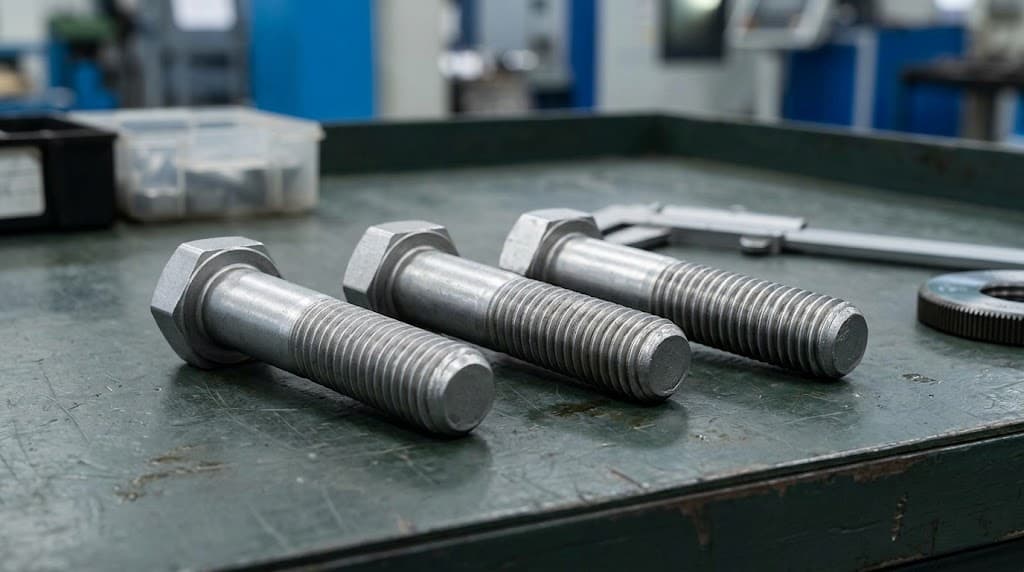
Metric bolts marked 8.8, 10.9 and 12.9 are different mechanical property classes. They are not just three strength grades you can swap freely. For hot-dip galvanized projects, buyers also need to check thread fit, coating specs, and the supplier’s process controls carefully.
This is just a purchasing checklist, not a design approval document. The project engineer in charge must verify the connection design and relevant project standards.
What do 8.8, 10.9 and 12.9 mean?
Under ISO 898-1, the property class of a metric carbon or alloy steel bolt is read in two parts:
- the first number indicates nominal tensile strength divided by 100;
- the second number indicates the relationship between yield strength and tensile strength.
Minimum acceptance values, size limits and test methods follow the exact version of the standard you use. One thing to note: you cannot use the nominal strength value directly as the allowable load for the finished connection.
| Property class | Common material direction | Heat-treatment consideration | What the buyer should verify |
|---|---|---|---|
| 8.8 | Low- or medium-carbon steel | Processing can vary by product and standard | The project requires 8.8 and the proposed bolt meets the specified mechanical and dimensional requirements |
| 10.9 | Generally alloy steel | Commonly quenched and tempered | The higher class is required and the complete bolt, nut and coating combination has been reviewed |
| 12.9 | Generally alloy steel | Commonly quenched and tempered, with close process control | The design requires 12.9 and the project accepts the higher-hardness and coating implications |
These are only general material references, not official material certificates. Your PO should clearly state the product standard, property class, size, material rules and inspection requirements.
How should a buyer choose the grade?
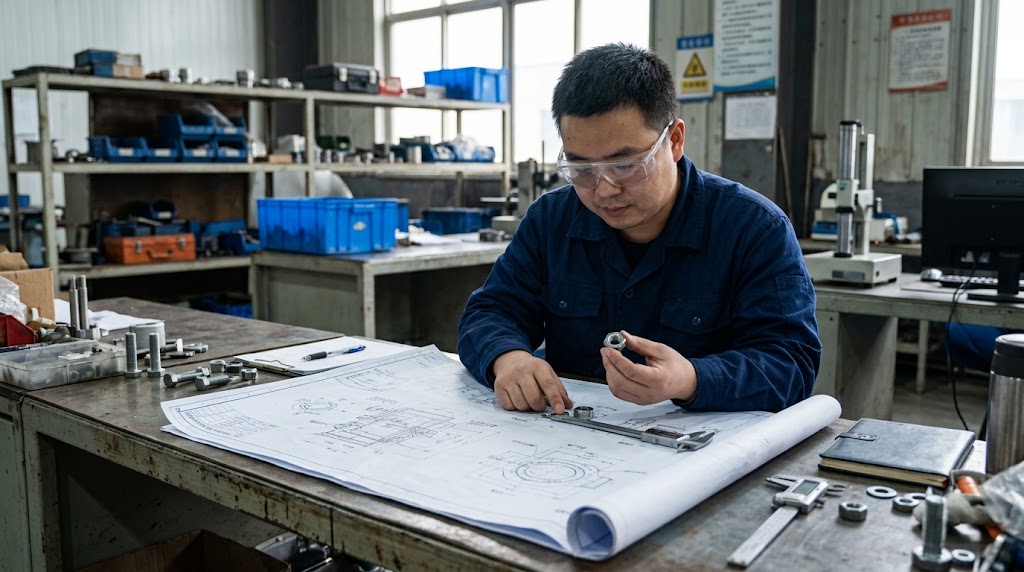
Start with the drawing and the application, not with the highest number in a catalogue.
Confirm:
- the applicable product standard, including the edition where relevant;
- the type of connection and whether the load is static, dynamic or fatigue-sensitive;
- the required bolt class and matching nut class;
- nominal diameter, pitch, length and thread length;
- the required material and heat-treatment route;
- the coating standard and any thread-fit requirement;
- the tightening method and any project-specific installation requirement;
- the inspection documents required for the order.
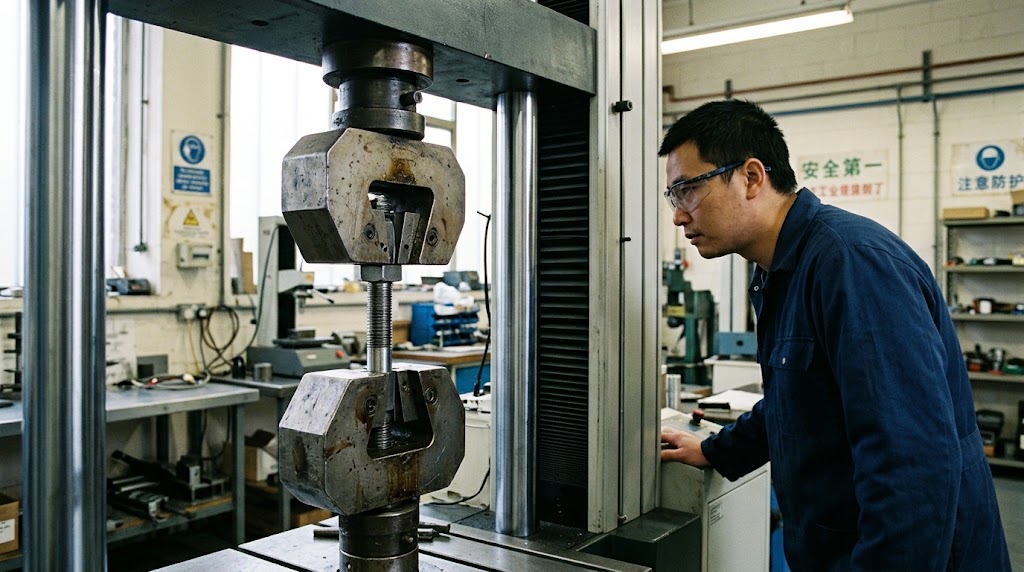
A higher property class may allow a higher preload for a given bolt size, but the design may not require or permit it. Bolt strength, nut strength, washer bearing area, thread engagement, hole condition and connected materials all affect the assembly. Replacing an approved 8.8 bolt with 10.9 or 12.9 requires engineering approval.
What changes with hot-dip galvanizing?
Hot-dip galvanizing adds a zinc layer with measurable thickness. On threaded parts, this changes the actual thread dimension. A nut that fits bare bolts might not screw onto galvanized ones properly.
The nut may need to be produced or selected as part of a compatible galvanized assembly, with an enlarged or overtapped thread where required by the applicable standard. The American Galvanizers Association explains that overtapping compensates for the coating thickness; the allowance should not be copied from one diameter to every size.
High-strength grades need additional attention. In a technical article, the Southern African Institute of Steel Construction documented brittle failure risks involving galvanized grade 10.9 bolts and identified hydrogen embrittlement and heat-treatment control among the possible causes. This does not mean that every galvanized 10.9 or 12.9 bolt is unsuitable. It means the grade, material, cleaning and coating process, and inspection requirements must be reviewed together.
Before ordering an HDG high-strength assembly, confirm:
- the coating standard and coating thickness or class;
- whether the bolt and nut will be checked as a matched assembly;
- how thread fit is controlled after coating;
- whether the specific grade and diameter are permitted with the chosen coating process;
- what process controls and inspection records apply;
- whether a sample assembly or dimensional check is required.
Do not assume that “hot-dip galvanized” means every grade, size and thread combination is available.
What should an RFQ include?
A clear RFQ helps the supplier confirm the product instead of quoting from a general catalogue description.
- Application and drawing: connection type, project requirement and drawing or sample reference.
- Product and standard: hex bolt, stud, socket screw or other product, with the required standard.
- Dimensions: diameter, pitch, length, thread length and tolerances.
- Property class: 8.8, 10.9, 12.9 or the exact drawing requirement.
- Material: specified steel grade or material requirement.
- Coating: hot-dip galvanizing standard, thickness or class, and any post-coating requirement.
- Assembly: nut standard and class, washer dimensions and whether the parts must be supplied as a matched set.
- Quantity: pieces or sets by size, with separate quantities for bolts, nuts and washers.
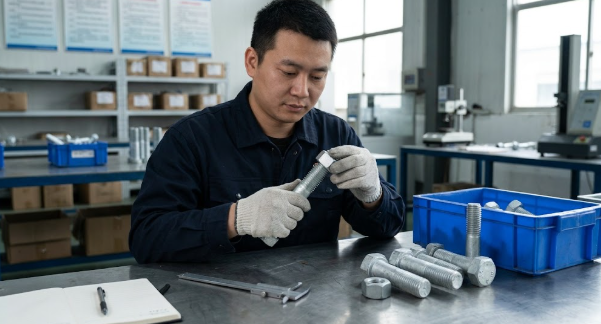
- Inspection: dimensional, mechanical, coating, thread-fit or material-document requirements.
- Delivery: packing method, destination and required delivery date.
Ask the supplier to identify any deviations, exclusions or points that require confirmation. A catalogue range does not confirm that every grade, size and coating combination is available.
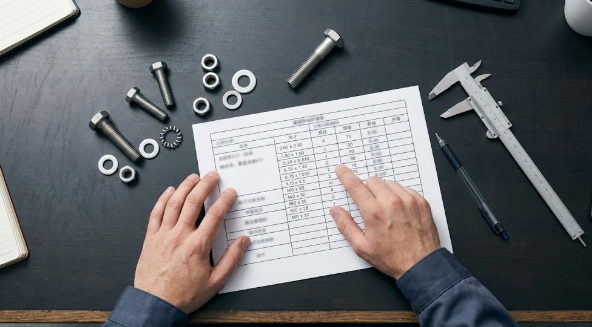
Common buying mistakes
- Treating the property class as a material name.
- Assuming the highest grade is automatically the safest choice.
- Buying galvanized bolts and standard nuts separately without checking thread fit.
- Comparing quotations without comparing standards, nut classes, coating requirements and inspection.
Questions buyers often ask
1.Is 10.9 stronger than 8.8?
Yes, 10.9 specifies a higher property class than 8.8. That does not make it a universal replacement. The complete assembly, installation method and project requirements still need approval.
2.Can 12.9 bolts be hot-dip galvanized?
It depends on the applicable product standard, material, dimensions, manufacturing route and project acceptance criteria. Do not approve the combination from the grade name alone.
3.Does a higher bolt grade remove the need to match the nut?
No. Bolt and nut classes have separate requirements. A high-strength bolt can still perform poorly if the nut, thread engagement or washer is unsuitable.
---
Send the drawing or required specification with the standard, dimensions, property class, material, coating, nut and washer requirements, quantity and inspection requirements.
Hotop Fasteners supplies hot-dip galvanized bolts, nuts, washers and related fasteners for industrial and infrastructure projects. You can review the DIN 933 8.8/10.9 bolt range, the 12.9 grade hex bolt range and the HDG 8.8 bolt and nut page.
For a project-specific quotation, send the required grade, standard, dimensions, coating and quantity. The supplier can then confirm the proposed product combination and the information required for technical review.
Related News
Other news you might be interested in
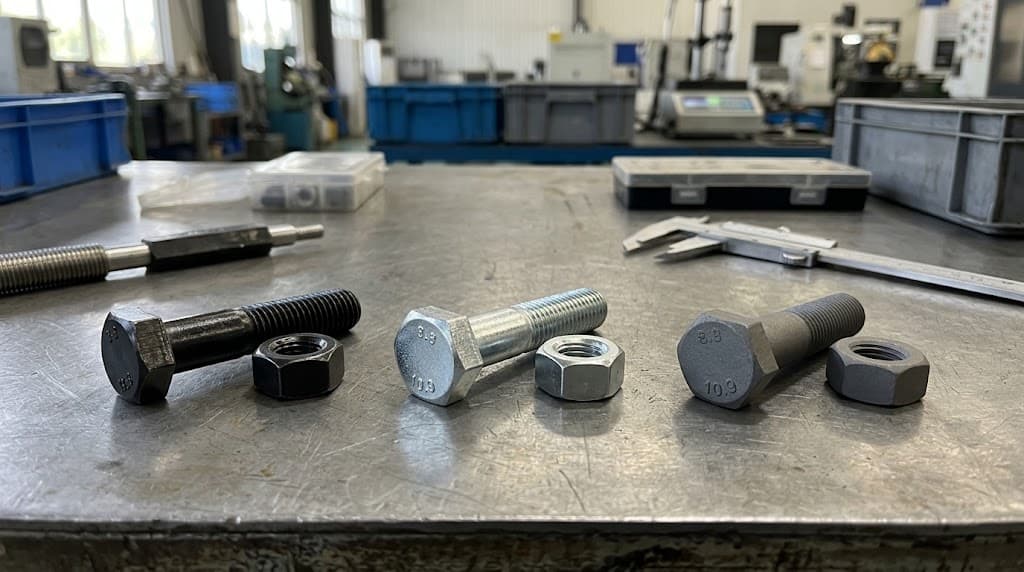
Are Black Oxide Fasteners Suitable for Outdoor Use?
Compare black oxide, electro galvanized, and hot dip galvanized fasteners by corrosion protection, cost, and application. Learn what to specify before requesting a bulk quote.
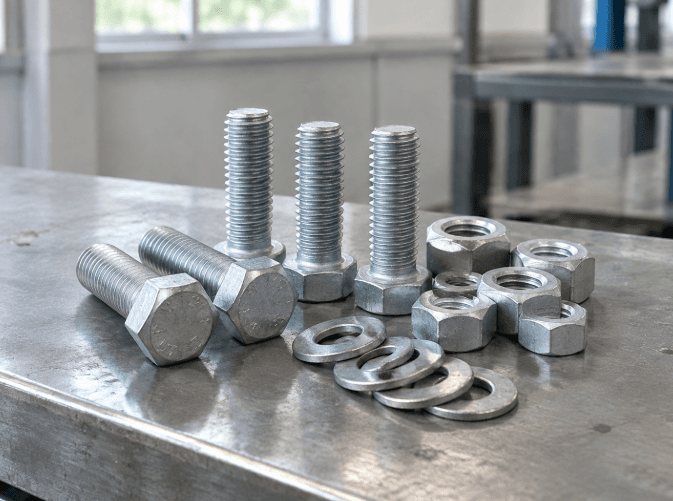
Hot-Dip Galvanized Bolts at Canton Fair 2026: What Bulk Buyers Should Check
Sourcing hot-dip galvanized bolts and nuts for a construction or steel structure project? Learn what bulk buyers should check for standards, grades, coating, thread fit, inspection and supply before placing an order.
Want to know more?
Get in touch with us for more information about our services and products.