Bolt Markings & Lot Traceability Checklist

Annie Z
AuthorWith over 25 years of experience in fastener production and export sales, we operate our own manufacturing plant and our products are exported to over 50 countries. We are professional experts in bolts, nuts, washers, anchor bolts, and customized fasteners.
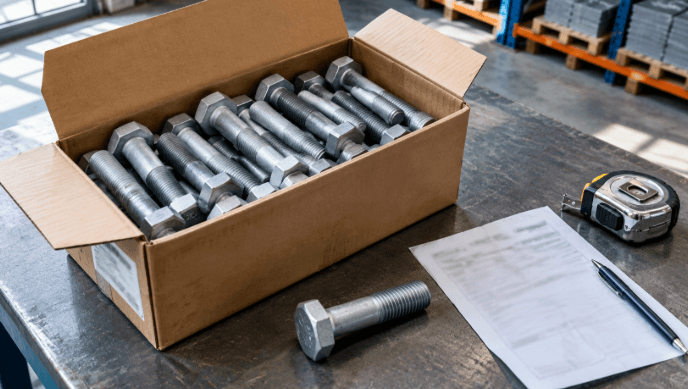
The grade markings and test reports are insufficient to prove that the report covers the delivered fasteners. The product, original packaging, purchase order lines, and required records need to be checked together according to the agreed requirements.
This guide addresses identification and document matching at receipt. It does not determine product suitability, replace inspection or testing, or authorize release for installation. For information to agree before ordering, see our fastener submittal checklist.
1. Check What Each Identifier Refers To
| Identifier | Question to resolve |
|---|---|
| Grade or property-class marking | Which designation is shown, and is it required for this product under the specified standard? |
| Manufacturer's identification | Which organization does the mark identify under the applicable requirements? |
| Steel heat reference | Which material heat does the material record cover? |
| Manufacturing lot reference | How is the production lot defined and linked to the products? |
| Inspection lot reference | Which group of products does the inspection or test record cover? |
| Package reference | Which carton, pallet or other package does the delivery record identify? |
Do not consider manufacturer markings, furnace numbers, batch numbers, and packaging references as interchangeable. The manufacturing and inspection batches may also be different; Check the relationship between the definition and records of the order.
The marking requirements depend on the applicable standards, product form, and any relevant exceptions. ISO metric, SAE, and ASTM names are not a universal marking system. Missing or unfamiliar markings need to be reviewed according to the prescribed requirements; Just appearance alone cannot prove authenticity or consistency.

2. Click on the product to document link
Use approved orders, drawing revisions, specifications, and required document lists. Sampling, inspection methods, and release decisions should follow the applicable receiving quality procedures. If these are unclear, please submit the gap to the responsible reviewer instead of selecting sample size or acceptance rules from this article.
Record the inspected products in their original packaging
For items inspected according to the agreed upon plan, visible product markings, original packaging references, and delivery references should be placed together. Record the specified product, size, grade, quantity, and batch identifier (if any). Photos can support this recording, but they cannot replace the required inspection or testing.
For hot-dip galvanized fasteners such as hot-dip galvanized heavy hex bolts, surface brightness does not establish mechanical grade or coating thickness. If the required markings are obscured, please seek clarification. Unauthorized procedures are not allowed to grind, re imprint, or remove coatings.
Match the packaging with the order and packing list
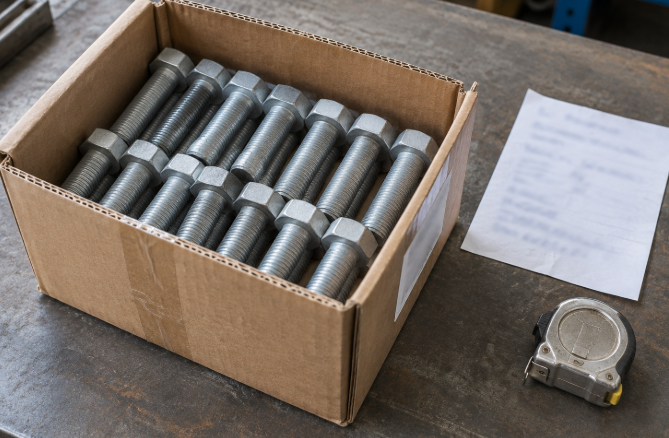
Determine which order line, specified batch, and quantity the packaging belongs to. Use records to indicate the quantity of cartons or mixed batches delivered or repackaged in batches.
If the goods are repackaged, please retain the original identifiers and record their relationship with the new packaging within the scope required by the order and quality procedures. Similar size or appearance does not prove that the product belongs to the same batch.
Match batch references with required records
The batch reference of the finished product on the packaging may differ from the thermal reference on the material certificate. This difference will not automatically become an error; Check if the recorded relationships meet the traceability requirements of the order.
If a link is needed but unclear, please request the packaging to be batch processed to record cross references. If the relationship with the delivered goods is not resolved, reports of the same nominal size and grade cannot determine the coverage range.
Where hot-dip galvanized hex nuts and hot-dip galvanized flat washers are included, inspect them separately. A report identifying only the bolts does not establish coverage of the other assembly components.
3. Read the scope of each document
Check the issuer, document reference, product identification, applicable requirements, results, and verification details related to the type of document ordered.
| Record | Scope to check |
|---|---|
| Material record | Material designation, heat reference, supplied form and relationship to the finished fasteners |
| Finished-fastener mechanical report | Product, grade, lot, required tests and reported results |
| Dimensional or thread inspection record | Size, drawing revision, inspected characteristics and inspection scope |
| Coating report | Specification, product or lot references, inspection methods and results |
| Packing list and cross-reference | Packages and quantities linked to order lines and document references |
The raw material certificate itself cannot determine the mechanical properties of the finished fasteners. The mechanical report itself cannot determine size or coating compliance.
ISO 16228 addresses inspection-document types for finished fasteners. Its public scope excludes special-purpose or specially engineered applications requiring other procedures. If the order specifies this standard, EN 10204 or another document framework, review its applicability, requirements and the actual document scope. The term “MTC” alone does not define the required evidence. Do not assume that every order requires the same records or that documents with different names are interchangeable.

4. Conduct authorization review based on differences
Record the affected packaging and quantity, relevant order requirements, and exact mismatches. If the differences affect the required identification or consistency, the recognizability of the goods should be maintained and detention and release controls of the receiving procedure should be applied.
The authorized examiner should determine whether missing references, corrected documents, further verification, or other processing are necessary. The supplier's explanation or replacement of labels is evidence of review, not automatic acceptance of the goods' permission.
Do not change tags, replace levels, or conduct informal validation testing as a shortcut to release. The testing, rework, and acceptance of deviations must follow the applicable approval process.
---
Use receiving differences to determine requirements for clearer protocols: labeling, batch separation, file linking, repackaging records, and file delivery time. Keep these consistent with the accepted order, rather than creating a separate, conflicting list.
Send your product specification, quantity schedule and document requirements to Hotop Fasteners. Ask for written confirmation of the proposed identification and documentation scope, limitations and supply conditions.
Related News
Other news you might be interested in
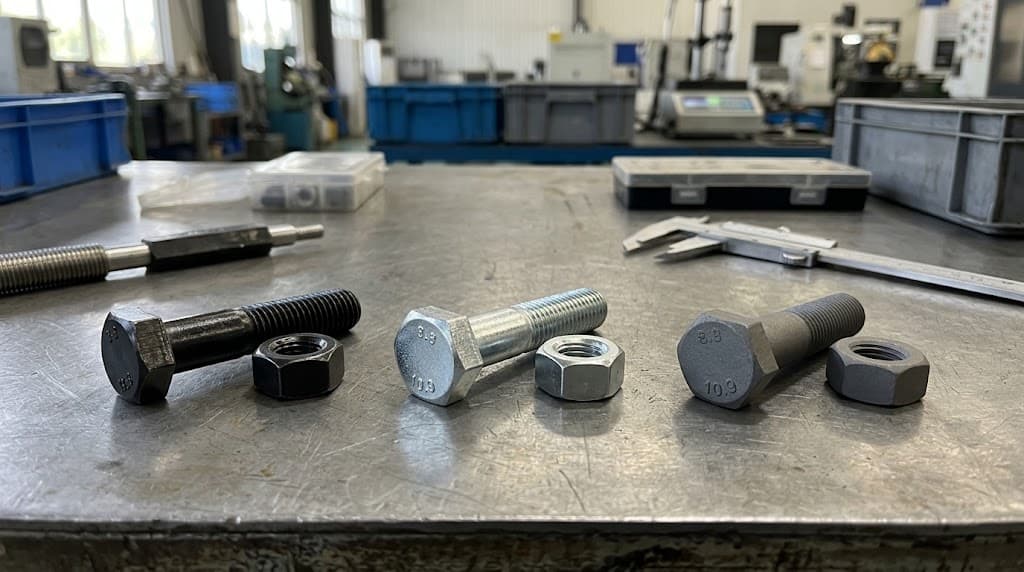
Are Black Oxide Fasteners Suitable for Outdoor Use?
Compare black oxide, electro galvanized, and hot dip galvanized fasteners by corrosion protection, cost, and application. Learn what to specify before requesting a bulk quote.

Hot-Dip Galvanized Bolts at Canton Fair 2026: What Bulk Buyers Should Check
Sourcing hot-dip galvanized bolts and nuts for a construction or steel structure project? Learn what bulk buyers should check for standards, grades, coating, thread fit, inspection and supply before placing an order.
Want to know more?
Get in touch with us for more information about our services and products.