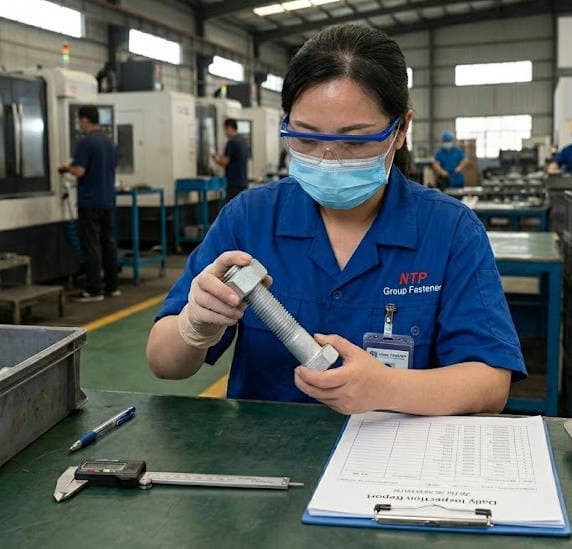
How to Check Thread Fit for Galvanized Bolts On-Site? A Quick Inspection Guide

Annie Z
AuthorWith over 25 years of experience in fastener production and export sales, we operate our own manufacturing plant and our products are exported to over 50 countries. We are professional experts in bolts, nuts, washers, anchor bolts, and customized fasteners.
The On-Site Nightmare: When Bolts and Nuts Won't Match
Imagine this: Your construction crew is working on a tight schedule, assembling a heavy steel framework. The crane is holding the steel beam in position, but when the worker tries to thread the nut onto the hot dip galvanized (HDG) bolt, it stops halfway. It’s completely stuck.
For construction sites—whether in the humid climates of Southeast Asia or the harsh infrastructure projects in the Middle East—this is a common and expensive delay.
With Hot Dip Galvanized fasteners, thread fit is the most critical quality issue. Because HDG creates a thick zinc coating (usually 40 to 50 microns or more) to protect against severe outdoor corrosion, standard nuts will not fit onto standard galvanized bolts.
If you are a site supervisor, QA/QC engineer, or procurement manager, you need to know how to verify thread compatibility before the installation begins. Here is a practical, quick inspection guide to checking thread fit for HDG bolts right on the job site.
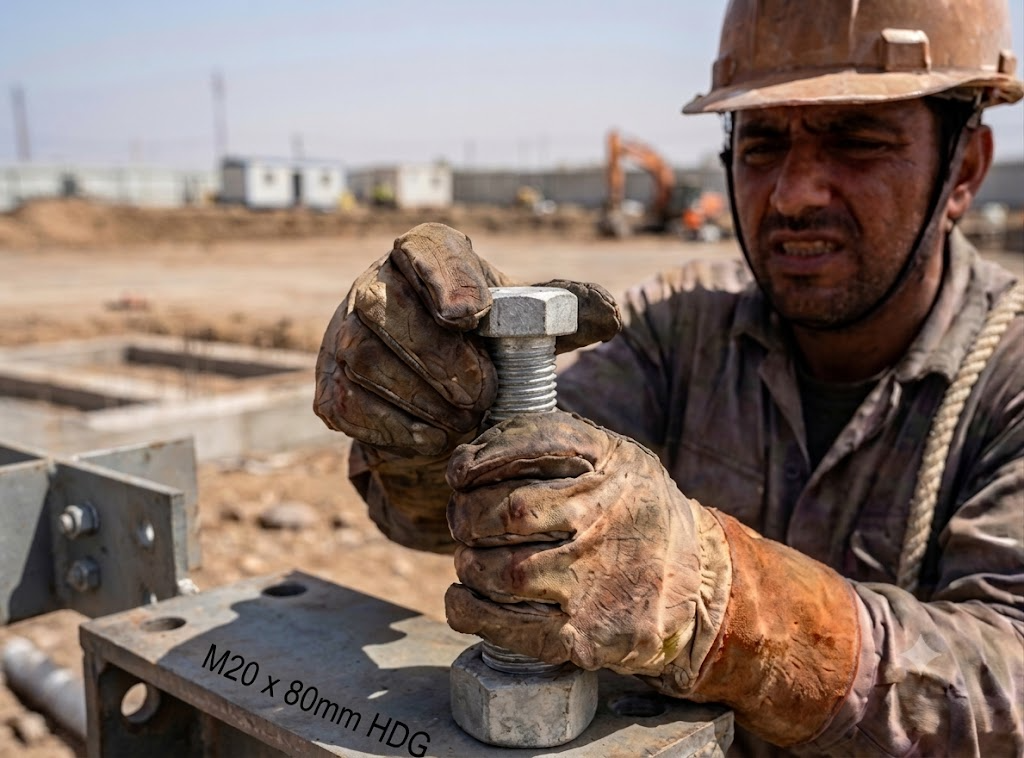
Why Does Thread Fit Fail in HDG Fasteners?
Before checking the bolts, it is important to understand why they fail. Unlike electro-zinc plating, which leaves a very thin and precise layer, hot dip galvanizing involves dipping the steel into molten zinc. This process adds significant thickness to the bolt's external threads and can sometimes leave small zinc residues (zinc pooling) in the thread valleys.
To solve this, international standards dictate that the matching nuts must be overtapped (threaded slightly larger) after the galvanizing process. If your supplier fails to control the overtapping size, or if you bought the bolts and nuts from two different suppliers, thread binding (galling) will happen on site.
Method 1: The "Free Spin" Hand Test (Quickest On-Site Check)
You don’t always have a laboratory on a construction site. The simplest way for a site worker to test thread fit is the Free Spin Test.
How to do it:
- Pick a random sample of bolts and nuts from the newly opened carton (test at least 5-10 sets per batch).
- Clean off any obvious dust or packaging debris from the threads.
- Hold the bolt vertically.
- Thread the matching heavy hex nut onto the bolt by hand.
- The Standard: You should be able to spin the nut down the entire length of the thread using only your fingers, without applying excessive force or using a wrench.
Warning Signs: If you feel heavy resistance after one or two turns, or if you need a wrench to force the nut down, stop. Forcing it will strip the zinc coating, destroy the corrosion protection, and likely lock the assembly permanently (a phenomenon known as thread galling).
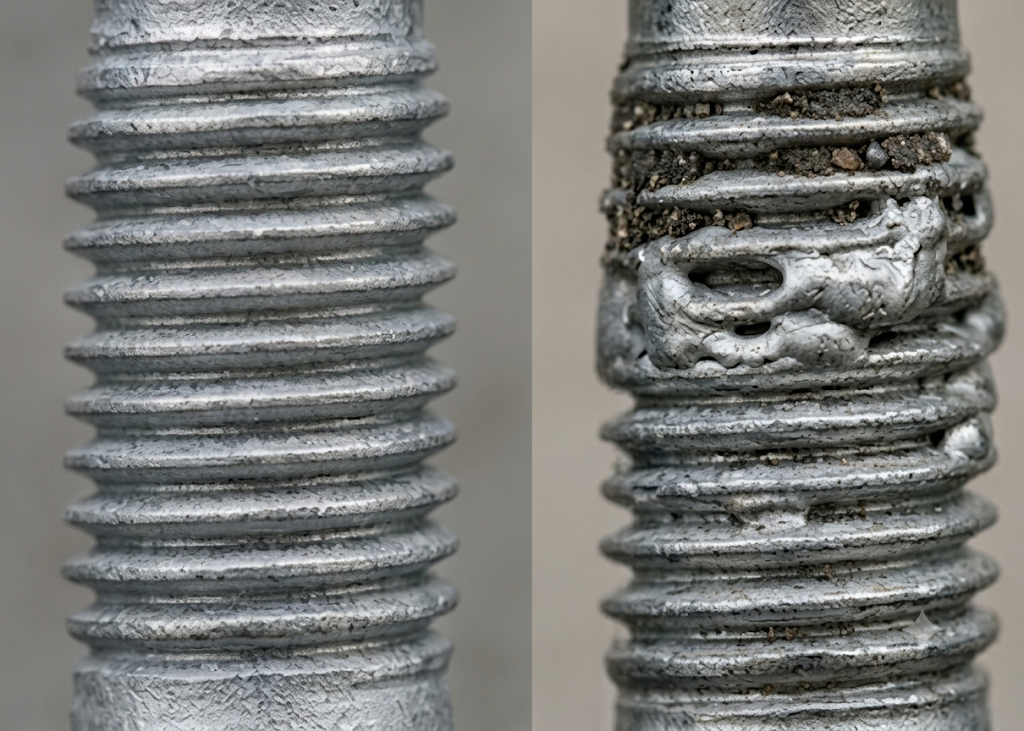
Method 2: The Go/No-Go Gauge Test (The Professional Standard)
For quality control engineers receiving shipments, visual and manual checks are not enough. You must use a Thread Ring Gauge (for bolts) and a Thread Plug Gauge (for nuts). This is the exact method used in reliable manufacturing facilities before export.
- The "Go" Gauge: This gauge must spin freely over the entire threaded length of the bolt. If it passes, it means the maximum outer diameter of the zinc-coated thread is within standard limits.
- The "No-Go" Gauge: This gauge should not be able to thread onto the bolt for more than two turns. If it goes all the way down, the bolt threads have been cut too deep, compromising the strength of the fastener.
Method 3: Visual Inspection for Zinc Pooling
Sometimes, the nut is properly overtapped, but the bolt still won't fit. This is often due to poor galvanizing techniques.
What to look for:
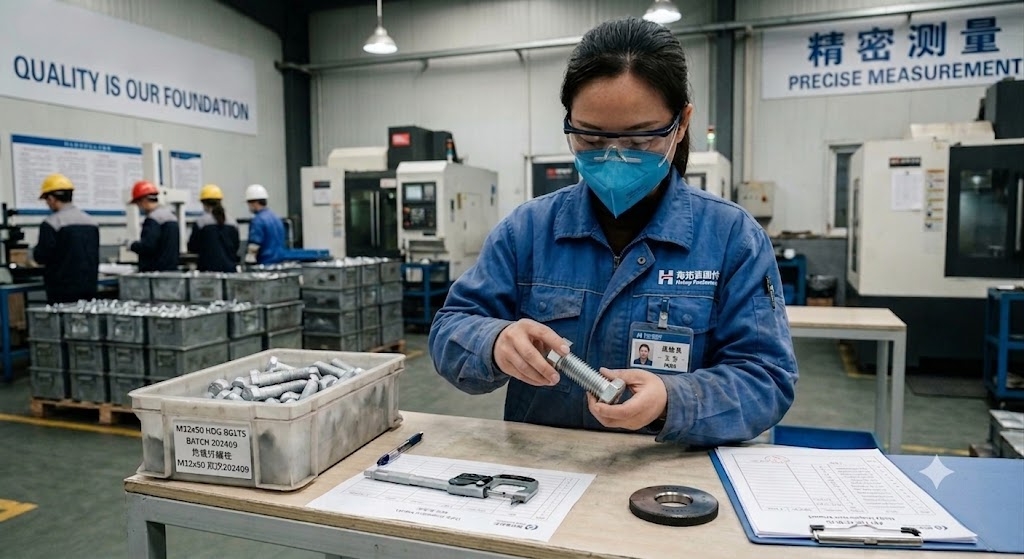
Take a close look at the bolt threads under good lighting. The thread valleys (the bottom of the V-shape) should be relatively clean. If you see thick, uneven lumps of zinc filling the valleys (known as zinc pooling or zinc bridging), the nut will get jammed.
High-quality manufacturers use centrifuge spinning immediately after the hot dip process to throw off excess molten zinc, ensuring the threads remain clear while maintaining the required coating thickness.
The Ultimate Fix: How to Prevent Thread Fit Issues Before Shipment
The best way to solve on-site thread problems is to prevent them at the procurement stage. Buyers can eliminate 99% of these headaches by following two rules:
- Always Buy Complete Assemblies: Never buy HDG bolts from Supplier A and HDG nuts from Supplier B. Always purchase them as a matched set (Complete Assemblies) from a single manufacturer.
- Demand Pre-Shipment Testing: Instruct your supplier to conduct thread fit checks (rotational capacity tests) before packing.
Reliable HDG Fasteners for Your Next Project
At Hotop Fasteners, we understand that construction delays cost money. That is why thread fit is a mandatory checkpoint in our quality control process.
Before any shipment leaves our facility, our QC team rigorously checks our hot dip galvanized bolts and overtapped nuts using precise Go/No-Go gauges and physical assembly tests. We deliver clean threads, standard-compliant zinc thickness, and matched sets ready for immediate use on your job site.
Experiencing thread fit issues with your current supply?
Related News
Other news you might be interested in
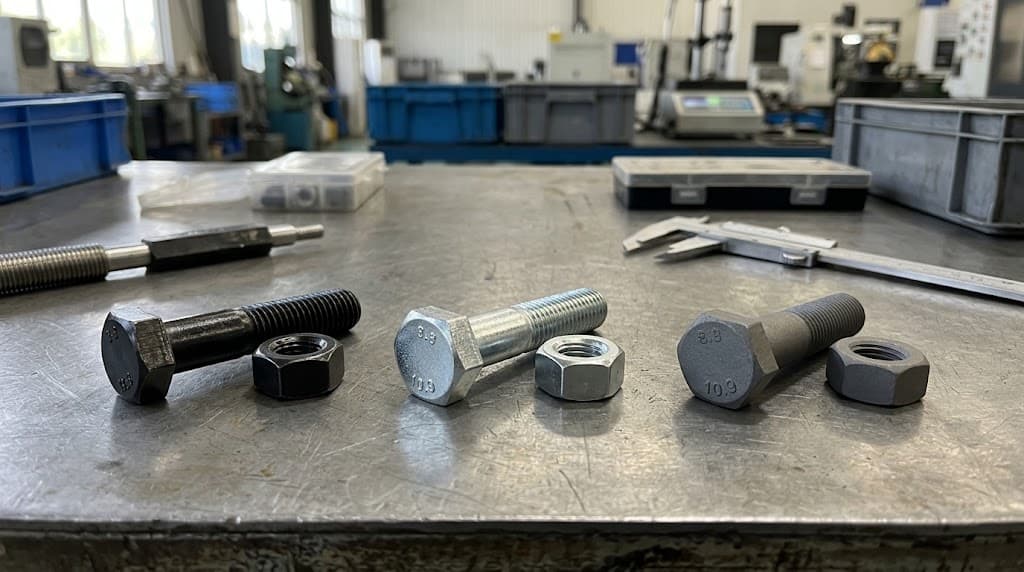
Are Black Oxide Fasteners Suitable for Outdoor Use?
Compare black oxide, electro galvanized, and hot dip galvanized fasteners by corrosion protection, cost, and application. Learn what to specify before requesting a bulk quote.
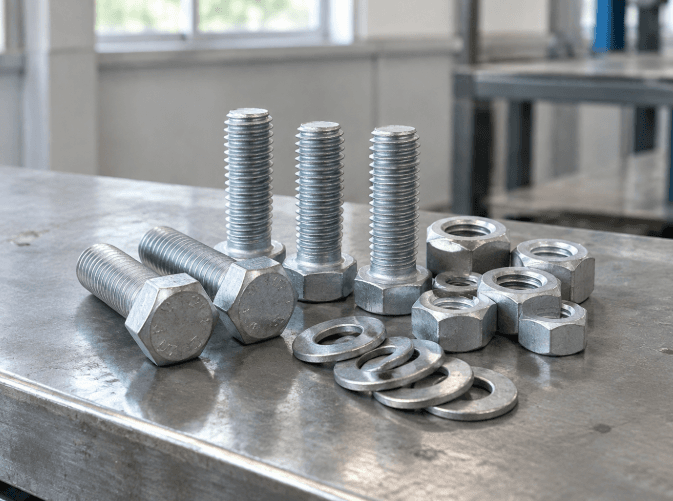
Hot-Dip Galvanized Bolts at Canton Fair 2026: What Bulk Buyers Should Check
Sourcing hot-dip galvanized bolts and nuts for a construction or steel structure project? Learn what bulk buyers should check for standards, grades, coating, thread fit, inspection and supply before placing an order.
Want to know more?
Get in touch with us for more information about our services and products.