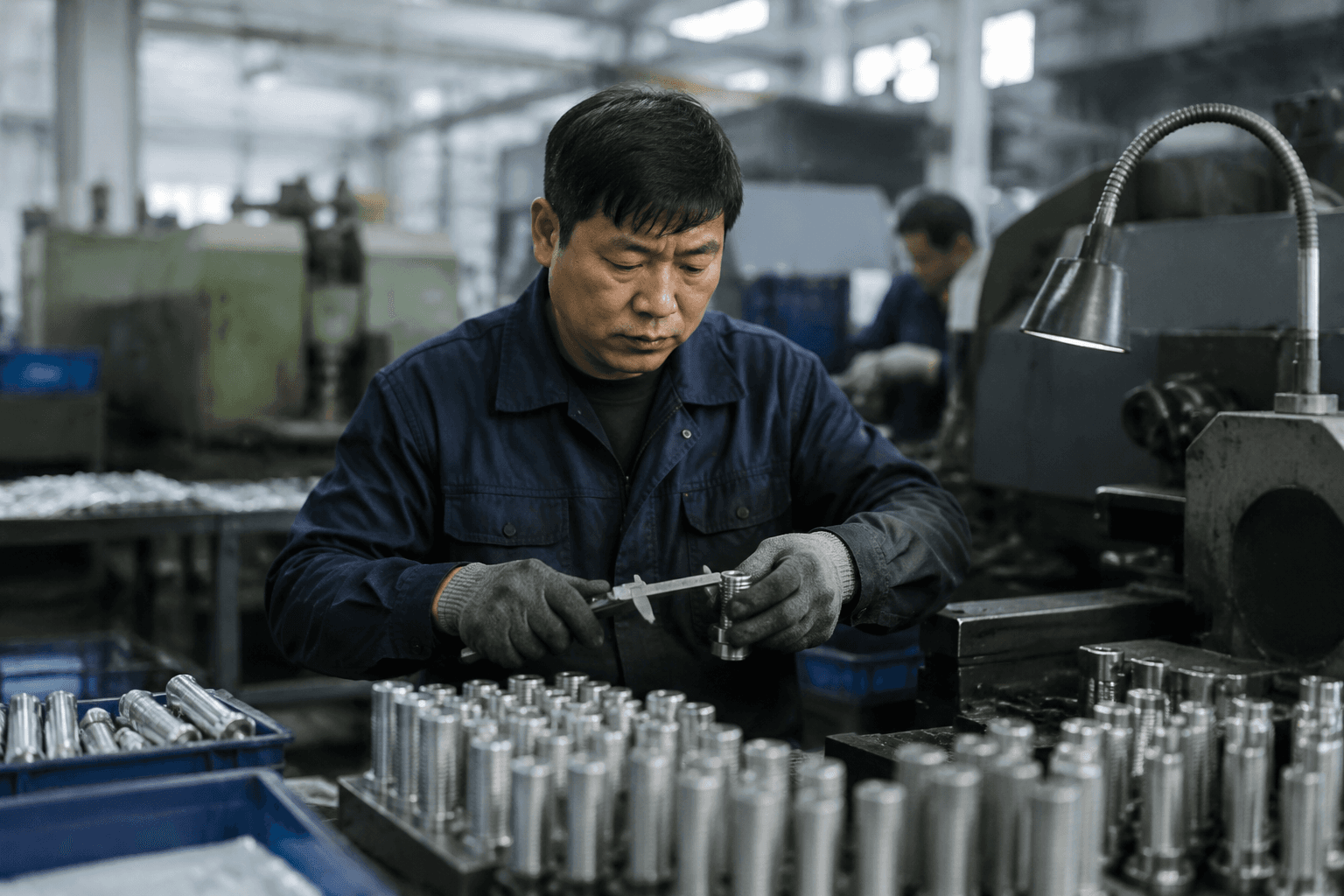
Industrial Fasteners Sourcing: How Factory-Direct Partnerships Prevent Disruptions and Drive ROI

Annie Z
AuthorWith over 25 years of experience in fastener production and export sales, we operate our own manufacturing plant and our products are exported to over 50 countries. We are professional experts in bolts, nuts, washers, anchor bolts, and customized fasteners.
Introduction: The Hidden Cost of Fastener Failures
Every industrial project depends on the integrity of threaded fasteners—from heavy-duty construction and automotive assembly to precision machinery builds and infrastructure deployments. When these components fail, the ripple effects are rarely contained to a single joint. Structural failures triggered by substandard manufacturing fasteners can bring entire production lines to a halt, expose engineering firms to liability claims, and trigger compliance penalties that erode project margins overnight.
Substandard industrial bolts or delayed fastener deliveries often lead to structural failures, project overruns, and compliance penalties. Industrial procurement teams frequently underestimate how a single weak link in the fastener supply chain can cascade into systemic delays. A missing batch of hex bolts on a construction site stalls critical path work. A faulty anchor bolt in medical equipment installation creates a safety hazard that demands immediate de-installation and replacement. These disruptions are avoidable when sourcing moves from transactional, price-driven buying toward a strategic partnership model.
In this guide, we explore how a strategic, factory-direct approach to sourcing industrial bolts, screws, and custom fastening components can mitigate risks and create long-term value. By aligning with a dedicated fastener manufacturer that controls production, quality, and global logistics from a single source, procurement leaders can eliminate the guesswork and fragility that plague traditional multi-tier supply chains.
Industrial Fasteners Market Outlook: Growth, Trends, and Scale
The global industrial fasteners market is projected to reach $30.9 billion by 2034, driven by infrastructure development, renewable energy installations, and the rapid expansion of automated manufacturing. As machinery fasteners become more technically demanding, procurement teams face increasing pressure to secure components that meet exacting specifications while maintaining predictable delivery schedules. The industry outlook for Class 12.9 demand highlights how high-strength applications are reshaping the fastener landscape, with carbon steel fasteners and alloy steel grades increasingly specified for load-bearing and safety-critical roles.
Key challenges include raw material price fluctuations, supply chain fragility, and the urgent need for corrosion-resistant solutions. Procurement professionals are also contending with extended lead times and unpredictable availability across standard fastener categories. If you are tracking delivery performance across your vendor base, the lead time watch for fastener supply chains in Q2 provides a useful benchmark.
Surge in demand for high-strength, technically advanced fasteners that meet ISO, DIN, and other international standards is reshaping procurement criteria. Buyers need standard fasteners and custom fasteners that carry full documentation, verified material properties, and demonstrable performance under load. This is where a global fastener supplier with in-house manufacturing capability delivers measurable procurement advantage.
The Cost of Compromise: Quality, Compliance, and Corrosion
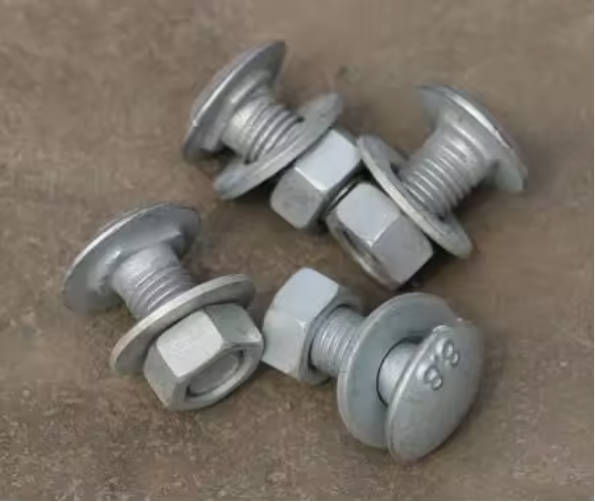
Inferior manufacturing fasteners can cause equipment downtime, safety accidents, and liability issues, often resulting in 25% higher total cost of ownership compared to sourcing from a qualified fastener supplier. The math is straightforward: a marginally lower unit price on industrial bolts means nothing when a single failure forces a production shutdown or triggers a warranty claim against your OEM fasteners. The hidden costs of rework, expedited replacements, and reputational damage far outweigh any upfront savings.
Compliance with standards like ISO 9001 and EN 10204 3.1 is non-negotiable for global fastener suppliers aiming to protect OEMs and engineering firms. Every serious fastener manufacturer must demonstrate process control, material traceability, and dimensional consistency across every production batch. Buyers should expect to receive a Material Test Certificate (MTC) with each shipment—not as an optional add-on, but as a standard deliverable that validates mechanical properties and chemical composition against the stated specification.
Surface finishing—from zinc-nickel coating to PTFE coating—plays a pivotal role in extending service life and meeting salt spray testing requirements. The choice of coating directly impacts how a fastener performs in corrosive environments. For procurement teams evaluating coating options, the trend toward zinc-nickel protection reflects a broader market move toward finishes that deliver extended corrosion resistance. Nickel plating remains a reliable option for enhanced wear resistance and controlled friction, while PTFE coating addresses reduced torque and chemical resistance.
Technical Sourcing: How to Select the Right Fastener for Your Application
Leverage technical sourcing expertise to identify the correct standard (DIN, GB/T, ASTM), material grade (carbon steel, alloy steel), and coating. Engineering fasteners operate within precise mechanical envelopes, and a mismatch in thread pitch, tensile strength, or coating thickness can compromise an entire assembly. Experienced procurement teams work with fastener manufacturers who provide rapid technical guidance on material selection, dimensional verification, and performance simulation for specific load cases.
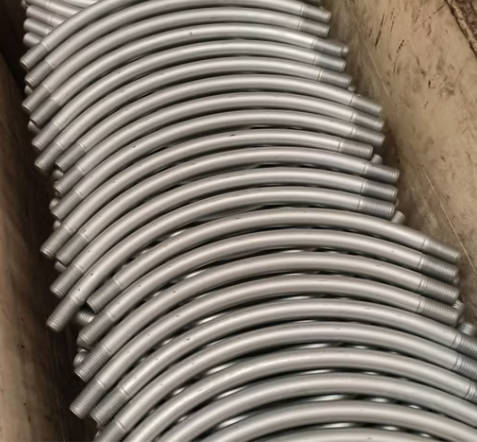
Understand the performance differences between hex bolts, U-bolts, anchor bolts, and tunnel segment bolts for specialized environments. A hex bolt for general assembly will not perform the same function as a hot-dip galvanized expansion anchor bolt embedded in concrete or a tunnel segment bolt subjected to cyclic loading. The application dictates the geometry, material, and surface treatment—and selecting incorrectly is an avoidable engineering failure.
Custom fasteners and ODM fasteners are ideal when standard solutions cannot meet dimensional, strength, or corrosion criteria. Whether you need cold forged fasteners in non-standard lengths, CNC machined components with tight geometric tolerances, or fully custom technical drawings executed to spec, a capable fastener manufacturer should offer flexible engineering support. Submit your custom technical drawings for feasibility review early in the design cycle.
Request Material Test Certificates (MTC) and EN 10204 3.1 documentation to verify mechanical properties and traceability. The MTC is your proof that the fasteners you received match the fasteners you specified. It establishes a chain of custody from raw steel through forging, heat treatment, threading, and finishing. Without this documentation, you are accepting risk you cannot quantify.
Product Spotlight: Engineered Fastening Solutions for High-Stakes Industries
Hot Dip Galvanized Carbon Steel U-Bolt: Right-angle structure and dense zinc coating ensure superior corrosion resistance; ideal for machinery, chemical, construction, and automotive sectors.
Hot Dip Galvanized Expansion Anchor Bolt: Provides slip-proof fixing for industrial construction and medical equipment; available in full M8-M24 sizes.
Hot-Dip Galvanized Arc Tunnel Segment Bolt: Dual HDG + Dacromet coating delivers unmatched protection for tunnel and subway shield engineering projects.
HDG Hot-Dip Galvanized Round Head Guardrail Splicing Bolt: Burr-free round head and weather-resistant finish suit municipal and traffic infrastructure.
High-Strength Grade 8 Hot Dip Galvanized Hex Nut: Combines high tensile strength with corrosion resistance; fits heavy machinery and new energy installations.
12.9 Grade Black Zinc Plated Hex Head Bolts (DIN931/DIN933): Full-thread and half-thread options in 10.9/12.9 grades; M4-M52 range for automotive and steel structures.
Request a quote for any of these fasteners today.
Quality Assurance: The Backbone of Reliable Fastener Supply
Rigorous quality assurance processes include tensile testing, salt spray testing, and dimensional inspection, ensuring every batch meets specifications. A fastener manufacturer that treats quality assurance as a core discipline—not a final inspection checkpoint—delivers a fundamentally different product than one that just ships parts.
ISO 9001-certified production facilities combine cold forging, thread rolling, and CNC machining to deliver precision and repeatability. Cold forged fasteners benefit from grain flow that follows the part geometry, yielding superior mechanical properties. Thread rolling produces threads that are harder and more fatigue-resistant than cut threads. For a deeper look at how one facility approaches this, the advantage of ISO 9001 certification is worth understanding before you qualify any new supplier.
Material Test Certificates (MTC) and third-party verification provide full traceability from steel mill to finished fastener. The ability to trace every batch back to its raw material heat lot is foundational for OEM fasteners used in regulated industries, transportation infrastructure, and safety-critical equipment. The advantage of an advanced metrology lab is that dimensional validation happens on calibrated, traceable equipment.
FastenersB2B's commitment to quality assurance reduces your risk and ensures long-term performance in demanding environments. Every order—from standard fasteners to fully custom ODM fasteners—is backed by documented inspection data, verifiable material properties, and a manufacturing process that prioritizes consistency over speed.
Why FastenersB2B: Factory-Direct Advantage for Global B2B Procurement
As a specialized fastener manufacturer, FastenersB2B offers factory-direct pricing, eliminating middlemen and reducing total procurement costs. The factory-direct model is not about the lowest unit price—it is about removing layers of margin and communication lag that introduce both cost and risk. When you buy from FastenersB2B, you are talking directly to the team that produces your industrial bolts, your hex bolts, and your custom fasteners. No trading company in the middle, no lost technical details, no diluted accountability.
Rapid global logistics, flexible MOQ, and competitive lead times support just-in-time manufacturing and project schedules. Our automated production lines enable us to scale output quickly without sacrificing precision, giving you confidence that your machinery fasteners will arrive when you need them—not weeks later.
Custom capabilities include cold forged fasteners, CNC machined components, custom technical drawings, and tailored packaging. Whether you need engineering fasteners produced to your exact dimensions, ODM fasteners developed from your specifications, or OEM fasteners that match your existing inventory, FastenersB2B provides the engineering support to get it right the first time. Our team reviews your custom technical drawings, provides input on manufacturability, and delivers samples before full production runs.
From bulk fastener orders to engineering fasteners, we provide end-to-end support—from technical sourcing to after-sales service. As a global fastener supplier with manufacturing roots, we take responsibility for the entire lifecycle of your fastener procurement, not just the moment the boxes leave our dock.
Ready to Secure Your Fastener Supply Chain?
Contact FastenersB2B today for a complimentary technical evaluation and quote on industrial fasteners, custom fasteners, or standard fasteners. Submit your custom technical drawings for a rapid feasibility and cost analysis. Our engineering team will help you select the right surface finishing—hot-dip galvanized, zinc-nickel, chrome plating, or PTFE coating—for your application. Request your free technical evaluation and quote now.
Related News
Other news you might be interested in
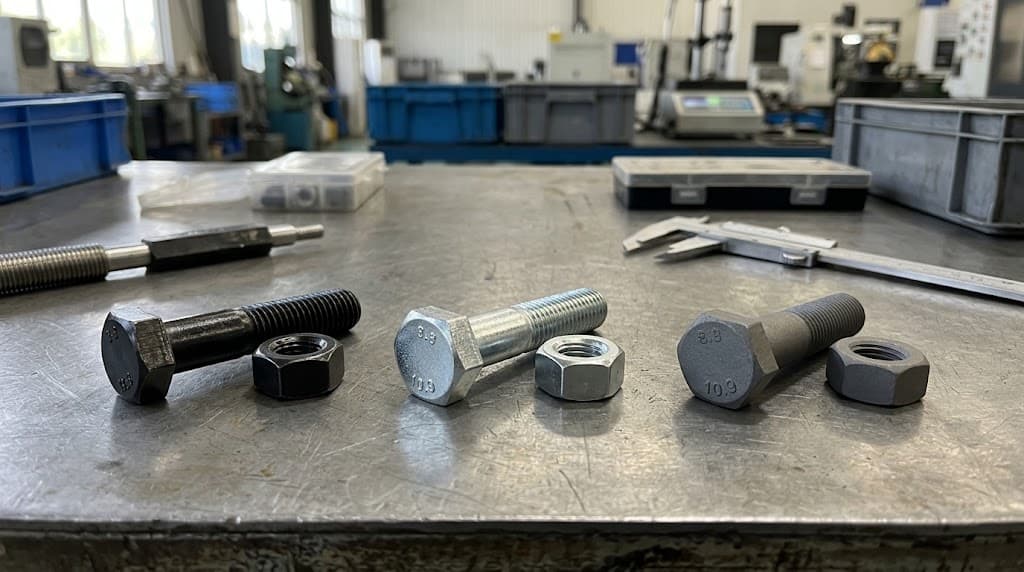
Are Black Oxide Fasteners Suitable for Outdoor Use?
Compare black oxide, electro galvanized, and hot dip galvanized fasteners by corrosion protection, cost, and application. Learn what to specify before requesting a bulk quote.
Hot-Dip Galvanized Bolts at Canton Fair 2026: What Bulk Buyers Should Check
Sourcing hot-dip galvanized bolts and nuts for a construction or steel structure project? Learn what bulk buyers should check for standards, grades, coating, thread fit, inspection and supply before placing an order.
Want to know more?
Get in touch with us for more information about our services and products.