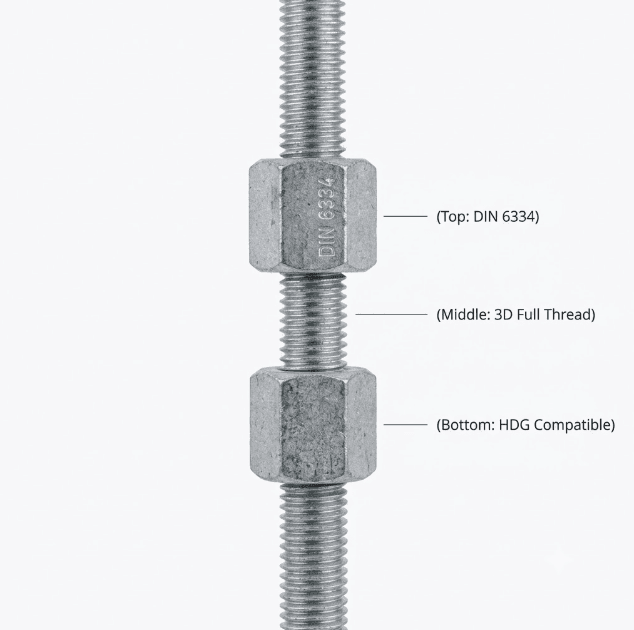
Suspending Heavy HVAC: How to Safely Splice HDG Threaded Rods with DIN 6334 Coupling Nuts

Annie Z
AuthorWith over 25 years of experience in fastener production and export sales, we operate our own manufacturing plant and our products are exported to over 50 countries. We are professional experts in bolts, nuts, washers, anchor bolts, and customized fasteners.
When suspending massive commercial HVAC ductwork, cable trays, or heavy plumbing lines (MEP systems) from high warehouse ceilings or airport concourses, a standard 3-meter threaded rod is rarely long enough. Engineers and field contractors must splice multiple rods together to achieve the required drop length.
If a suspension splice fails, multi-ton equipment will collapse, leading to catastrophic structural damage and severe safety hazards.
As a direct fastener manufacturer based in Handan, China, the Hotop Fasteners engineering team has seen countless splice failures caused by improperly sourced hardware. In this technical guide, we will break down the engineering physics of splicing Hot Dip Galvanized (HDG) rods, expose the manufacturing traps hidden by cheap trading companies, and explain why the DIN 6334 Coupling Nut is the only safe standard for heavy suspension.
1. The Anatomy of a Safe Splice: The "3D" Rule
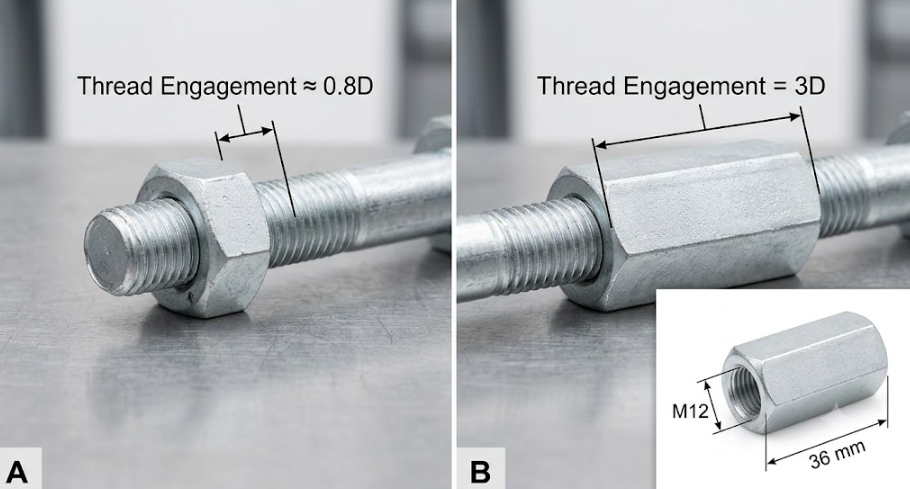
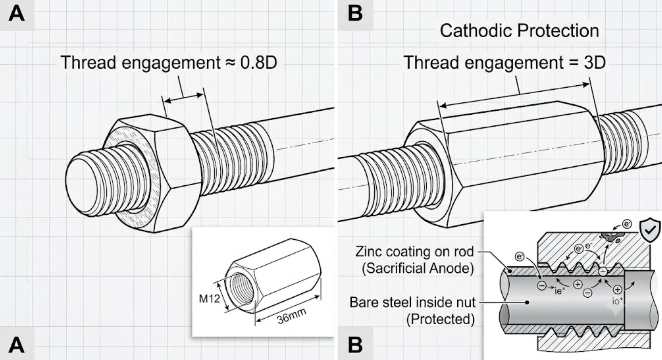
The most common—and most dangerous—mistake made by inexperienced contractors is using a standard hex nut to connect two threaded rods. Standard hex nuts only have a thread engagement length equal to roughly 0.8 times their diameter. Under the heavy, continuous dynamic load of an active HVAC system (which vibrates constantly), these short threads will quickly strip, pulling the rod straight out of the nut.
DIN 6334 Coupling Nuts (also known as Extension Nuts) are engineered specifically to solve this. They adhere to the "3D Rule."
- Their length is strictly manufactured to be 3 times the thread diameter (e.g., an M12 coupling nut is exactly 36mm long).
- This massive internal thread engagement creates a joint that is mathematically stronger than the tensile yield strength of the steel rod itself. If overloaded to the point of destruction, the rod will snap before the DIN 6334 coupling nut strips.
2. The "Halfway Jam": Exposing the Middleman Trap
Here is an industry secret regarding how coupling nuts are manufactured, and why cheap ones fail on the job site.
Tapping (cutting internal threads into) a long steel cylinder causes immense wear and tear on factory tooling. To save money on broken drill taps, low-end workshops will tap the nut from one end, stop in the middle, flip the nut over, and tap it from the other end.
The Result: The threads meet in the center, but they are misaligned. When your installer tries to screw two 3-meter rods into this cheap coupling nut, one rod will bind halfway inside. If forced, the entire 6-meter suspension drop will hang crooked, putting severe shear stress on the ceiling anchor.
The Hotop Fasteners Standard: We utilize advanced CNC tapping centers to perform Through-Tapping. A single, continuous cutting tap is driven completely through the nut in one pass. This guarantees absolute axial alignment. Your spliced HDG threaded rods will hang dead straight, every single time.
3. The HDG Overtapping Protocol (And the Myth of Rust)
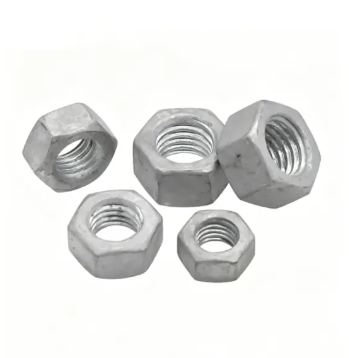
Because commercial ceiling plenums experience temperature swings and high humidity over a 30-year building lifespan, suspension hardware must be Hot Dip Galvanized. However, HDG adds up to 85μm of thick zinc-iron alloy to the threads of a rod.
If a trading company supplies you with standard-tapped coupling nuts, they will lock up against the thick zinc on the rod immediately.
Precision Overtapping
At Hotop Fasteners, we tap our HDG coupling nuts after the galvanizing process, using an oversized tolerance (typically +0.4mm to +0.8mm clearance). This allows the nut to spin smoothly onto the heavily galvanized rod by hand.
The Bare Steel Panic
Many buyers panic when they look inside our HDG coupling nuts and see bare steel threads. This is not a defect; it is the strict engineering standard. Once you thread the galvanized rod into the nut, the massive volume of zinc on the rod acts as a sacrificial anode. Through the science of Cathodic Protection (Galvanic Action), the zinc completely protects the internal bare steel of the nut from rusting.
4. Job Site Best Practices: Visual Inspection & Cold Zinc
Even with perfect factory hardware, field installation errors can compromise the HVAC suspension. We advise our B2B clients to enforce two rules on their construction sites:
The Sight-Hole Requirement
How do you know both rods have reached exactly to the center of the coupling nut to share the load equally? We can manufacture our DIN 6334 nuts with a pre-drilled center sight hole. This allows building inspectors to visually confirm that both rods are fully seated.
Field-Cutting Rods
Installers frequently cut 3-meter threaded rods to custom lengths using a band saw. This instantly destroys the HDG coating at the cut end. Contractors must be instructed to coat all freshly cut rod ends with a Zinc-Rich Cold Galvanizing Compound (minimum 90% zinc dust) before threading them into the coupling nut to restore corrosion resistance.
5. Export Logistics: Defending the Bare Threads
As a direct Chinese manufacturer exporting heavy hardware globally, we know that the bare internal threads of a coupling nut are highly vulnerable during a 30-day ocean voyage. We treat heavy-cargo packaging as a critical engineering step.
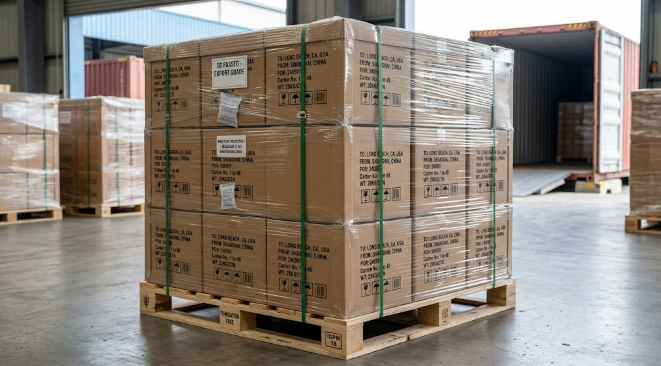
We bulk-pack our HDG coupling nuts into double-corrugated export cartons. Inside every single carton, the nuts are completely sealed within a thick PE moisture-barrier plastic bag. This completely blocks out salty ocean humidity and "container rain." The cartons are densely stacked on fumigation-free plywood pallets and bound with high-tension PET strapping, guaranteeing your hardware arrives at your warehouse in pristine, rust-free condition.
Partner with a True Engineering Factory
Don't let misaligned threads, stripped connections, or trading company markups compromise your high-altitude structural installations.
Related News
Other news you might be interested in
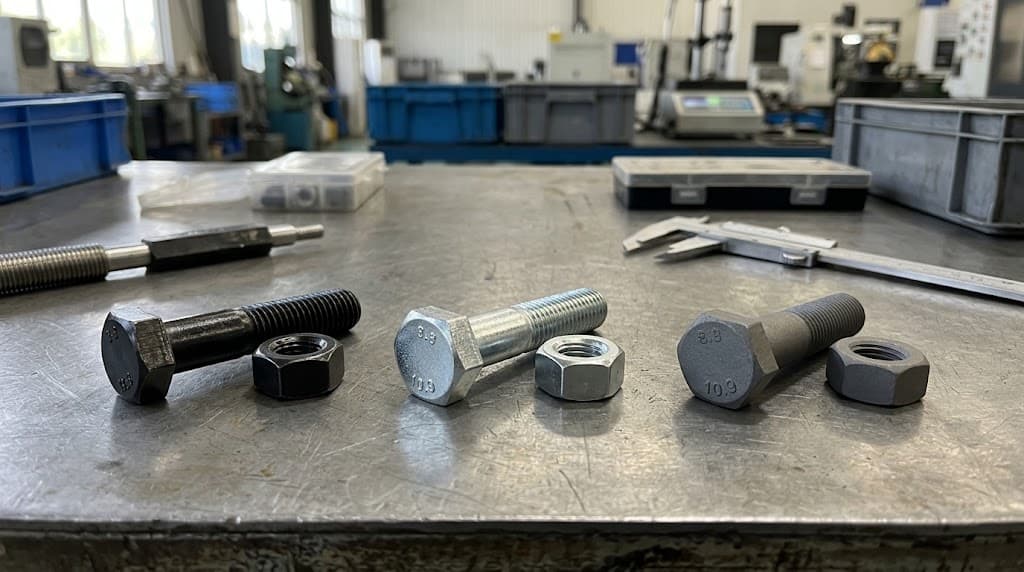
Are Black Oxide Fasteners Suitable for Outdoor Use?
Compare black oxide, electro galvanized, and hot dip galvanized fasteners by corrosion protection, cost, and application. Learn what to specify before requesting a bulk quote.
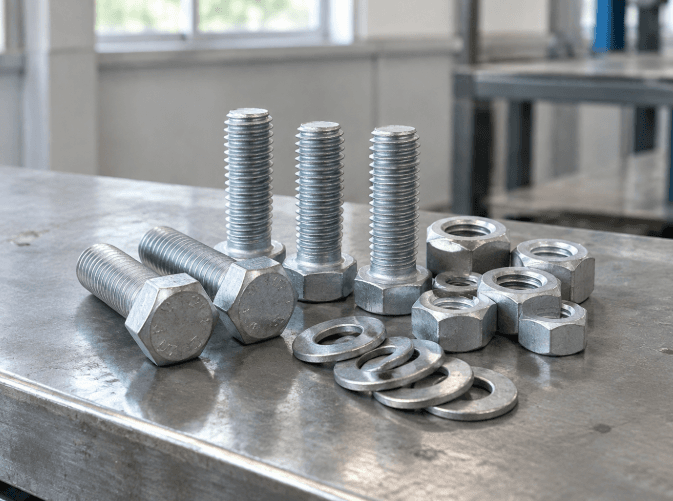
Hot-Dip Galvanized Bolts at Canton Fair 2026: What Bulk Buyers Should Check
Sourcing hot-dip galvanized bolts and nuts for a construction or steel structure project? Learn what bulk buyers should check for standards, grades, coating, thread fit, inspection and supply before placing an order.
Want to know more?
Get in touch with us for more information about our services and products.