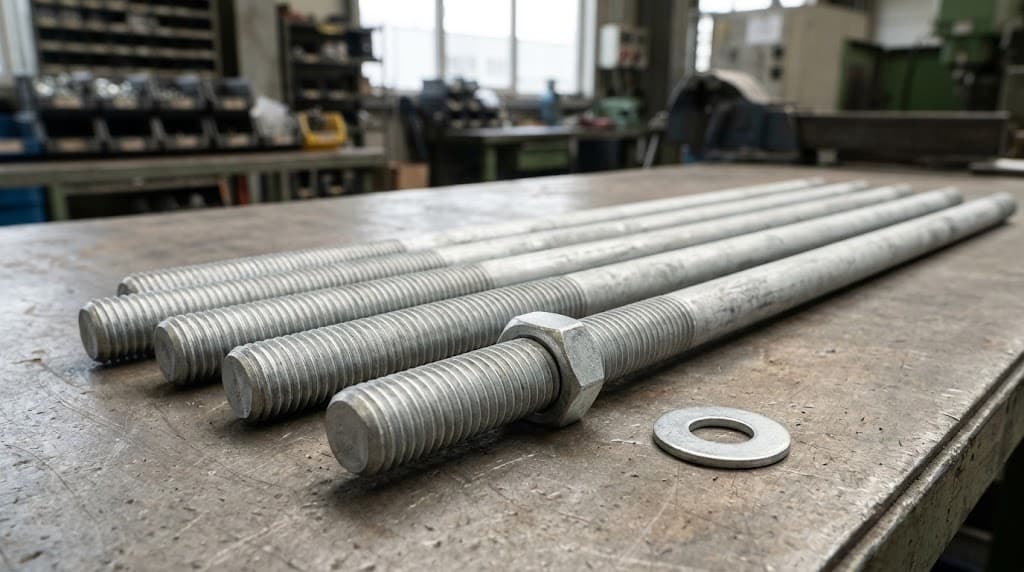
DIN 975 vs DIN 976: HDG Threaded Rod and Stud Bolt Guide

Annie Z
AuthorWith over 25 years of experience in fastener production and export sales, we operate our own manufacturing plant and our products are exported to over 50 countries. We are professional experts in bolts, nuts, washers, anchor bolts, and customized fasteners.
Ordering hot-dip galvanized threaded rods requires more than just diameter and standard number. The buyer also needs to confirm the length of the finished product, thread configuration, material grade, coating, and matching nuts.
DIN 975 and DIN 976 often appear in catalogs, but neither label should replace the complete specification. This guide explains the relationship between them and the detailed information required for quotation based on drawings.
What is the difference between DIN 975 and DIN 976?
DIN 975 is a traditional standard related to metric threaded rods. DIN has listed the 1986 version as a revoked version and stated that it is not applicable to new designs. However, this name is still common in commercial queries and old drawings.
DIN 976-1:2016-09 is the current standard for metric double headed bolts. Full threaded bolts and rods sold according to this reference should not be confused with tap end bolts with separately defined threaded ends.
| Reference | Product description | Purchasing focus |
|---|---|---|
| DIN 975 | Legacy metric threaded rod reference | Confirm the accepted specification and edition |
| DIN 976-1 | Metric stud bolts, commonly fully threaded | Confirm length, end form and thread requirements |
| DIN 938 | Tap-end stud with a metal end approximately 1d | Confirm tap-end and nut-end dimensions |
| DIN 939 | Tap-end stud with a metal end approximately 1.25d | Confirm tap-end and nut-end dimensions |
Do not automatically replace a reference with another reference. Please ask the project engineer to approve the proposed specifications, especially when using old standards in the drawings.
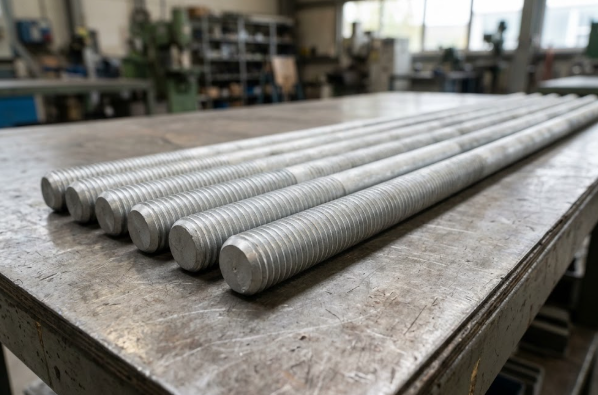
Threaded rod or threaded end stud?
The continuous threaded rod allows the nut to be positioned along its length. It is commonly used for pipeline hangers, cable trays, HVAC suspensions, and adjustable fastening components.
Full threaded bolts are supplied in the specified length and can accommodate nuts at both ends. Depending on the project, it may be used for equipment or flange connections.
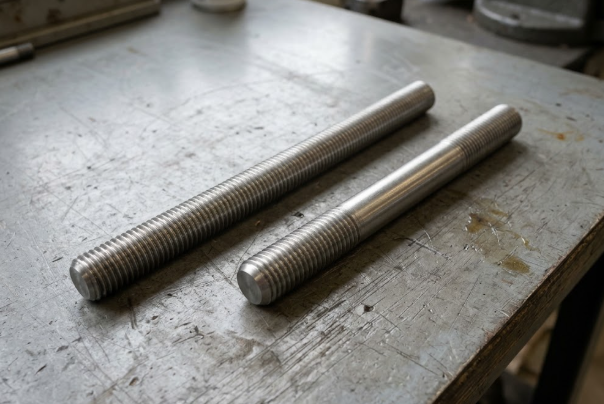
The threaded end stud has a designated end for tapping holes and the other end for nuts. According to the size, the unthreaded part may separate the ends. DIN 938 and DIN 939 tap-end studs have a specified metal end for a tapped hole and a nut end for the fastening assembly.
If the drawing requires no threads at the center or different thread lengths at both ends, please specify these dimensions clearly. The universal "DIN 976 stud" description cannot replace the correct drawings and product standards.
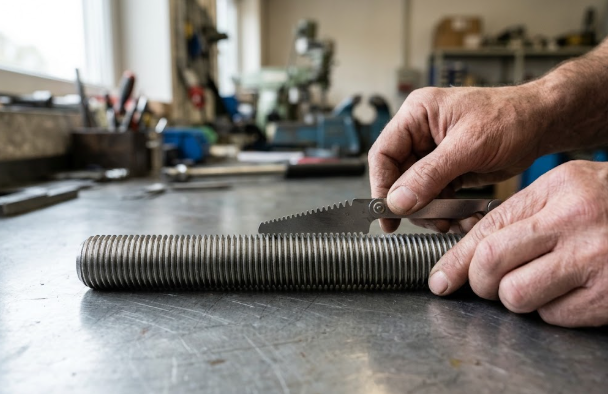
Size and grade to be confirmed
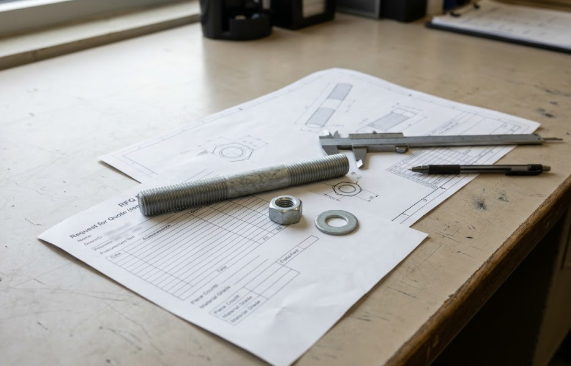
Before requesting a quotation, use drawings or sketches with annotated dimensions to define the parts.
| Item | Information required |
|---|---|
| Thread | Diameter, pitch, coarse or fine thread, and thread direction |
| Length | Finished overall length and measurement reference points |
| Threaded sections | Full thread or separately defined end lengths |
| Unthreaded section | Length and position, where required |
| Ends and tolerances | Chamfers, end form and dimensional limits |
| Material and grade | Specified material, property class and inspection requirements |
For the tap end stud, confirm if the length includes the tap end. Do not assume that every supplier measures from the same data.
Select materials and grades from approved project requirements, not just the maximum available quantity. It is necessary to check the matching nuts, washers, thread engagement, and connecting components together. Relying solely on the standard name cannot determine the load capacity of the connection.
What are the changes in hot-dip galvanizing?
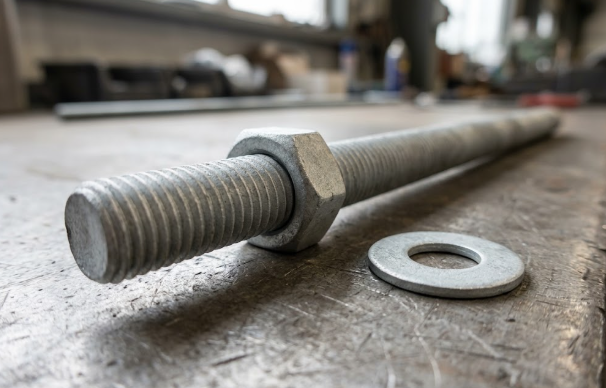
Hot dip galvanizing adds a layer of zinc coating, which helps protect the steel from corrosion. It is typically used for outdoor brackets, infrastructure, and installations exposed to humid environments, but the finish must be suitable for the actual usage environment.
The coating will also change the effective thread size. After galvanization, nuts installed on uncoated rods may not be installed correctly. Confirm compatible rod and nut combinations and applicable thread allowances, rather than applying an excessively large tapping value for each diameter.
Clearly define coating standards and inspection requirements. ISO 10684 is a recognized reference standard for hot-dip galvanized fasteners, but its scope is limited by threads, dimensions, and performance levels. Confirm if it is suitable for a specific order.
Galvanizing and hot-dip galvanizing are non interchangeable surface treatment descriptions. Galvanizing is typically used for components with less exposure, while HDG is commonly used for outdoor corrosion protection. Neither of them can guarantee their service life alone.
For higher strength products, please have the technical team review the materials, cleaning, and coating processes together. Do not assume that every grade, diameter, and pitch can be supplied using the same galvanizing route.
Prepare a complete inquiry form
Sending supplier:
- Drawing number, revision, and application
- Product form, standards, and versions
- Diameter, pitch, finished length, and measurement benchmark
- Thread length and any non threaded parts
- Materials and required performance levels
- Painting standards and post painting inspection requirements
- Match nuts, washers, or connecting nuts
- Quantity listed by size, required documents, packaging, and delivery destination
For HDG rods with fixed length cutting, confirm whether the cutting is performed before or after coating, and how to protect the exposed ends. For concrete anchoring, use approved anchoring system requirements; A single threaded rod cannot establish anchoring capability.
For suspension projects, see our HDG threaded rod and pipe hanger guide.
Frequently Asked Questions
Is DIN 975 still in use?
Yes, as a reference for commercial and traditional drawings. However, DIN 975:1986-09 has been revoked. Confirm the specifications accepted by the project, rather than assuming that the directory name proves compliance with requirements.
Does DIN 976 refer to a center unthreaded bolt?
DIN 976 is typically associated with fully threaded bolts and rods. DIN 938 and DIN 939 faucet products have different requirements. Specify the expected geometric shape on the graph.
Can galvanized threaded rods be cut on site?
Cutting will expose the steel at the end and may damage nearby threads or coatings. Before installation, follow the cutting, inspection, and coating repair requirements of the project.
Discuss Your Threaded Rod Requirements
Review our HDG threaded rods and DIN 976 stud bolts and fully threaded rods as catalogue starting points.
Send your drawing and RFQ to Hotop Fasteners. Include the dimensions, material, grade, coating, matching components and quantity, and request confirmation of the proposed specification and supply conditions before ordering.
Related News
Other news you might be interested in
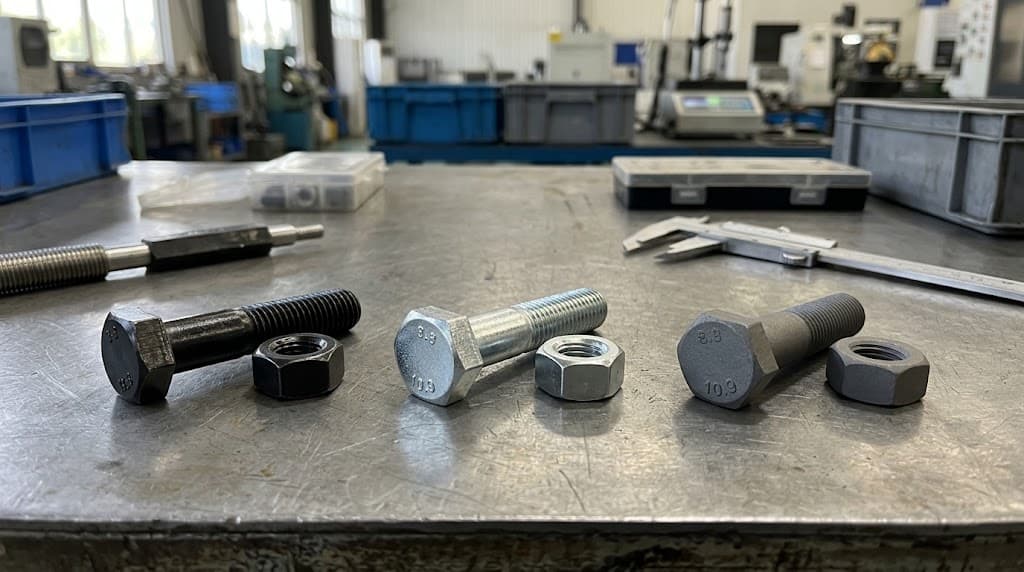
Are Black Oxide Fasteners Suitable for Outdoor Use?
Compare black oxide, electro galvanized, and hot dip galvanized fasteners by corrosion protection, cost, and application. Learn what to specify before requesting a bulk quote.
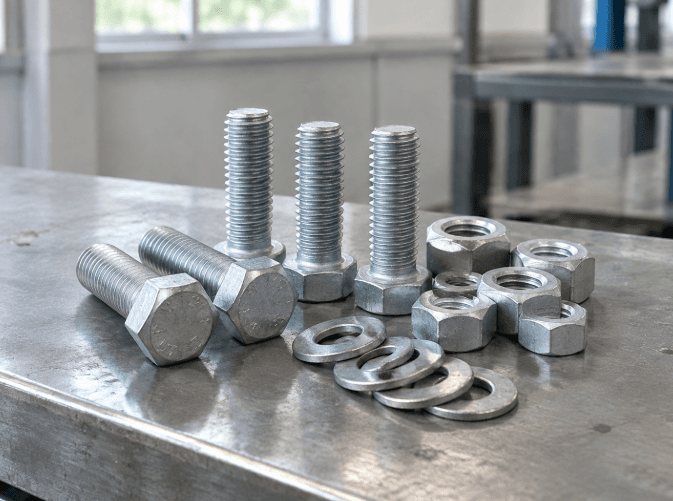
Hot-Dip Galvanized Bolts at Canton Fair 2026: What Bulk Buyers Should Check
Sourcing hot-dip galvanized bolts and nuts for a construction or steel structure project? Learn what bulk buyers should check for standards, grades, coating, thread fit, inspection and supply before placing an order.
Want to know more?
Get in touch with us for more information about our services and products.